Shir HaShirim – The Secret of Women's Jewelry
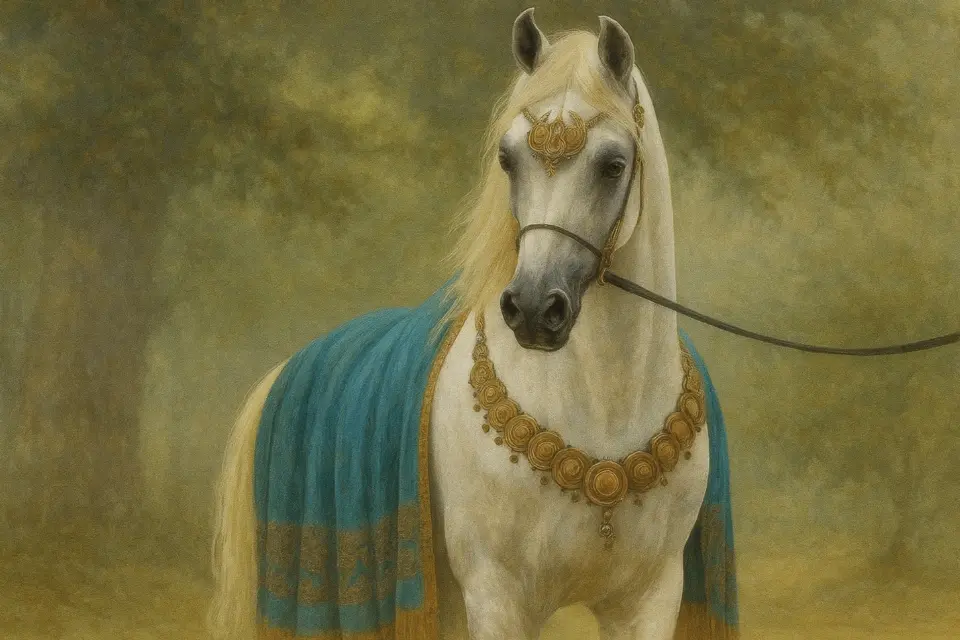
- “Le-susati be-rikhvei Pharaoh, dimitikh rayati” - (I have compared you, my beloved, to a mare among Pharaoh's chariots).
The Vilna Gaon asks why the verse says “susati” rather than “susi”—why does Shlomo compare the Jewish people to a mare rather than a stallion, using the feminine rather than the masculine form?
The Vilna Gaon explains that Egypt had the most beautiful horses, and the finest and most beautiful among them were selected for Pharaoh's herd. They were then divided: the stallions were taken to war—“ki-sus zakhar horekh ba-milhamah”—they went to their deaths in chariots on the battlefield, and their lives were short.
The mares, on the other hand, were taken to adorn Pharaoh's processions, “be-rekhvan u-mekushatan.”
And it is precisely to this mare—the finest of the finest, chosen for adornment, to be cared for and adorned—that Hashem compares the Jewish people. Of all the nations throughout history, Hashem chose to care for and adorn the Jewish people.
- “Na'u lekha'ayikh ba-torim, tzavarekh ba-haruzim” - (Your cheeks are beautiful with pendants, your neck with strands of jewels).
Horse ornaments are divided into two types—for the head and for the neck: turim and haruzim.
Turim are worn on the head—something solid and cast—while haruzim are worn around the neck: a necklace of beads or pearls made up of small individual elements.
What is the most important thing Hashem gave us? Torah and mitzvot.
What is Torah? It is teaching, logic, knowledge, and understanding—something whole and undivided.
Mitzvot, by contrast, are fragments of different types of activity—performed with the hands, the feet, and other parts of the body. They depend on different organs, are connected to different times, and have different values. Each mitzvah is a pearl, yet each one is separate and unique. The purpose of life is to gather mitzvot—to string together the beads. When we enter Olam HaBa, all these beads will be hung upon us, and wherever there is an empty space in the necklace, that will represent a mitzvah we failed to perform.
The ornament worn on the head represents the importance of the intellect, while the one worn around the neck represents the importance of action.
(Based on a lesson by Rabbanit Esther Offengeden)