A Kivrei Tzadikim Journey to Turkey
Immediately after the conclusion of the holiday of
Tu BiShvat—from
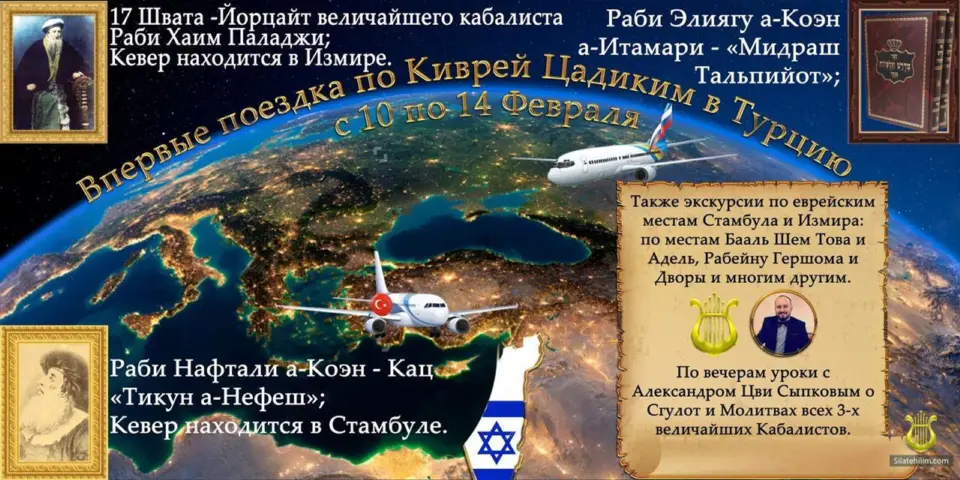
February 10 to 14, 2020—
Silatehilim.com organized a journey through Turkey to Kivrei Tzadikim, joined by Jewish women from Israel and Moscow.
The journey received the blessings of two renowned rabbis:
Rabbi Isaac Abramovich Kogan, Chief Rabbi of the Moscow Synagogue on Bolshaya Bronnaya Street, and
Gaon Rabbi Yaniv Assuri of Hadera, Rosh Yeshivah of
Yodei Binah in Israel.
The journey was timed to coincide with the yahrzeit of the great Kabbalist
Rabbi Chaim Palaggi (17 Shevat). We also planned to visit another great mekubal from Izmir,
Rabbi Eliyahu Ha-Kohen Ha-Itamari, author of the widely studied works
Midrash Talpiot and
Shevet Musar.
In Istanbul, we were to visit the kever of the Baal Ha-Mofet (miracle worker),
Rabbi Naftali Ha-Kohen Katz.
Several years earlier, when
Silatehilim.com was planning to hold a large hafrashat challah ceremony in
Meron, at the gravesite of the
Rashbi in Israel,
Gaon Rabbi Yaniv Assuri advised us instead to take women on a journey to Kivrei Tzadikim in Israel, and blessed the journey. Baruch Hashem, we were then able to combine both hafrashat challah and a journey to Kivrei Tzadikim.
Since then, this has become our guiding principle: from 20 to 55 women, from one holiday to the next and from the yahrzeit of one great tzadik to another, set out on journeys to holy sites in Israel and around the world.
That same year,
Gaon Rabbi Yaniv Assuri invited us on an unforgettable journey to the Kivrei Tzadikim of
Europe (Poland, the Czech Republic, Hungary, and Slovakia). He taught us many things at the Kivrei Tzadikim and instilled in us a love for such journeys. He pointed out that in the Diaspora, the graves of the righteous are visited less often than in Israel, making a journey to them a special mitzvah. It is believed that the soul of a tzadik whose grave is visited less frequently raises the prayers of those who come to him with special love.
Rabbi Yosef Dayan, one of the 36 hidden tzadikim, taught that in order to repair and purify his soul from sin, a person should go to the graves of the righteous and pray there. The more difficult and exhausting the journey to the tzadikim, the more sins are erased, and every step mitigates the heavenly judgments.
Thanks to Miriam Pokholko, one of the participants in the group, we were connected with
Dan Kachulin, a representative of the Russian Jewish community in Turkey, who organized the journey wonderfully.
The popular Facebook blogger
Alexander Tzvi Sypkov from Saratov, who gives very profound Torah lessons, was also invited to join the journey.
Every participant received a copy of his new book,
Good Dream (חלמה טבא), devoted to the subject of dreams in Jewish tradition.
Istanbul
In Istanbul, we visited an Ashkenazi synagogue, a historic Jewish cemetery, and the Jewish Museum. We also visited the waterfront of the Bosphorus near the Istanbul bridge connecting the two continents—Europe and Asia.
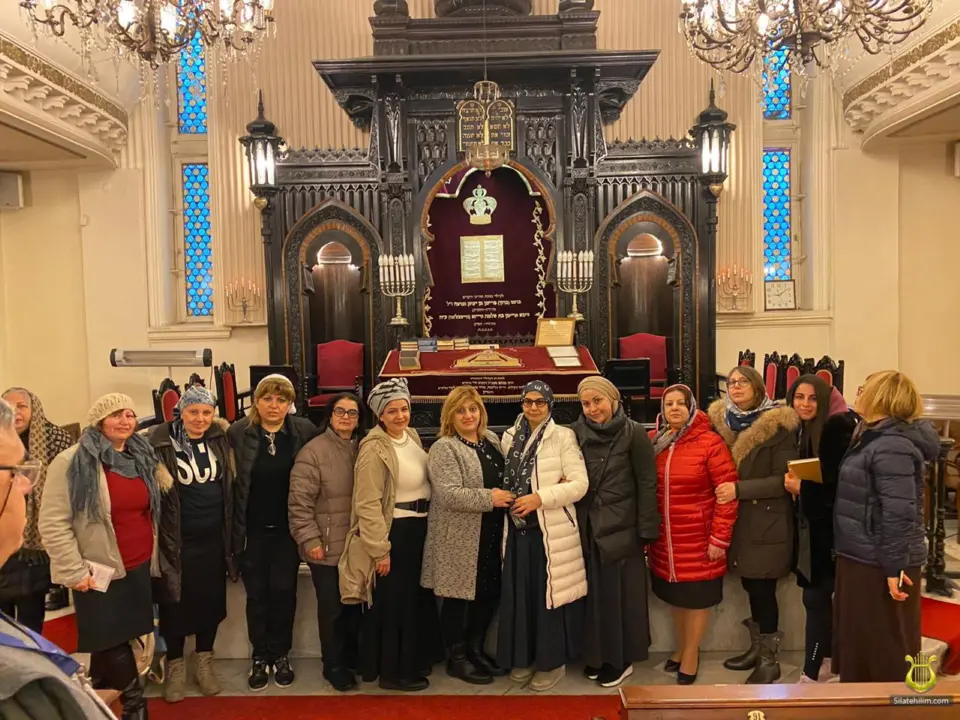
The group was accompanied by a tour guide, Khalid Gafar. He told us that in the past there were 21 synagogues in Istanbul, of which only nine remain today, including one Ashkenazi synagogue. It is located in the
Beyoğlu district and is a colorful building with three white arches on a pale pink façade. Surrounded on all sides by other buildings, it is not easy to find, and entry is possible only through strictly guarded, ornate metal gates.
The guests were warmly welcomed by
Rabbi Isaac Halevi, who told us that in earlier times this district was considered one of the main areas where Istanbul's Jews lived. Today, a minyan gathers there daily, and a service was taking place in the synagogue during our visit. The women went up to the second floor to pray. The building is also currently home to the Chief Rabbinate of Istanbul.
We then went to the
Beşiktaş district, where Istanbul's medieval Jewish cemetery is located.
The kever of the great 18th-century Kabbalist,
Rabbi Naftali Ha-Kohen Katz, drew particular attention. He had served as rabbi of the Jewish communities of Ostroh, Poznan, and Frankfurt.
In our time,
Gaon Rabbi Yeshayahu Pinto revived his little-known
Tikun Ha-Nefesh—a special collection compiled by
Rabbi Naftali Katz, consisting of ten psalms of King David, together with two additional psalms, one introductory and one concluding.
Tikun HaNefesh of Rabbi Naftali Katz
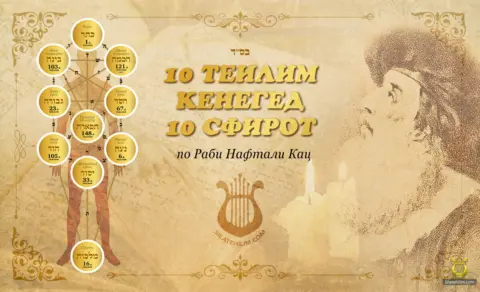
Another of his famous prayers is
Ten Tehillim, corresponding to the
Ten Sefirot. Reciting them in this order can purify one's body and soul of all blockages.
10 Tehillim Corresponding to the 10 Sefirot, According to Rabbi Naftali Ha-Kohen Katz
Everyone who received a booklet containing the tzadik's Tikkun prayed at the kever of its author for their personal needs, for when recited with awe and devotion, this Tikkun brings deliverance from various troubles and misfortunes.
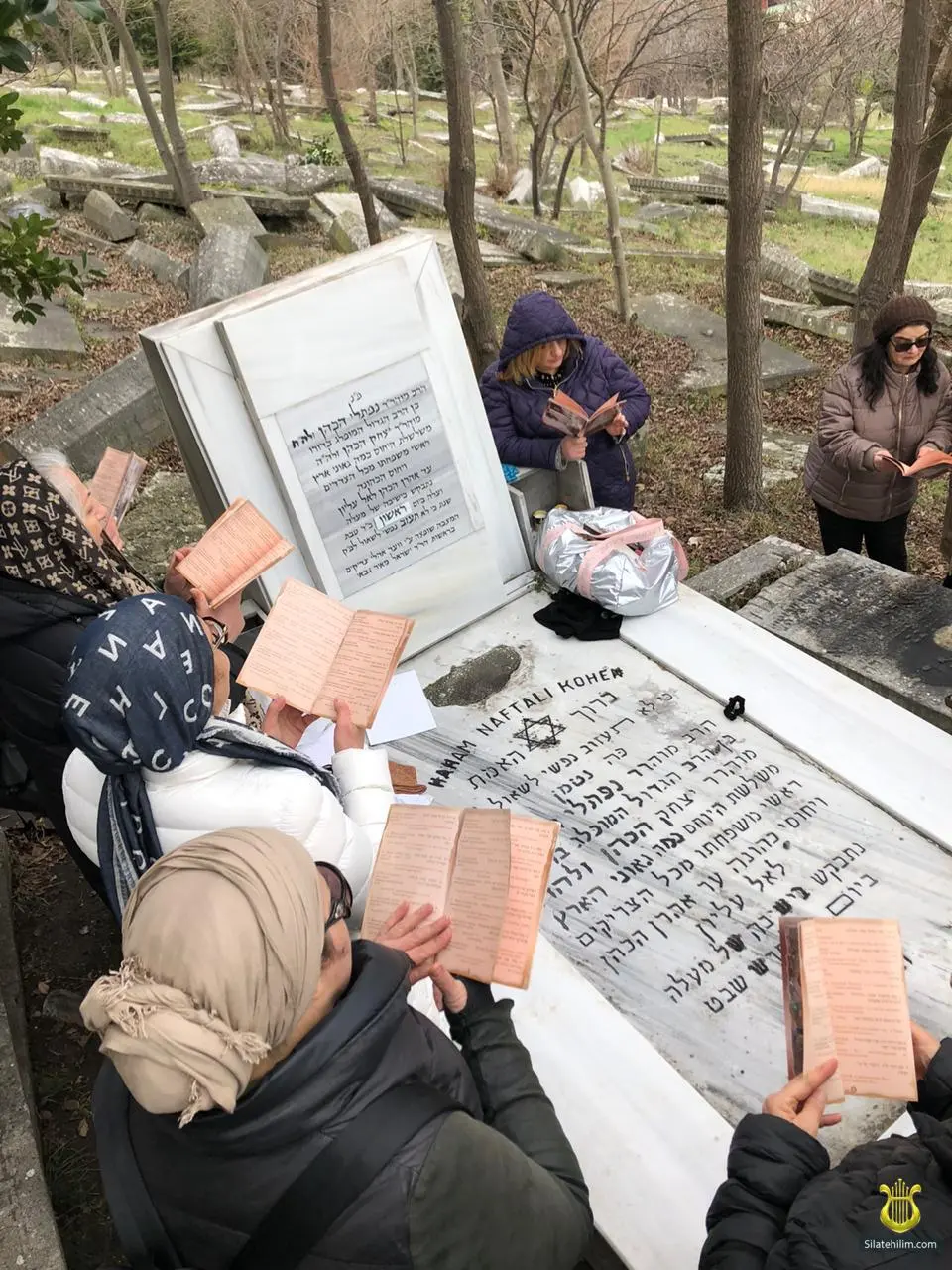
The great Torah scholar
Rabbi Naftali Katz was also renowned among the people as a healer and miracle worker. It is known that he himself escaped from Tatar captivity by using practical Kabbalah, but he was best known for helping people suffering from severe emotional and physical ailments.
In 1718, he decided to travel to the Holy Land, but died on the way, in the capital of Turkey.
We lit candles at the tzadik's grave and prayed for our loved ones. It was an amazing feeling—the tzadik did not seem willing to let us go for a long time. I think this was because so few people recite his
Tikun Ha-Nefesh at his kever.
Kever of Rabbi Naftali Ha-Kohen Katz
Naftali HaKohen Katz
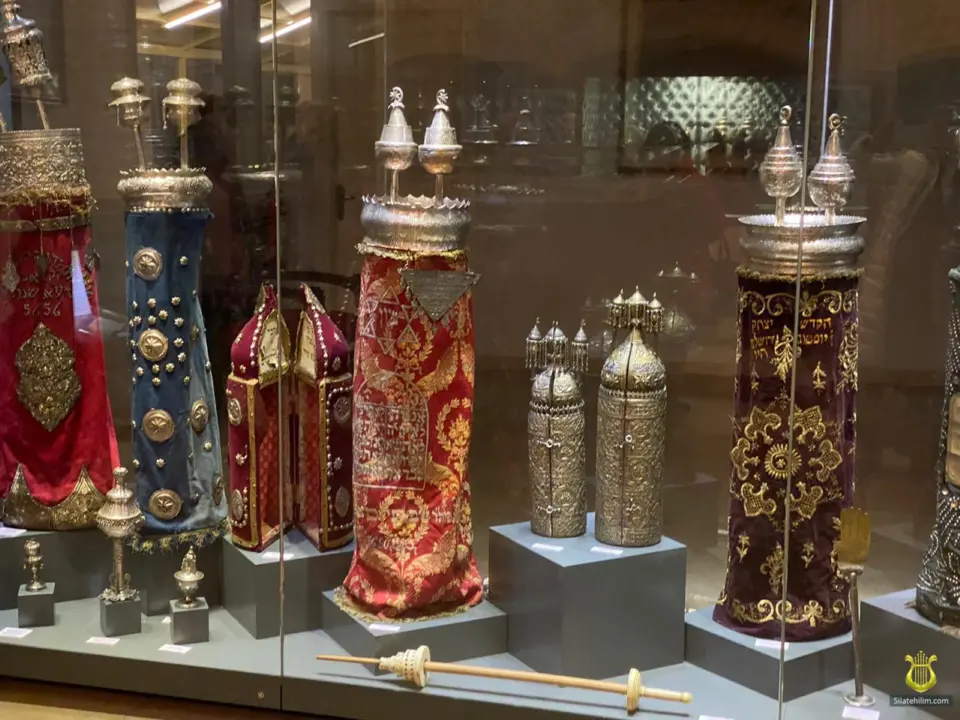
The Istanbul Jewish Museum, opened in 1992 to mark the 500th anniversary of the migration of Sephardic Jews from Spain and Portugal to Turkey, impressed us with its collection of antique Judaica and items from the daily life of Turkey's Jews.
 Izmir
Izmir
The next day, we flew to Izmir, Turkey's third-largest city.
After an hour and a half in the air from the capital, we arrived in a city that had been a haven for Jews since the 14th century.
On the yahrzeit of the tzadik from Izmir,
Rabbi Chaim Palaggi, whose prayers and segulot are widely featured on the Silatehilim.com website, Jews from different countries gathered at his kever. Among them were a direct descendant of the tzadik from Israel, whose blessing we were privileged to receive; a family from France; and a father and son from Israel who organized a
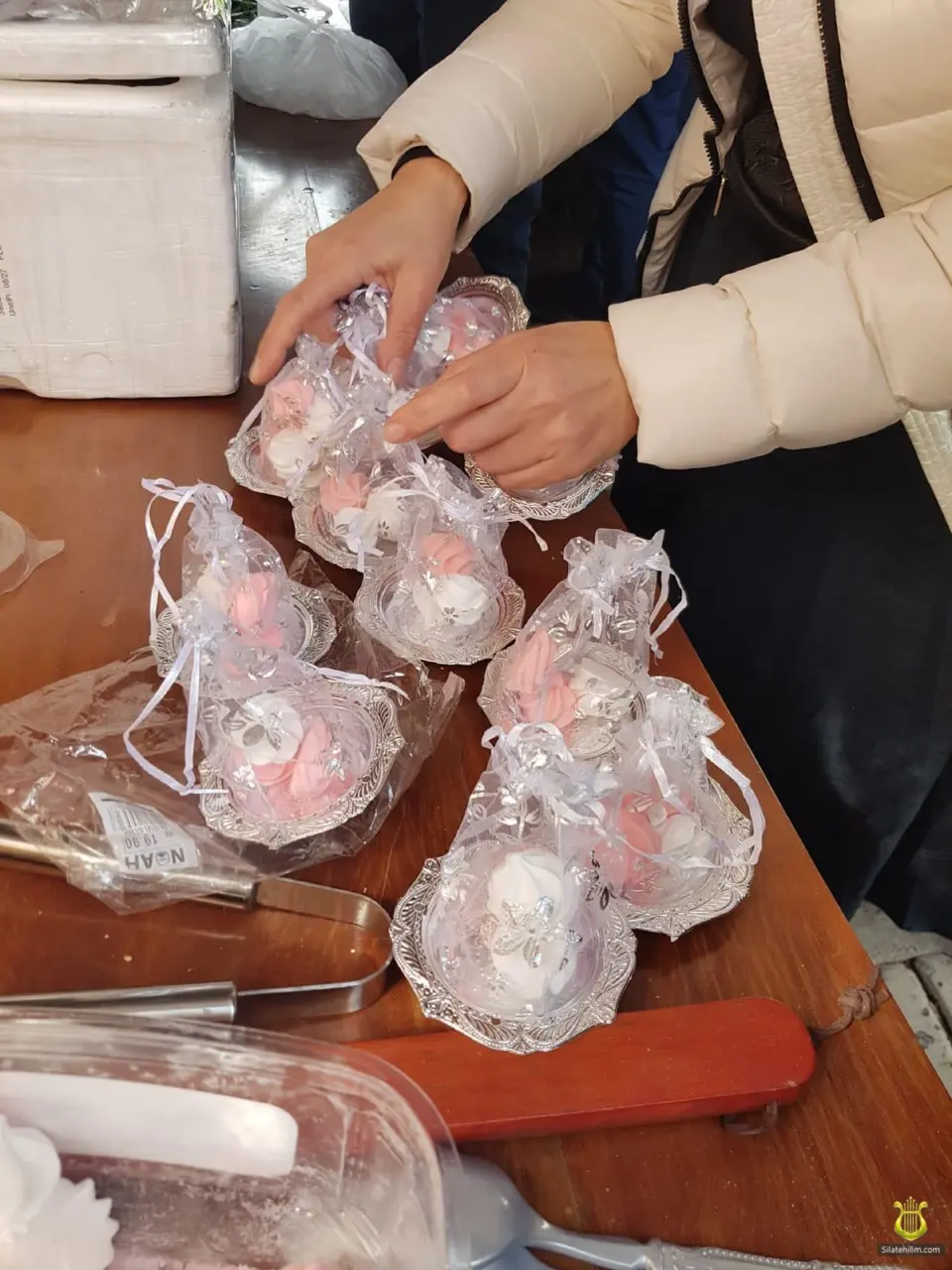
seudat mitzvah at the kever. The care and love with which the father and son approached this mitzvah taught us all how much one should strive to beautify a mitzvah. They had thought of every detail: beautiful and expensive disposable plates, although simpler ones are usually used in such places; delicately prepared treats in elegant bonbonnières for a
Seudat Amenim; meat, chicken, and other foods brought from Israel for the grill—and many other details that only experienced women's eyes would notice. When our group got to know them better and learned that they were from Hadera and that their rabbi was
Gaon Rabbi Yaniv Assuri, everyone was filled with joy. It was now clear where their reverence for the tzadikim came from.
A white tent was erected over the
kever of Rabbi Chaim Palaggi. The recitation of
Nishmat Kol Chai and the
Special Prayer of Repentance by Rabbi Yehudah HaChassid created a feeling of being drawn into holiness.
Kever of Rabbi Chaim Palaggi
Chaim Palagi of Izmir
Opposite the grave of
Rabbi Chaim Palaggi lies the grave of another great Kabbalist,
Rabbi Eliyahu Ha-Kohen Ha-Itamari. There we recited
Shir HaShirim.
Kever of Rabbi Eliyahu Ha-Kohen Ha-Itamari
Eliyahu HaKohen HaItamari of Izmir
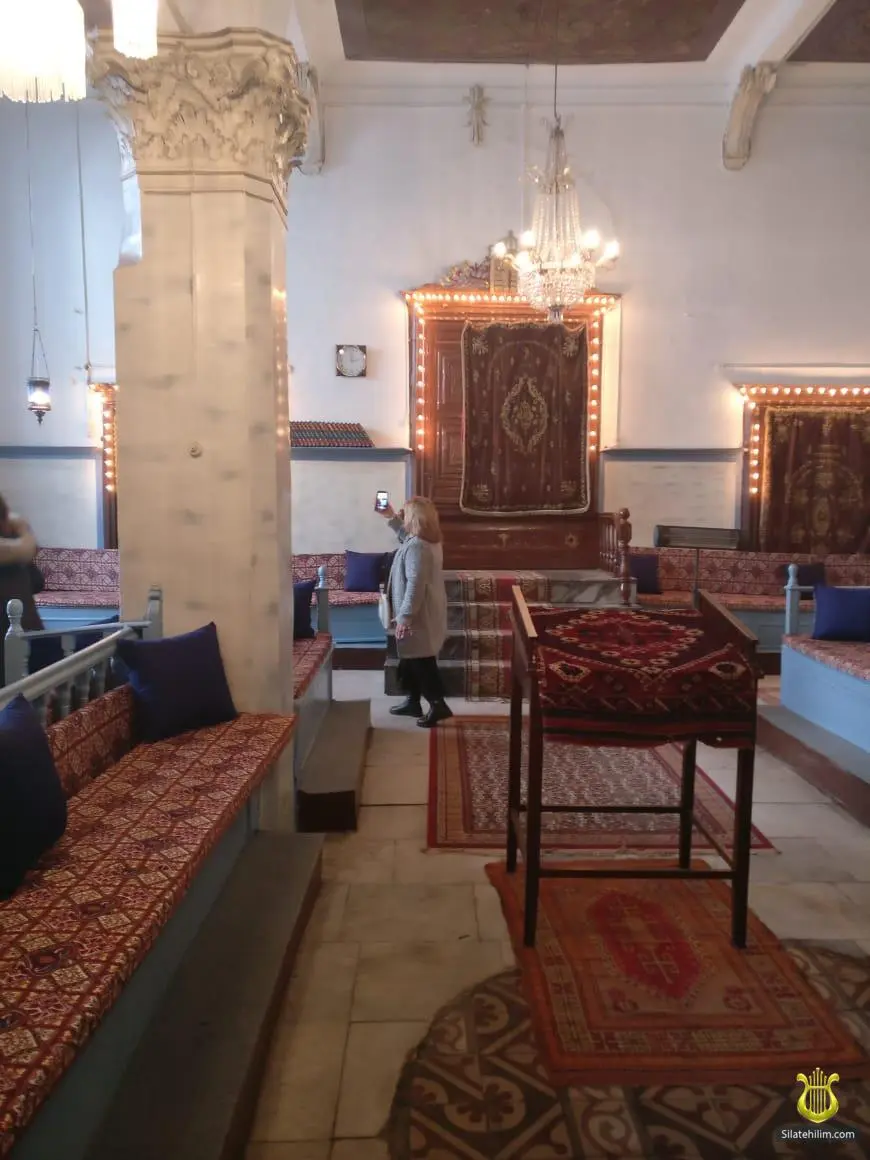
Afterward, we decided to visit the synagogue named after Rabbi Chaim Palaggi, which was built by his family. Winding through the narrow streets in the market district, we had difficulty finding the historic building. When its gates opened, the visitors felt as though they had entered a time machine and been transported into the past. The synagogue has a clean, cozy courtyard with memorial plaques. The plaques also record the dates of its restoration—1919 and 2005. The synagogue's interior is unusual: benches with soft cushions line the sides. The floor, table, and curtain of the Aron HaKodesh are all covered with colorful carpets. The wooden ceiling, with its carved columns and visible cracks, reveals the synagogue's age. The women were welcomed and blessed by two chazzanim who had come from Tel Aviv—Menashe Zriha and Peretz Katz.
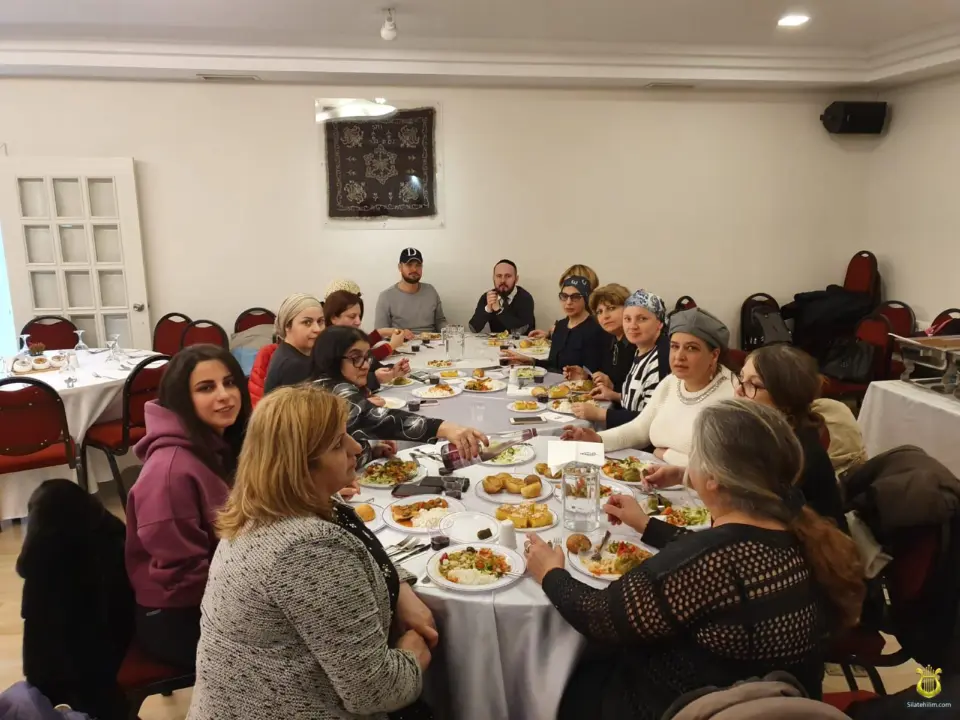
Throughout the journey, we ate at a kosher restaurant located on the second floor of the Jewish Center and Zionist Congress of Turkey, whose president is Kalef Kaya Booker. Sinam, the director of the kosher restaurant, took thoughtful care of everyone and spoke with the guests in Hebrew and English.
During the journey, lessons were given on the segulot, or wondrous properties, of precious stones, based on
Midrash Talpiot by Rabbi Eliyahu Ha-Kohen; on
Tikun Ha-Nefesh by Rabbi Naftali Katz; and on
Refuah VeChaim (
Healing and Life) by
Rabbi Chaim Palaggi.
All the participants held the journey's co-organizer, Denis Kachulin, in especially high regard. He accompanied and looked after us throughout the entire trip. Such respectful treatment of every woman and such care for each of us from a young man are a great rarity nowadays. At every hour of the day and night, he was there for us: meeting us at the airport and seeing us off, arranging minibuses, food, and much more.
I would also like to thank Alexander-Tzvi Sypkov for his lessons, filled with wisdom and holiness, and for presenting them with such simplicity and ease.
May the zechut of the tzadikim protect Am Yisrael!
Please note: some articles on our site contain the holy Names of the Almighty. If you print these articles, they may not be thrown away or destroyed. Please handle printed copies with care and respect.