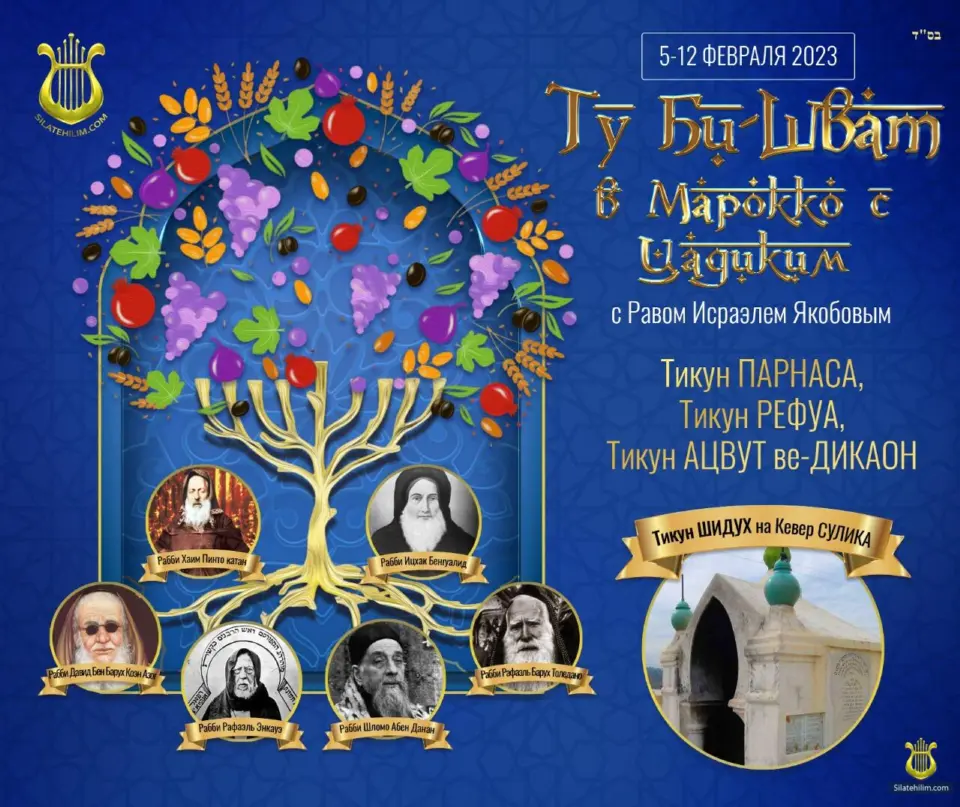
A Trip to the Kivrei Tzadikim in Morocco
From February 5–12, 2023, the “Silatehilim.com” website organized a trip to the Kivrei Tzadikim in Morocco for the holiday of Tu BiShvat.
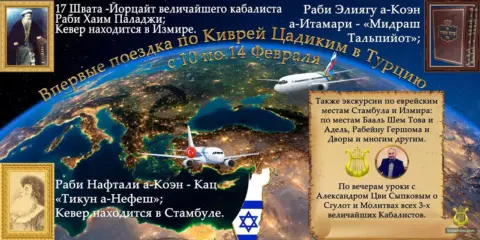
This trip had been planned since February 2020, inspired by an extraordinary trip to the Kivrei Tzadikim in Turkey. But then the newly emerging Corona epidemic brought our plans to a halt.
And so, three years later, women from several countries—17 from Russia, 12 from Israel, 2 from England, 2 from the United States, and 1 from Belgium—gathered in Morocco for the holiday of Tu BiShvat.
Rabbi Israel Yakobov was invited to join the trip. For the past three years, “Silatehilim.com” has been organizing classes with him on the “Hidden Meaning of Tehillim” and other fascinating topics in Judaism.
Also participating in the trip was the former Chief Rabbi of Brandenburg, Germany, and Dayan on the Beit Din for conversion in Scandinavia—Rabbi Yaakov Luft.
You can find all the photographs from the Kivrei Tzadikim in Morocco by following the link for each tzadik—in the gallery at the end.
Marrakesh
At a beautiful hotel in Marrakesh, we held a
Tu BiShvat Seder according to Rabbi Chaim Palaggi, where we were introduced to the distinctive character of authentic Moroccan cuisine.
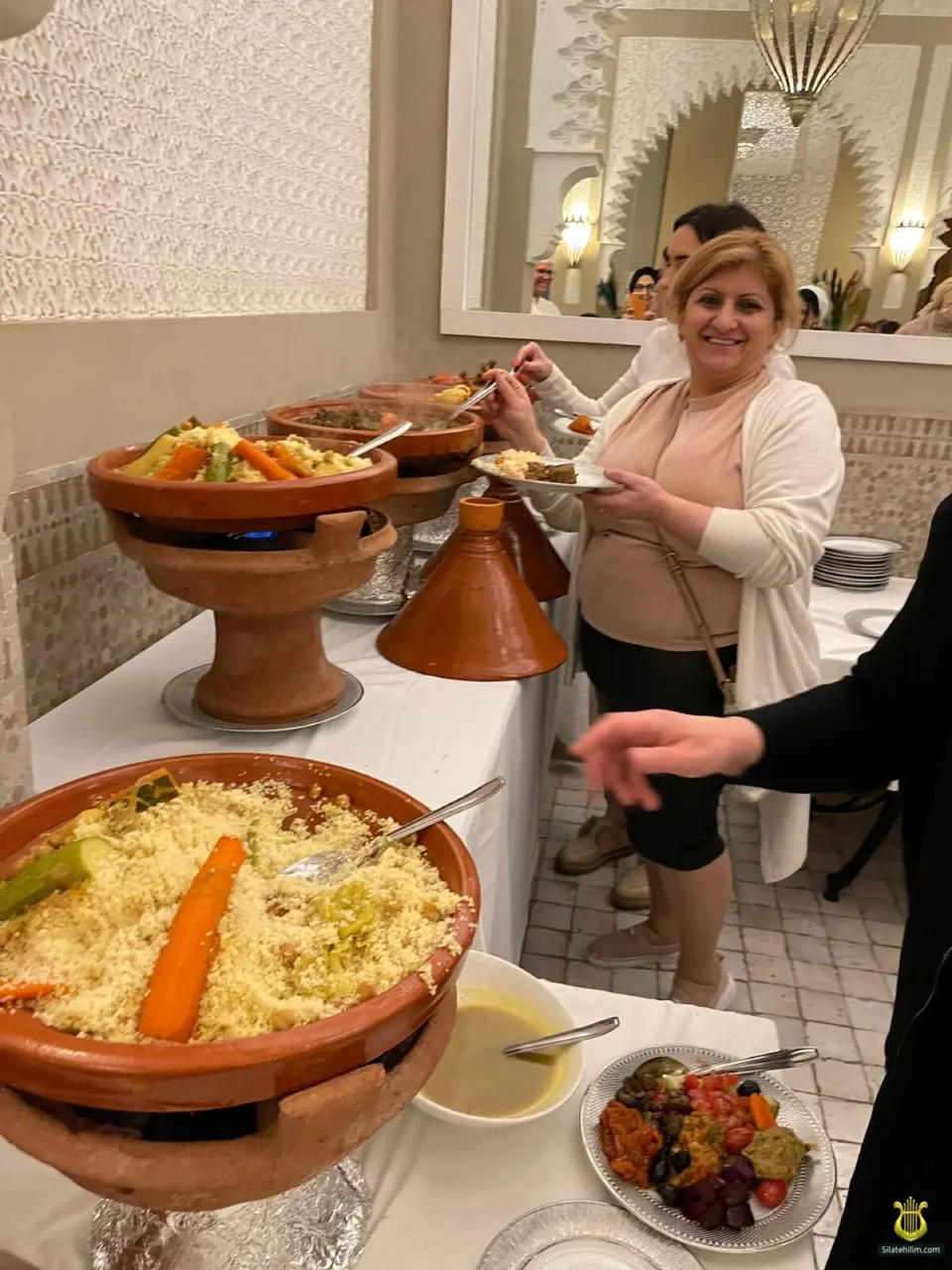
One of the participants, Angela Eliyahu, gave everyone a gift: she set a separate table with beautiful Tu BiShvat presents.
The next day, we set out on a tour of central Marrakesh—the Medina.
Remarkably, in all the major cities of Morocco, the Jewish quarters—the Mellahs—are located in the Medina (the city center) or adjacent to it, reflecting the importance of the Jewish community in Morocco.
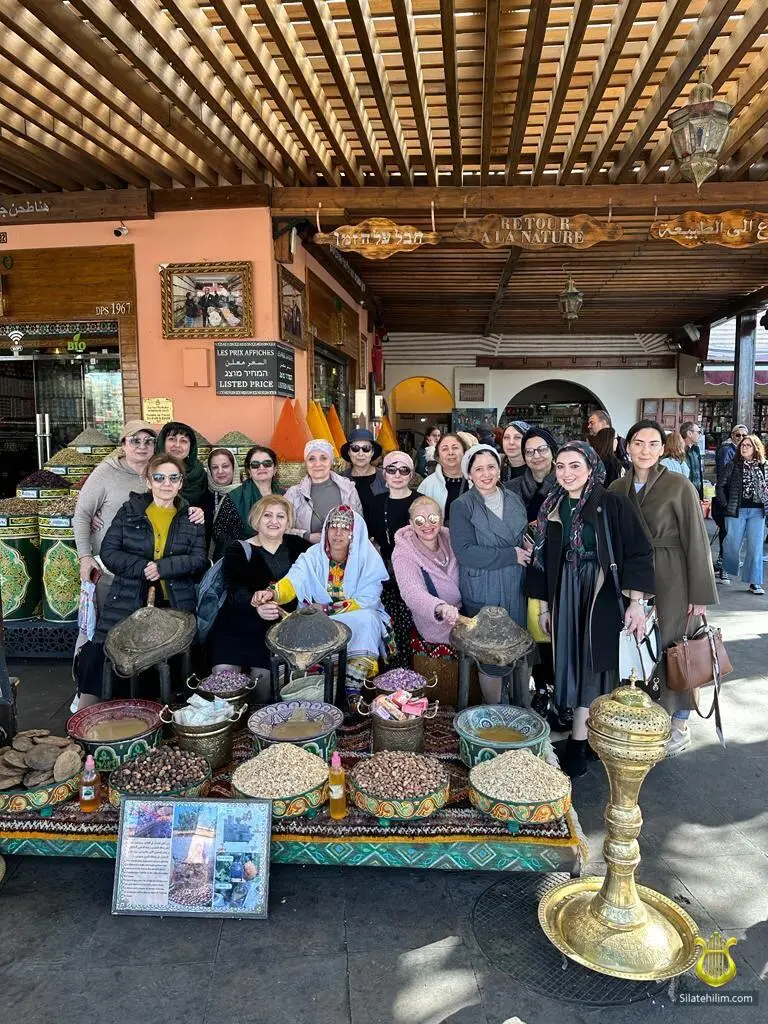
All the Jewish quarters are filled with market stalls: local spices and souvenirs, as well as Jewish Judaica in Moroccan style—mezuzot, menorahs, trays, and more.
In the Mellah itself, we also visited Marrakesh’s historic active synagogue.
Afterward, we went to the Beit Kvarot “Me'arash,” where the great Moroccan Chachamim are buried—all of them Kabbalists and Ba'alei ha-Mofet (wonder-workers). All photographs can be found at the links:
Rabbi David Hazan, Rabbi Avraham Azulai ha-Rishon,
David Chazan
Rabbi Yitzchak Delvya—the Chief Rabbi of Morocco,
Rabbi Avraham Ben Atar,
Yitzchak Delia
Rabbi Chananya ha-Kohen—a great wonder-worker,
Chananya HaCohen
Rabbi Shlomo Amar,
Shlomo Amar
Rabbi Avraham Abitbol and his father, the author of the Shabbat hymn
“Yaffah ve-Tamah”—Rabbi Shlomo Abitbol,
Shlomo Abitbol – "Yafa ve-Tama",
as well as
Rabbi Shlomo Ben Tamtsut
Rabbi Shlomo Ben Tamtzut
You can read remarkable Sipurei Tzadikim in the “Kivrei Tzadikim” section of our website.
Casablanca
The next day, we moved on to Casablanca. First, we decided to go to the Atlantic coast to recite the berachah
“Oseh ha-yam ha-gadol”.
In Casablanca, at the ancient Jewish cemetery, we visited the Kivrei of two great tzadikim:
Rabbi Chaim Pinto ha-Katan
Chaim Pinto HaKatan
and
Rabbi Avraham Abuhatzeira.
Avraham Abuhatzeira
Everyone was struck by the enormous ancient tree in the cemetery, with its magnificent heart-shaped crown.
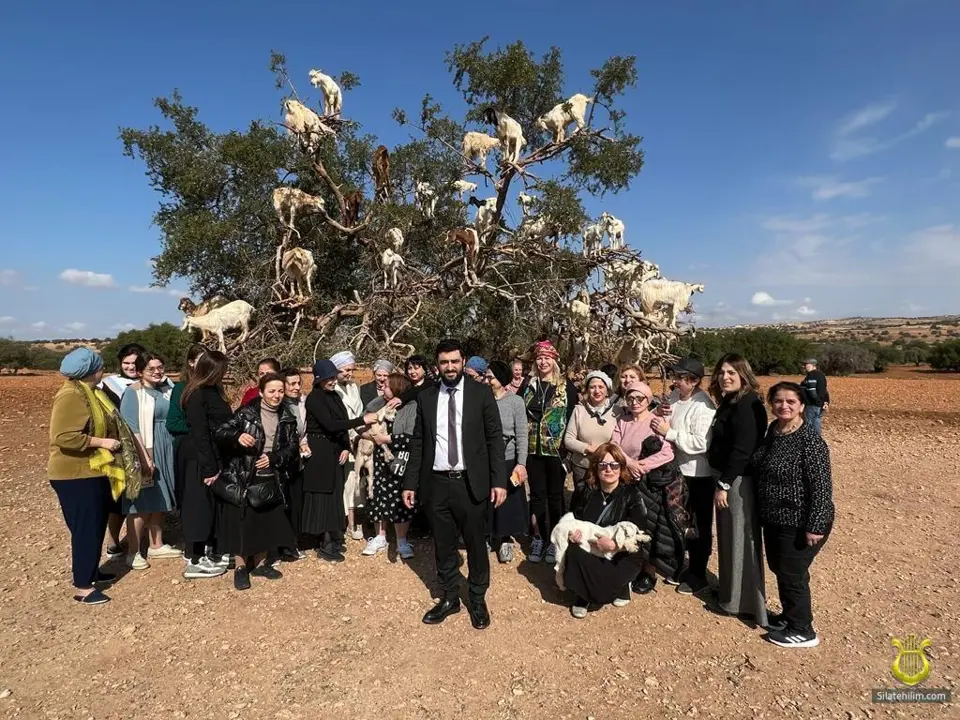
On the road from Casablanca to Essaouira, in the village of Ouled Merah, we witnessed an astonishing sight: along the entire road, rare, picturesque trees were covered with white goats. Naturally, we could not pass by without stopping to enjoy this unusual spectacle.
 Essaouira
In Essaouira, we visited the great
Chacham, Rabbi Chaim Pinto ha-Gadol.
Chaim Pinto HaGadol
We were amazed by the continuous stream of Jews from all over the world, even outside the tzadik’s yahrzeit—it was the most crowded site of the entire trip.
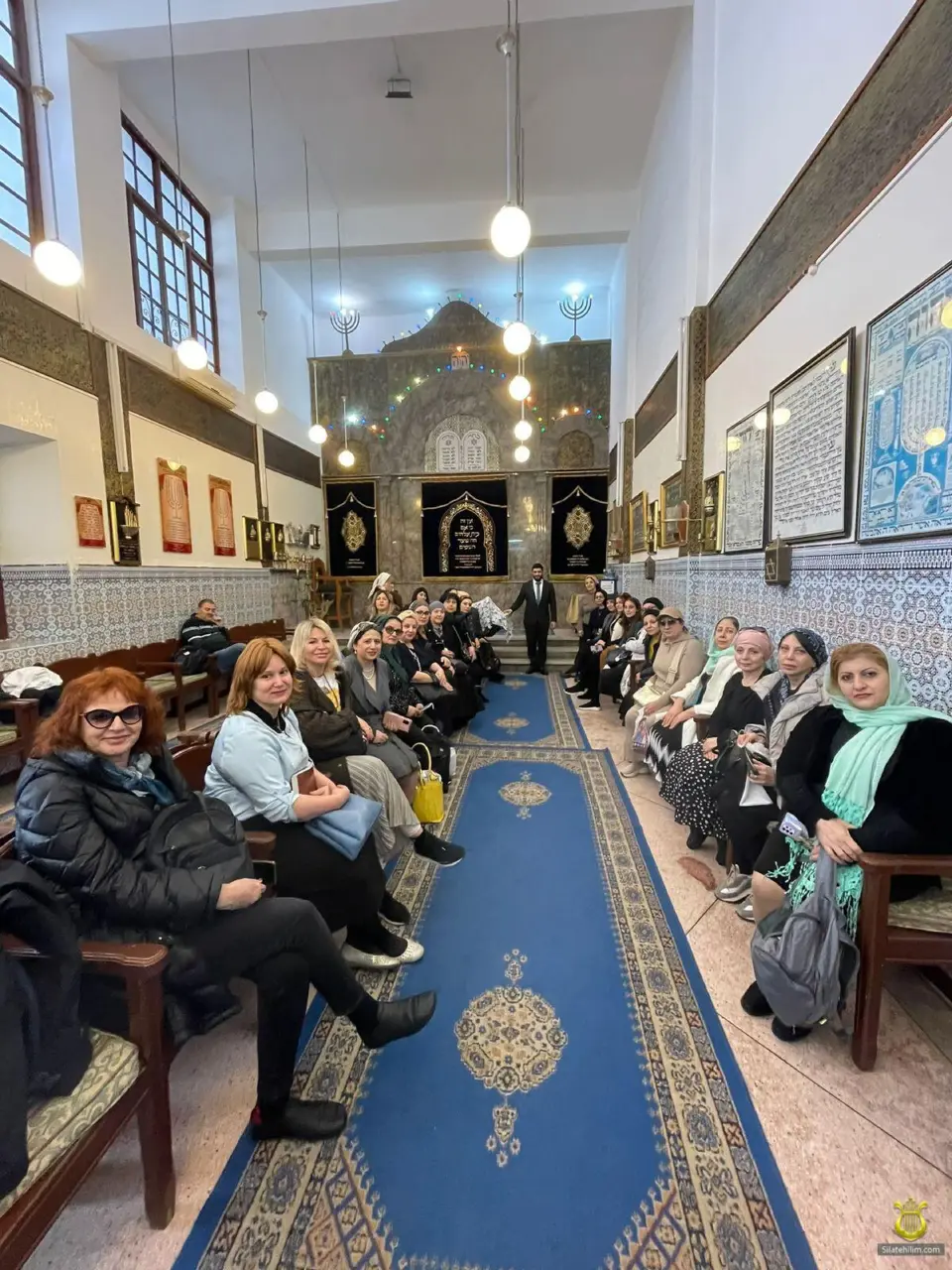
Nearby is the ancient synagogue where Rabbi Chaim Pinto ha-Gadol himself prayed.
 Salé and Tikkun Atzvut ve-Dikaon
We had been especially eager to visit Salé—the kever of the great
Rabbi Raphael Ankawa, Chief Rabbi of Morocco and a great Kabbalist.
Read the extraordinary story about
“Kav Melave” here to appreciate the stature of this tzadik.
Rafael Enkaoua
Here, at the tzadik’s kever, we performed a very rare
Tikkun Atzvut ve-Dikaon, described in the book of the great Kabbalist,
Mekubal Rabbi Salman Mutzafi—a tikkun involving walnuts. As we cracked the nuts in accordance with a סדר of special prayers, it was as though we were breaking apart all our worries and troubles.
Chefchaouen
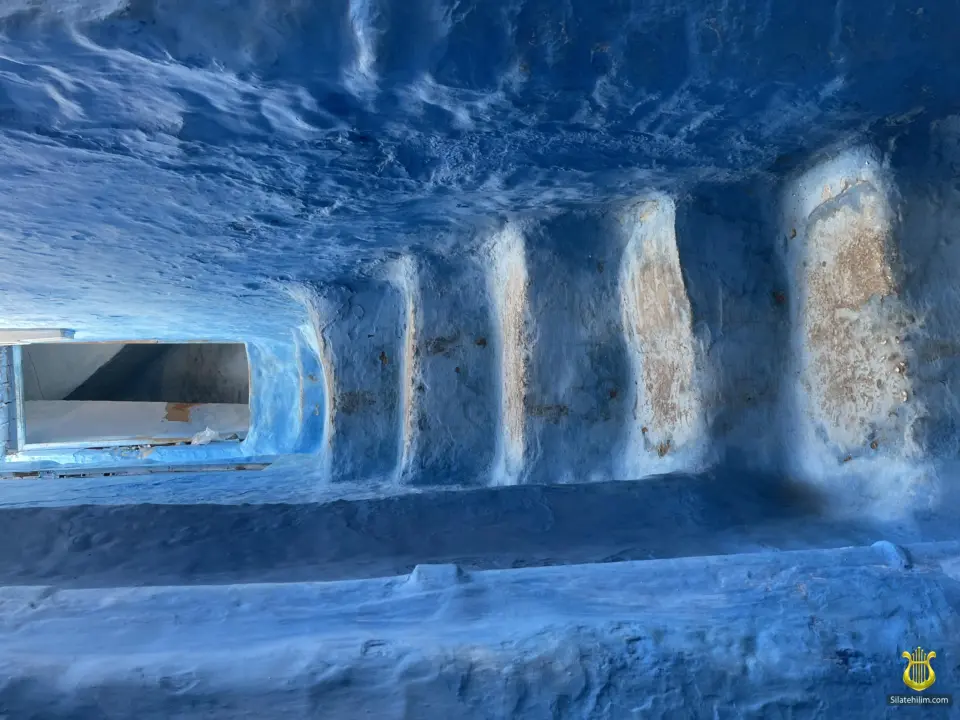
From Essaouira, we traveled to the blue city of Chefchaouen, founded by Jewish refugees from Spain. (Indeed, every city has preserved the memory that Moroccan Jews are descendants of the exiles from Spain.)
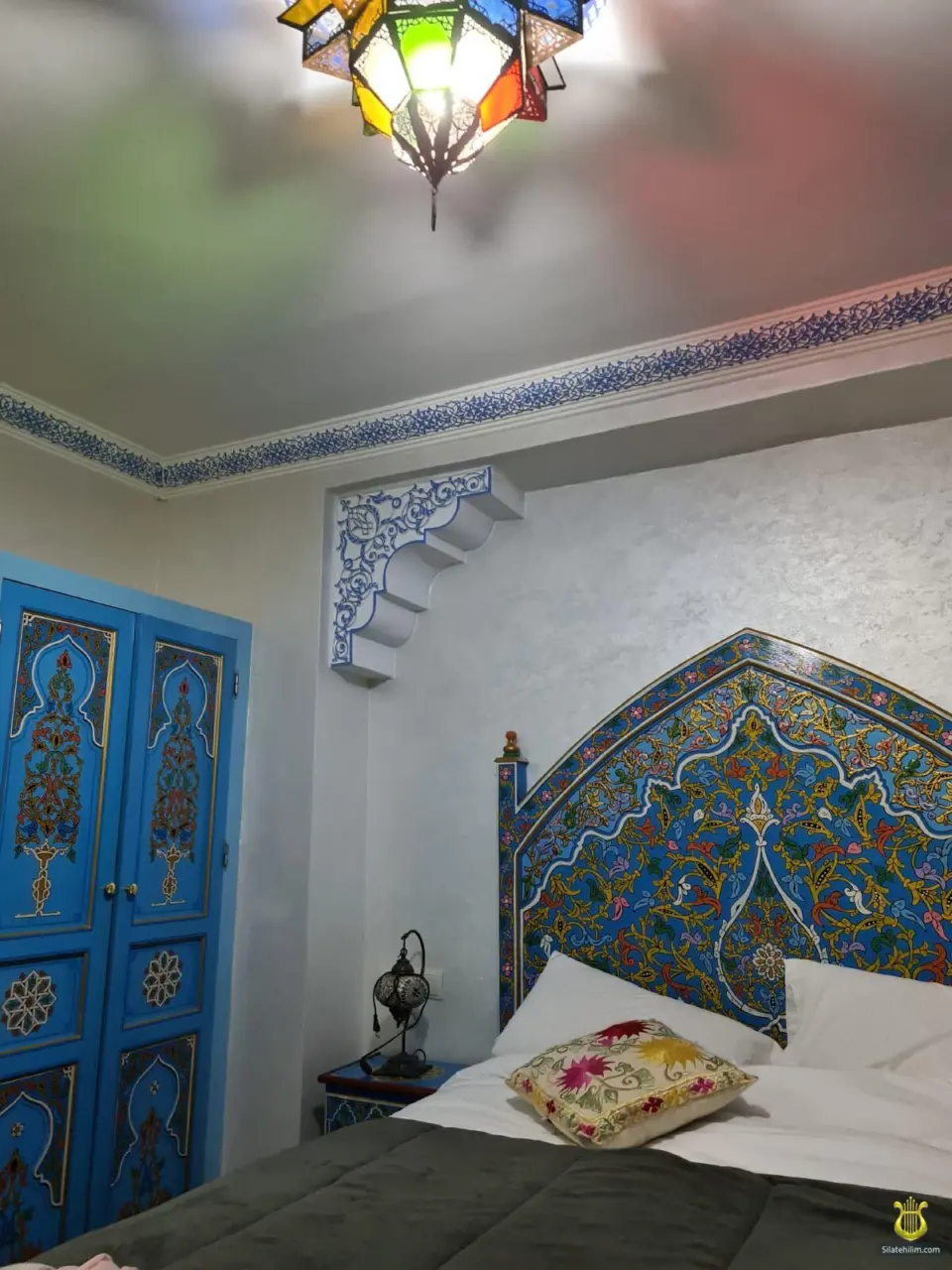
When we arrived at the hotel, we were initially apprehensive—we had been warned that in such a small, unique town there were only authentic hotels, so we should not expect anything special. But how astonished we were when we entered yet another fairy tale: a hotel in pure Moroccan style, as though we were on a film set surrounded by scenery.
This small, ancient Jewish town, breathtakingly beautiful, evoked many emotions.
The town’s streets, rising and descending, together with its blue color, seemed to symbolize the connection between the Jewish people and G-d.
At one of the town’s ancient water springs, we performed a beautiful segula for purchasing a home—the segula of
Rav Yitzchak Abuhatzeira, the uncle of
Baba Sali, whose yahrzeit fell on that day—
14 Shevat.
After enjoying the beauty of Chefchaouen, we continued northward.
Tetouan
Our route took us to Tetouan, in northernmost Morocco, 40 minutes from Gibraltar, to the great Gaon,
Rabbi Yitzchak Ben Walid, author of
“Vayomer Yitzchak”, which is studied in yeshivot throughout the world.
Yitzchak Ben Walid
Baba Sali’s son, Baba Meir Abuhatzeira, testified that he had never before felt such holiness as he experienced at the grave of the saintly and revered
Rav Yitzchak Ben Walid.
He was a wonder-worker with the face of an angel. When he touched infertile or seriously ill people with his cane, they were immediately healed.
Ouazzane–Ashiyn
Our route then took us to Ouazzane, to the greatest
Rabbi David Ben Amram.
Amram Ben Diwan
At the kever of
Rabbi David Ben Amram, the scent of miracles was everywhere. Instead of an ordinary grave, there was a mound of charred stones—the tzadik had instructed that no monument be erected and that he be buried beneath an olive tree.
For these 200 years, a tradition has continued in which Jews from around the world come and light candles on the stones at his kever, especially on Lag BaOmer, when the candle flames can be seen even in nearby villages—and during all this time, the fire has never spread to the tree standing beside it.
The fruit of this olive tree works miracles, healing people from eye ailments and other illnesses. Even the dry olives scattered around the kever are considered a segula for many troubles.
Many pilgrims testify that they have repeatedly seen a dove circling above the grave of
Rabbi Amram Ben Diwan.
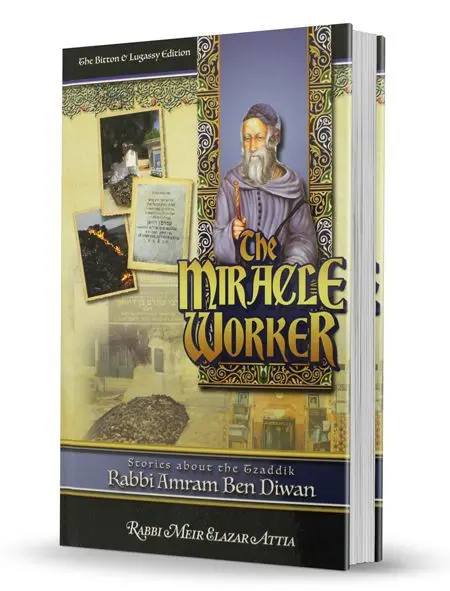
The book
“Miracle Worker” recounts the remarkable miracles that have occurred here in Ashiyn.
 Fez
Fez
The climax of the trip was, of course, Fez—a breathtaking fortified city with one of the oldest Jewish communities.
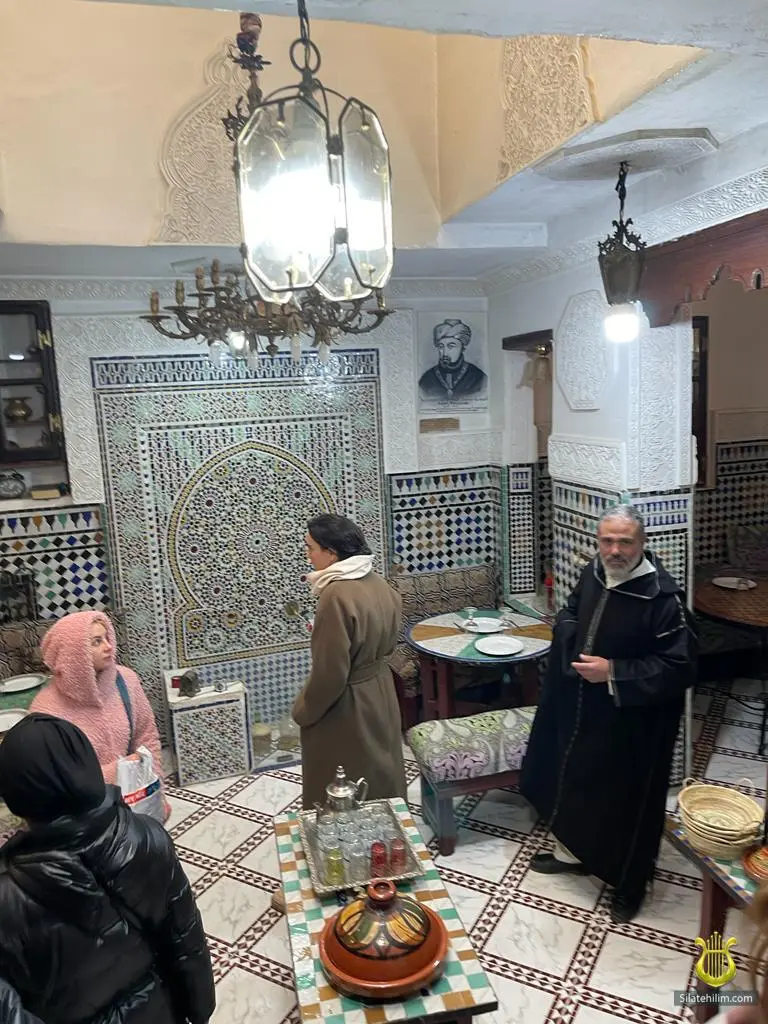
Here we visited the home of the Rambam, which preserves some household items, as well as the synagogue where the Rambam himself prayed, and we saw an ancient mikveh.
It was here in Fez that the tzadekket
Solika Hadju'el was buried—a 14-year-old girl who chose death rather than abandon her faith and convert to Islam under pressure. There are remarkable segulot at her kever.
Sol Hachuel
At this same cemetery, we visited the Me'arat Tzadikim, including Morocco’s Chief Rabbi,
Rabbi Shlomo Aben Danan, his son,
Rabbi Moshe Aben Danan, and the renowned Moroccan rabbis
Rabbi Meir Israel and
Rabbi Yedidya Monsoniego.
Here we performed the much-needed
Tikkun Shidduch.
Shlomo Aben Danan
Against the backdrop of Solika’s kever, one can see a beautiful and unusual grave. It is the final resting place of the great
Rabbi Yehuda Ben Atar, grandfather of the
Or HaChaim ha-Kadosh, who was thrown into a pit with hungry lions. Instead of tearing him apart, they listened to Torah from his lips. Read about this extraordinary tzadik here:
Yehuda Ibn Attar
Rabat
The wonderful conclusion to our trip to Morocco was a visit to the home of the Gaon,
Rav Yeshayahu Pinto. While preparing for the trip, we very much wanted to meet with Rav Pinto and checked when he would be in Morocco, but we were disappointed to learn that he would only be there in March.
Through hashgachah pratit and the kindness of Heaven,
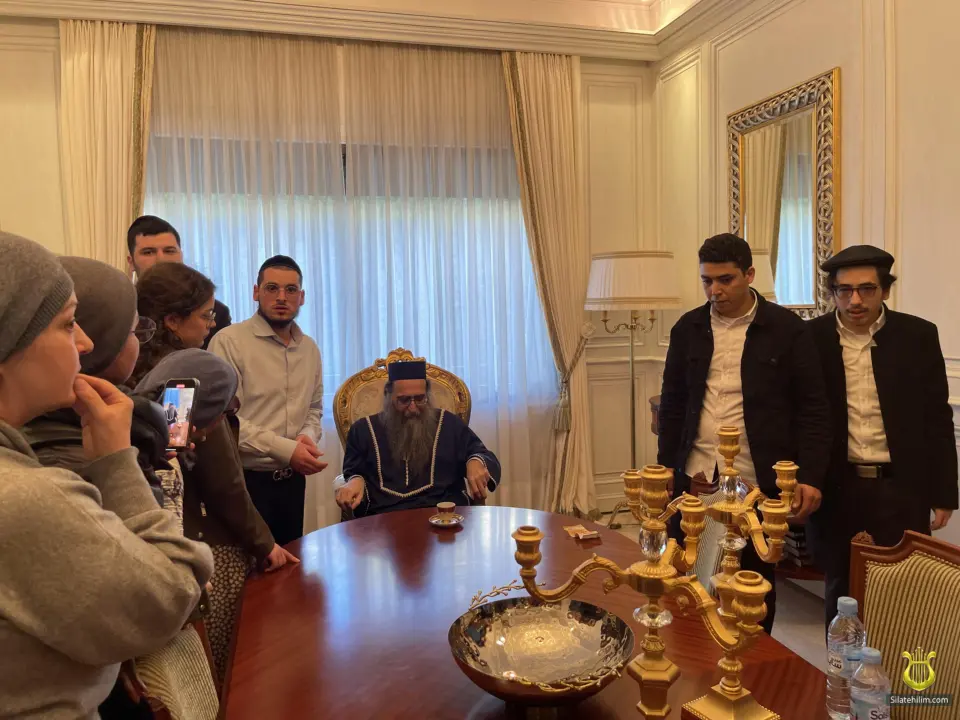
Gaon Yeshayahu Pinto flew to Rabat during our trip. After receiving a call from our close friends, he agreed to receive us. The entire group of 35 people received a berachah and good wishes from the Gaon.
Thank You, Hashem, for such a truly magnificent trip to the Kivrei Tzadikim in Morocco—one filled with miracles and holiness!
May the merit of the Moroccan tzadikim protect Am Yisrael!
Please note: some articles on our site contain the holy Names of the Almighty. If you print these articles, they may not be thrown away or destroyed. Please handle printed copies with care and respect.