Friday — a Double Portion of Manna
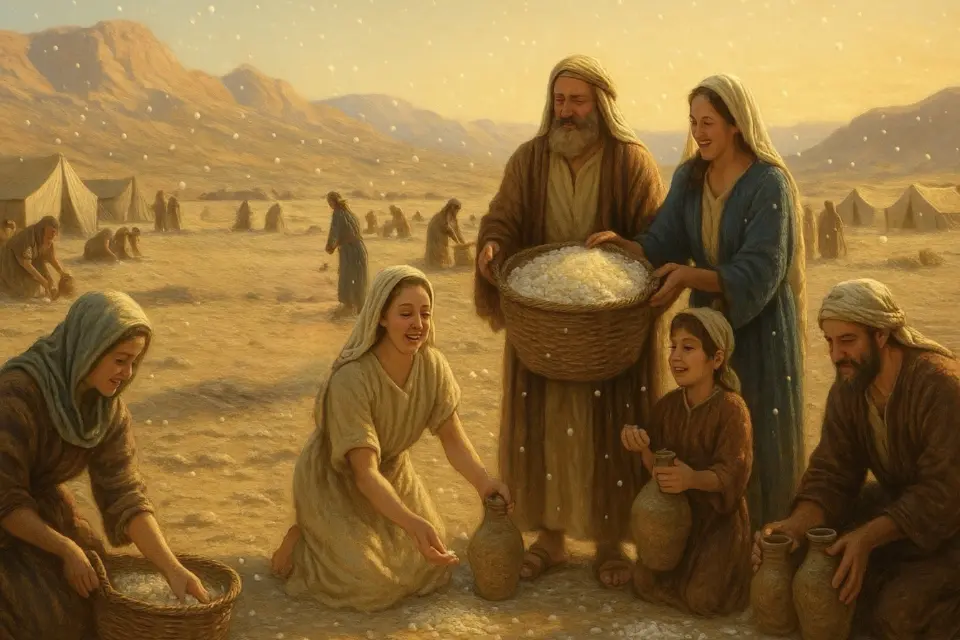
The Torah, in Parashat Beshalach (16:22), describes how on the sixth day the Jewish people received a double portion of manna: “On the sixth day they gathered a double portion of food, two omers for each person; and all the leaders of the community came and told Moshe.”
Rabbi Rahamim Nissim Palagi, in
“Yafeh LaLev”, writes that one who cannot recite
Parashat HaMan every day should recite it on Friday, because on that day it fell in a quantity twice the usual amount.
On Friday—Yom Shishi—the measure of an omer was doubled; this is written by
Rabbi Chaim Palagi.
It is written in
“Imrei Pinchas” that it is beneficial to read
Parashat HaMan immediately after
“Aleinu Leshabeach”.
The
Midrash Talpiot writes that it is also beneficial to read Parashat HaMan after
Havdalah as a segula for good fortune.
There was a tzadik who named his son Man so that he would not forget to recite Parashat HaMan every day—for one must ask for parnassah every day.
Sefer “Shefa Chaim” relates a teaching of the Chacham Rabbi Yeshayah Tzvi: when the manna fell, the Clouds of Glory were above Am Yisrael, and the gentiles could not see the manna falling for Am Yisrael, because the Clouds of Glory protected the manna from the ayin hara. Today we no longer have the Clouds of Glory, but we awaken each day and the manna is already in our pockets.
It is written in
“Sefer HaManhig”, one of the works of our early Sages in the Jerusalem Talmud, that one who reads
Parashat HaMan every day is a ben Olam, because he does not sin—he does not steal, but asks Hashem for his livelihood.
Rabbeinu
“Yafeh LaLev” writes that
תפ “tav-pei” (480) words appear in
Parashat HaMan. The word
פתאום “pit'om” (suddenly) begins with these letters, indicating that one’s livelihood can change at any moment—in other words, it can change “suddenly,”
“pit'om”.
Parnassah on Friday
1. A segula for parnassah—reciting Parashat HaMan twice
Yanuka Gaon once spoke about his weekly Friday practice of reading
Parashat HaMan twice. Since the manna fell twice on Friday—once for Friday and once for Shabbat—it is beneficial to read
Parashat HaMan twice on Friday.
Parashat HaMan in the format of "Shnayim Mikra ve-Echad Targum" - Aramaic
2. A segula for parnassah—“Bameh Madlikin”
Yanuka Gaon shared a precious teaching: there is great merit in reading the second chapter of Mishnayot Shabbat,
“Bameh Madlikin” (“With what may one kindle, and with what may one not kindle”), on Friday afternoon. Nowadays, many neglect this practice. But
Rav Pinchas of Koretz said: “One who does not read
“Bameh Madlikin” on Erev Shabbat will lack a livelihood throughout the entire week.”
The Mishnah “Bameh Madlikin” — A Segula for Livelihood on Friday Before Shabbat
3. A knife for parnassah
There is a segula to sharpen one’s parnassah knife specifically on Friday.
4. Hafrashat Challah
Mishnah Berurah and Ben Ish Chai, in the name of the
Arizal, along with other Chazal, explain in detail the significance of separating challah specifically on Friday: “Adam HaRishon, who was created on Friday, was called ‘the challah of the world.’ Because of the sin of the Eitz HaDaat, Chavah spoiled this ‘challah dough’ on Friday. Women rectify this act through the mitzvah of Hafrashat Challah specifically on Friday—Erev Shabbat.”
Let us take note of this, knowing how important the mitzvah of Hafrashat Challah is for parnassah.
30 Rare Segulot of Hafrashat Challah
(translated by the Silatehilim website from a lesson by Gaon Rabbi Yitzchak Cohen, a student of “Matok MiDvash,” and from a lesson by Yanuka Gaon)
Was this helpful?
100% of readers found this article helpful (62 votes).
Please note: some articles on our site contain the holy Names of the Almighty. If you print these articles, they may not be thrown away or destroyed. Please handle printed copies with care and respect.