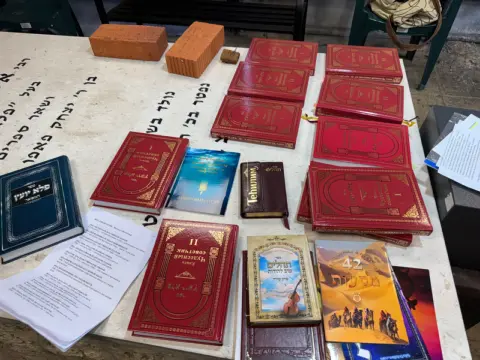
Mekubal Rabbi Salman Mutzafi, alav ha-shalom, taught that when a person comes to the kever of a tzadik, he should take a small stone in his left hand and place it on the kever, so that the tzadik's soul will descend and hear that person. When the person leaves the kever, he should remove the stone so that the tzadik's soul can return to the place from which it descended.
(Place the left hand on the grave and say):
Ribono shel olam, Adon ha-selichot, ve-Adon kol ha-neshamot, E-l Elohei ha-ruchot le-chol basar, asher be-yado nefesh kol chai ve-ruach kol basar ish.
Yehi ratzon milfanecha, Ad-nai Eloheinu ve-Elohei avoteinu, she-titmalle be-rachamim al kol ha-nefashot ve-ha-ruchot, ve-ha-neshamot shel amcha Yisrael, u-vichlalom yehemu na rachamecha al nefesh, ruach u-neshamah shel (name), ha-shochev be-kever zeh, ve-titnaheg imahem be-middat ha-chesed ve-ha-rachamim, ve-tikanes lahem lifnei ve-lifnim mi-shurat ha-din, ve-ta'aleh be-ma'alot le-or be-or panecha, ve-lehanot mi-ziv Shechinatecha, ve-yanuchu al mishkevotam be-shalom ad she-ya'amdu le-goralam le-ketz ha-yamim.
(For a father or mother):If my father or mother, who lies in this grave, is subject to any judgment, behold, I am an atonement for his or her resting place, so that no judgment and no suffering should befall him or her. May he or she have only a proper rest among the tzadikim. Amen, so may it be Your will!(Continue)And in the merit of the one who lies in this grave, and in the merit of our holy forefathers who rest in Hebron, and in the merit of all the tzadikim and pious ones who plead for us, may You have mercy on us and grant us long life, a good life, a blessed life, a life of ample livelihood, a life of strong bones, a life containing fear of sin, a life without shame or disgrace, a life in which we complete the rectification of our nefesh, ruach and neshamah, and do not come before You in shame. May You grant us the merit of seeing the coming of Mashiach speedily in our days, for we have awaited Your salvation all day long. May the verse be fulfilled concerning us: “He will destroy death forever, and the L-rd G-d will wipe away tears from every face; He will remove the disgrace of His people from the entire earth, for the L-rd has spoken.”“May the dead come to life; may My corpses arise. Awaken and sing, you who dwell in the dust, for Your dew is dew of lights, and the earth will cast out the dead.” And He, being merciful, will atone for iniquity and not destroy; He will repeatedly restrain His anger and not arouse all His wrath.Do it for the sake of Your Name; do it for the sake of Your right hand; do it for the sake of Your Torah; do it for the sake of Your holiness. The L-rd will guide you constantly and satisfy your soul with radiant light, and strengthen your bones. You will be like a watered garden and like a spring whose waters do not fail. Rest in peace and sleep in peace until the arrival of the Comforter who proclaims peace.(Then recite Psalms 16, 17, 20 and 23; if there is a minyan, also recite Kaddish.)Guidelines for Being in a Cemetery
1. Anyone who sees Jewish graves after an interval of 30 days or more should recite the following blessing:
בָּרוּךְ אַתָּה ה’ אֱלֹ-הֵינוּ מֶלֶךְ הָעוֹלָם, אֲשֶׁר יָצַר אֶתְכֶם בַּדִּין וְזָן אֶתְכֶם בַּדִּין, וְכִלְכֵּל אֶתְכֶם בַּדִּין, וְהֵמִית אֶתְכֶם בַּדִּין, וְיוֹדֵעַ מִסְפַּר כֻּלְּכֶם, וְהוּא עָתִיד לְהַחֲיוֹתְכֶם וּלְקַיֵּם אֶתְכֶם בַּדִּין, וְעָתִיד לְהַחֲיוֹתְכֶם בַּדִּין לְחַיֵּי הָעוֹלָם הַבָּא, בָּרוּךְ אַתָּה ה’ מְחַיֵּה הַמֵּתִים.
“Baruch Atah Ad-nai Eloheinu Melech ha-olam, asher yatzar etchem ba-din, ve-zan etchem ba-din, ve-chilkel etchem ba-din, ve-hemmit etchem ba-din, ve-yode'a mispar kulchem, ve-Hu atid le-hachayotchem u-lekayem etchem ba-din, ve-atid le-hachayotchem ba-din le-chayei ha-olam ha-ba. Baruch Atah Ad-nai, mechayeh ha-metim!”
(Blessed are You, G-d, our L-rd, King of the universe, Who created you through judgment, nourished you through judgment, sustained you through judgment, and brought death upon you through judgment; He knows the number of all of you, and in the future He will revive you and sustain you through judgment, and will revive you through judgment for life in the World to Come. Blessed are You, G-d, Who revives the dead.)
There are several versions of this blessing, depending on one's tradition. It is therefore preferable to recite it from a siddur. This blessing should not be recited at a grave where only one person is buried, since it addresses the dead in the plural.
2. It is also customary to add this passage from the Amidah:
אַתָּה גִבּור לְעולָם ה’ מְחַיֵּה מֵתִים אַתָּה רַב לְהושִׁיעַ מורִיד הַטָּל מְכַלְכֵּל חַיִּים בְּחֶסֶד, מְחַיֵּה מֵתִים בְּרַחֲמִים רַבִּים. סומֵךְ נופְלִים וְרופֵא חולִים וּמַתִּיר אֲסוּרִים. וּמְקַיֵּם אֱמוּנָתו לִישֵׁנֵי עָפָר. מִי כָמוךָ בַּעַל גְּבוּרות וּמִי דומֶה לָךְ. מֶלֶךְ מֵמִית וּמְחַיֵּה וּמַצְמִיחַ יְשׁוּעָה וְנֶאֱמָן אַתָּה לְהַחֲיות מֵתִים:
“Atah gibor le-olam, Ad-nai, mechayeh metim atah, rav lehoshia, morid ha-tal. Mechal kel chayim be-chesed, mechayeh metim be-rachamim rabbim, somech noflim, ve-rofe cholim, u-matir asurim, u-mekayem emunato li-yshenei afar. Mi chamocha ba'al gevurot, u-mi domeh lach? Melech memit u-mechayeh u-matzmiach yeshuah. Ve-ne'eman Atah le-hachayot metim. Baruch Atah Ad-nai, mechayeh ha-metim.”
(You are mighty forever, G-d; You revive the dead; You are mighty in salvation; You make the dew descend; You sustain the living with kindness, revive the dead with abundant mercy, support the fallen, heal the sick, release the bound, and keep faith with those who sleep in the dust. Who is like You, Master of mighty deeds? Who can be compared to You? King Who brings death and gives life, and causes salvation to flourish. And You are faithful in reviving the dead.)
3. Anyone traveling along a road who sees a cemetery from the window of a car or bus should recite the blessing. There is also an opinion that the blessing should be recited only while in the cemetery or within four cubits—approximately two meters—of a grave.
The blessing should be recited only when one sees part of a grave that is connected to the ground. If one sees only a dome erected over a grave or something similar, the blessing should not be recited.
4. Anyone who sees burial caves in which the graves themselves are not visible—for example, the cave where Rabbi Shimon bar Yochai is buried in Meron, or the cave in Hebron where our forefathers are buried—should not recite the blessing, since the graves themselves cannot be seen there.
5. A person who lives near a cemetery may not recite this blessing, since he sees the graves more often than once every 30 days.
(According to Eliyahu Ariel, “Sha'ar Ha-Ayin,” ch. 16)
(From the book “Beit Tefillah,” “Bracha ve-Yeshuah,” published by Yahad)
Was this helpful?
100% of readers found this article helpful (57 votes).
Please note: some articles on our site contain the holy Names of the Almighty. If you print these articles, they may not be thrown away or destroyed. Please handle printed copies with care and respect.
Material from our site may be copied for the purpose of spreading Torah, provided a link to Silatehilim.com is included. Any use of the site's material in print publications or for commercial purposes is prohibited without the rights holder's consent.