

 Sila Tehilim
כוחה של תהילים
silatehilim.com
Sila Tehilim
כוחה של תהילים
silatehilim.com
28 Iyar · Yahrzeit
Shmuel HaNavi
Rabbi Shmuel ben Elkana HaNavi
Yahrzeit - 28 Iyar
Burial place - Jerusalem (Ramot), Highway 436
The prophet Shmuel was the last judge of Israel before the period of the Kings. G-d instructed him to anoint Shaul as the first king of Israel, and afterward to anoint King David as his successor.
Shmuel is considered the "Father of all the Prophets," second only to Moshe Rabbeinu and Aharon HaKohen.
According to the Arizal, the level of Shmuel HaNavi's soul stems from Cain, the son of Adam.
Shmuel also attained an ibbur of the souls of Nadav and Avihu, the sons of Aharon HaKohen. (Shaar HaGilgulim, Hakdama 32)
Shmuel's soul returned again as Aviyah, son of King Yeravam. (Shaar HaGilgulim, Hakdama 33)
In more recent history, Rabbi Shmuel Shmelke of Nikolsburg (1726-1778), a disciple of the Maggid of Mezeritch, was considered to carry a spark of the soul of Shmuel HaNavi.
The Story of Shmuel HaNavi's Birth
Elkana had two wives, Chana and Peninah. Chana was childless and after nineteen years of marriage had not borne any children. Peninah, on the other hand, had ten children. Our Sages teach that the Almighty loves to send trials specifically to the righteous, because He wants to hear their prayers.
In addition to the grief of having no children, Chana also suffered from Peninah's taunts about her childlessness. Peninah would say, "If you were righteous, the Almighty would not have withheld children from you!" Some commentators explain that Peninah only wanted to increase Chana's suffering so that she would pray more fervently and persistently, and that the Almighty would sooner answer her prayer.
Elkana loved Chana very much, despite her childlessness.
"Don't cry, you are dearer to me than ten sons," he would tell her. "Rejoice in what you have, for this is the will of the Almighty."
But his words did not comfort Chana; she did not accept her childlessness as a final verdict. Year after year she went with her husband to the Tabernacle and prayed there for the Almighty to grant her a child. She made a vow that if she bore a son, she would dedicate him to the Almighty and give him over to serve in the Tabernacle.
Chana prayed silently, so that her voice could not be heard, only her lips moved.
When the Kohen Gadol Eli saw Chana praying, he thought she was drunk (she prayed while trembling). So he consulted the Urim and Tumim, where the letters appeared:
"Shin, Kaf, Reish, Hei" - which, when combined, gave the Kohen Gadol Eli the word "shikura" (drunk)
"And he asks Chana:
- Are you drunk?" - to which Chana replies:
- You read it incorrectly, you made a mistake - I am not drunk, not 'shikura' - I am 'kesarah' (the same letters) - like Sarah (childless), I have come to weep over my childlessness."
And indeed, upon returning home, Chana soon became pregnant and gave birth to a son. She named her son Shmuel, which means "G-d has heard."
Shmuel was an extraordinary child; Ha-Shem endowed him with intellect and spiritual strength beyond his years.
His righteous mother, though she had waited for him so long and loved him with all her heart, fulfilled her vow and, as soon as it became possible, brought him to the Tabernacle and handed him over to Eli, who raised him in holiness as a servant of the Almighty.
Each year, when coming to the Tabernacle, Chana would bring her son a new robe.
On the day Chana brought Shmuel to the Tabernacle, a spirit of prophecy descended upon her, and she composed a hymn of praise to the Almighty, which we now read every year on the Day of Judgment.
This hymn recalls how difficult it was for Chana to part with her son, and contains prophecies of what will happen to the Jewish people until the end of days.
Chana's prayer is one of the special prayers in Judaism. Several laws of prayer in general were derived from her example. For instance, it is said of Chana that her voice could not be heard during her prayer. From this, the law was derived that one must pray quietly, and it is forbidden to raise one's voice. At the same time, Chana's lips moved, and therefore, according to the law, one must form the words with one's lips while praying.
In some Eastern communities, excerpts from Chana's prayer are included in the daily morning prayer. Women add: "Master of the Universe! Just as You heard Chana's prayer, so too hear my prayer!"
Chana was a great woman. She rose above her troubles and trials. Her praise of the Almighty became the foundation of our prayer. Her prayer was able to annul the Almighty's decree. She overcame her personal feelings and dedicated the most precious thing she had - her son - to the Almighty.
It is interesting that Shmuel HaNavi lived 52 years, which equals the gematria of the word "ben" - (son).
Chana's Prayer - or How to Reach the Heavens
Hannah’s Prayer – How to Reach the Heavens
Chana and Peninah - Reward for Tzarot
Hannah and Peninnah — a Reward for Tzarot, or: Do Not Oppress
Pilgrimage site:
Grave: Shmuel HaNavi
Articles about this tzadik 22
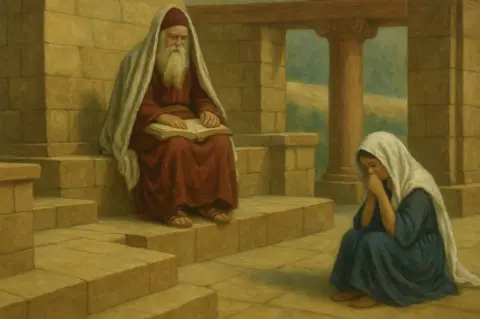 Hannah’s Prayer – How to Reach the Heavens
20.05.2018
Hannah’s Prayer – How to Reach the Heavens
20.05.2018
 Gilgul Neshamot
18.04.2021
Gilgul Neshamot
18.04.2021
 The Power of Benjamin—7 Bows to Esau—Who Will Defeat Amalek
02.02.2019
The Power of Benjamin—7 Bows to Esau—Who Will Defeat Amalek
02.02.2019
 Lighting Candles for Tzadikim with Their Mothers’ Names
14.11.2023
Lighting Candles for Tzadikim with Their Mothers’ Names
14.11.2023
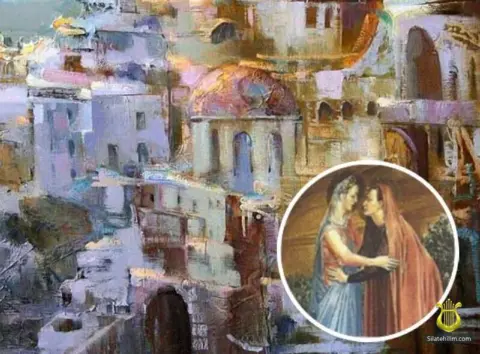 Nitzavet bat Adael—mother of David HaMelech
12.11.2019
Nitzavet bat Adael—mother of David HaMelech
12.11.2019
 Tehillim 82, or Where David HaMelech Encoded His Mother's Name
13.02.2024
Tehillim 82, or Where David HaMelech Encoded His Mother's Name
13.02.2024
 Segulot after Birkot HaShachar - Secrets of the Jewish Morning
19.11.2022
Segulot after Birkot HaShachar - Secrets of the Jewish Morning
19.11.2022
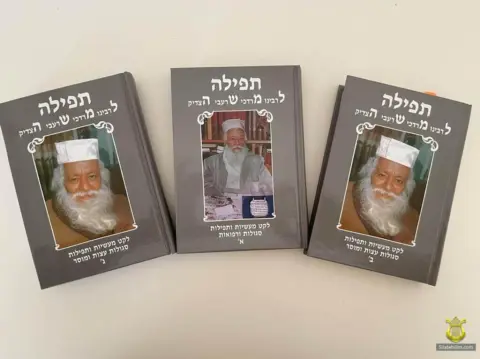 Seder Melaveh Malkah of the Mekubal Rabbi Mordechai Sharabi
29.09.2021
Seder Melaveh Malkah of the Mekubal Rabbi Mordechai Sharabi
29.09.2021
 Kavanot and Segulot of the Amidah
24.05.2021
Kavanot and Segulot of the Amidah
24.05.2021
 Segulot for Infertility from Rav Moshe Sternbuch
06.08.2020
Prayer of Hannah (Transliterated)
29.10.2019
Segulot for Infertility from Rav Moshe Sternbuch
06.08.2020
Prayer of Hannah (Transliterated)
29.10.2019
 Zohar on Tehillim – The 70 Years of a Person’s Life
12.08.2019
Zohar on Tehillim – The 70 Years of a Person’s Life
12.08.2019
Source: https://silatehilim.com/en/events/шмуэль-а-нави/
Material from our site may be copied for the purpose of spreading Torah, provided a link to Silatehilim.com is included. Any use of the site's material in print publications or for commercial purposes is prohibited without the rights holder's consent.