Kavanot Hafrashat Challah
Kavanot Hafrashat Challah
It is stated in the holy books that the mitzvah of challah is greatly cherished. (Shabbat, 32b)
In the Torah, one who gives challah to a Kohen (in the days of the Temple) receives a blessing, as it is written (Ezekiel 44:30): “The first portion separated from your dough shall be given to the Kohen, in order to bring blessing into your home.”
The entire world was created in the merit of fulfilling the mitzvah of separating challah. In the merit of the mitzvah of challah, the Jewish people merited entering the Land of Israel. (“Sifra Zuta,” Parshat Shelach, section 17)
To one who fulfills this mitzvah, the words of Scripture are addressed (Kohelet 9:7): “Go, eat your bread with joy and drink your wine with a glad heart.” (“Bamidbar Rabbah,” 17:2)
Just as bread is the basic and most common form of food, the Creator wished to give a person the opportunity to continually fulfill His will by separating challah from the dough, so that through this mitzvah our bread would be blessed and serve as nourishment not only for the body, but also for the soul. (“Sefer HaChinuch,” mitzvah 385)
Challah is one of the three mitzvot entrusted specifically to women (the others being the laws of family purity—niddah—and lighting Shabbat and holiday candles—hadlakat ha-ner). By separating challah, a Jewish woman rectifies the sin of Chavah, who, by giving Adam the forbidden fruit, brought death into the world.
The Jerusalem Talmud calls Adam the challah of the world. For the world was created from earth, and the first portion of this “mixture” was separated by the Holy One, blessed be He, in order to create man—the crown of creation—as it is written (Genesis 2:7): “And the L-rd G-d formed man from the dust of the earth, and He breathed into his nostrils the soul of life, and man became a living soul.” The gematria of the name Adam is 45; the gematria of the word “challah” is 43.
As a living soul, a person is called upon to elevate the materiality of this world to Heaven, sanctify the earth, and transform everything into the glory of the Creator. For this mission, the L-rd breathed a holy soul into Adam’s mouth and placed him in Gan Eden, so that he would guard and cultivate it. At that time, man was freed from all material concerns: the angels roasted meat for him and poured wine into his cup.
After the sin, Adam was banished from the Garden, and he now had to earn his daily bread by the sweat of his brow.
By separating a portion of the dough so that the Kohanim could devote themselves entirely to serving in the Temple, we purify and elevate the world for the glory of the Creator. In this way, we directly rectify the sin committed at the beginning of creation. The beginning (the first portion of the dough, challah) atones for what was broken at the beginning (on the sixth day of creation).
The blessing of material abundance descends into this world specifically through fulfilling the mitzvah of challah.
This mitzvah possesses 14 healing qualities.
Kavanot Challah
Flour—as we sift the flour, we sing, because joy is the key to the success of every spiritual endeavor.
Flour symbolizes strength, and we ask Hashem to give us strength in serving Him.
Also, as we sift the flour, we separate the bad from the good, so that only goodness remains within us.
Sugar—we add sugar so that we may experience the sweetness we would like to feel in our family life; so that all the mitzvot of our families will have a sweet taste and be performed without bitterness. We add sugar in order to learn to see the “sweetness” at every stage of our lives.
Yeast—we add yeast as a symbol of elevation, so that every member of our family will rise, like yeast, both spiritually and materially.
Water is a symbol of Torah. As we add water, we ask Hashem to fill our homes and our family members with Torah, and to teach us to thirst for Torah just as we thirst for water. Water is also a symbol of life, and a symbol of the connection between body and soul.
Salt—a symbol of the eternal covenant: one of salt’s principal qualities is its ability to preserve and prevent spoilage;
the second is its ability to give food flavor.
Therefore, the Creator commanded that sacrifices be brought with salt, making it a symbol of the covenant.
Oil—a symbol of anointing and blessing. As we slowly add the oil, we name each member of the family and, as it were, “perform an anointing ceremony” and pray that the Holy One, blessed be He, will give each person what he or she needs.
Egg—a symbol of the soul. As we add the egg, we ask Hashem to help us fulfill the purpose of our soul in this gilgul—be-Rachamim Rabim, ve-Chesed, ve-Ahavah.
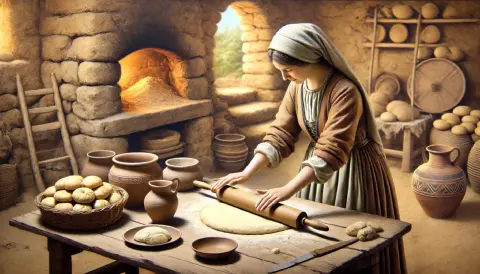
Kneading the dough—the time for prayer
As we knead the dough, we pray fervently that fulfilling this mitzvah will help rectify the mistake of the first woman on earth, Chavah. She brought death into the world, while we will bring life, annulling death and wiping away the tears from every face.
We ask the Holy One, blessed be He, that this challah be accepted as though we had brought an offering in the Temple—an offering that washes away all our transgressions and helps us be born anew.
As we knead the dough, we feel that we are participating in the process of Creation.
We cover the dough and pray:
“Ribono shel Olam, make it so that this dough contains the blessing that was in the dough of our Foremother Sarah, so that everyone who eats this bread will draw closer to You and open his or her heart to serving You.”
It is now good to recite Tehillim 20 seven times.
Place matches or garlic on top of the covered dough (to help it rise quickly), and put it in a warm place.
Hafrashat Challah—separating challah
When the dough has risen—before separating challah, give tzedakah (a minimum of 18, whose gematria is chai, “life”).
Then, saying: “Hareini madlikah ner le-chvod Rabbi Shimon bar Yochai ve-Rabbi Meir Baal HaNes”—light two candles.
Ask for personal matters in the merit of the tzadikim.
It is very important that, while performing the mitzvah, the woman be dressed modestly (with her elbows, knees, and collarbones covered) and have her head covered.
At this time, you will stand before the Holy One, blessed be He, and ask Him. Therefore, make sure that your prayer is pleasing to Hashem and accepted by Him.
Now, by the candle, recite Psalm 23—to open the Gates of Prayer.
Perform netilat yadayim (washing the hands). Take a small sheet of foil, large enough to wrap a piece of dough the size of an egg.
Prayer before Hafrashat Challah:
“Hareini ba lekayem mitzvat hafrashat challah letaken et shorsha ba-makom elyon, laasot nachat ruach le-yotzreinu ve-laasot ratzon bor'einu.
Vihi Noam Ad-nai Elo-heinu aleinu, u-maaseh yadeinu konenah aleinu, u-maaseh yadeinu konenehu.” (twice)
Before separating challah, state for whom you are separating it:
Refuah Shleimah (healing), shidduch (marriage), parnassah tovah (livelihood), and so on.
Now, Hafrashat challah —the separation of challah.
Take a piece of dough the size of a kezayit (the size of an egg); it may be the size of a fist. Without tearing it completely away from the rest of the dough, recite the prayer:
Prayer
ברוך אתה אדוני אלוהינו מלך העולם אֲשׁר קִדְּשׁנוּ בְּמִצְוֹתָיו, וְצִיוָּנוּ לְהַפְרִישׁ חַלָּה תְּרוּמָה
ברוך אתה אדוני אלוהינו מלך העולם אֲשׁר קִדְּשׁנוּ בְּמִצְוֹתָיו, וְצִיוָּנוּ לְהַפְרִישׁ חַלָּה מןהעסה
“Baruch Atah Ado-nai, Elo-heinu Melech ha-Olam, asher kidshanu be-mitzvotav ve-tzivanu le-hafrish challah terumah (for Sephardim) / min ha-isah (for Ashkenazim).”
(Blessed are You, L-rd our G-d, King of the universe, who has sanctified us with His commandments and commanded us to separate challah).
At this point, separate the dough from the main portion, raise the piece in your hands, and say:
הרי זו חלה - “harei zo challah” - (may this be challah).
Holding the separated challah in your hand and closing your eyes, ask Hashem for what is most important to you and your loved ones.
“Yehi ratzon milfanecha Ad-nai Elo-heinu ve-Elohei avoteinu. Sheyibane Beit HaMikdash bimherah ve-yameinu. Ve-ten chelkeinu be-Toratecha. Ve-sham naavodcha be-yirah kimei olam u-kshanim kadmoniyot. Ve-arevah la-Ad-nai minchat Yehudah ve-Yerushalayim, kimei olam u-kshanim kadmoniyot.”
(May it be Your will, L-rd our G-d and G-d of our fathers, that the Temple be rebuilt speedily, in our days. And grant us a portion in Your Torah. And there we shall serve You with awe, as in days of old and former years. And may the offering of Judah and Jerusalem be pleasing to the L-rd, as in days of old and former years).
Prayer after separating challah
יְהִי רָצוֹן מִלְּפָנֶיךָ, ה' אֱלֹהֵינוּ וֵאלֹהֵי אֲבוֹתֵינוּ, שֶׁמִּצְוַת הַפְרָשַׁת חַלָּה תֵּחָשֵׁב לִי כְּאִלּוּ קִיַּמְתִּיהָ בְּכָל פְּרָטֶיהָוְדִקְדּוּקֶיהָ, וְתֵחָשֵׁב הֲרָמַת הַחַלָּה שֶׁאֲנִי מְרִימָה כְּמוֹ הַקָּרְבָּן שֶׁהֻקְרַב עַל גַּבֵּי הַמִּזְבֵּחַ וְתִתְקַבֵּל בְּרָצוֹן. וּכְמוֹבִּזְמַן שֶׁבֵּית הַמִּקְדָּשׁ הָיָה קַיָּם, הָיְתָה הַחַלָּה נְתוּנָה לְכֹהֵן וְהָיְתָה זוֹ לְכַפָּרַת עֲווֹנוֹת, כָּךְ תִּהְיֶה הַפְרָשָׁה זוֹלְכַפָּרַת עֲווֹנוֹתַי, וְאָז אֶהְיֶה כְּאִלּוּ נוֹלַדְתִּי מֵחָדָשׁ נְקִיָּה מֵחֵטְא וְעָווֹן וְאוּכַל לְקַיֵּם מִצְוַת שַׁבַּת קֹדֶשׁ וְהַיָּמִיםהַטּוֹבִים עִם מישפחה שלי, לִהְיוֹת נִזּוֹנִים מִקְּדֻשַּׁת הַיָּמִים הָאֵלֶּה. וּבִזְכוּת מִצְוַת חַלָּה יִהְיוּ יְלָדֵינוּ נִזּוֹנִיםתָּמִיד מִיָּדָיו שֶׁל הַקָּדוֹשׁ בָּרוּךְ הוּא בְּרֹב רַחֲמָיו וַחֲסָדָיו וּבְרֹב אַהֲבָה. וּתְקַבֵּל מִצְוַת חַלָּה כְּאִלּוּ נָתַתִּי מַעֲשֵׂר. וּכְשֵׁם שֶׁהִנְנִי מְקַיֶּמֶת מִצְוַת חַלָּה בְּכָל לִבִּי, כָּךְ יִתְעוֹרְרוּ רַחֲמָיו שֶׁל הַקָּדוֹשׁ בָּרוּךְ הוּא לְשָׁמְרֵנִי מִצַּעַרוּמִמַּכְאוֹבִים כָּל הַיָּמִים. אָמֵן כֵּן יְהִי רָצוֹ
“Yehi ratzon milfanecha Ad-nai, Elo-heinu ve-Elohei avoteinu, she-mitzvat hafrashat challah techashev li ke'ilu kiyamtiah bechol perateha ve-dikdukeha, ve-teichashev haramat ha-challah she-ani merimah kemo ha-korban she-hukrav al gabei ha-mizbeach ve-titkabel beratzon.
U-kemo she-Beit HaMikdash hayah kayam, haytah ha-challah netunah le-kohen ve-haytah zo le-kaparat avonot, kach tihye hafrashah zo le-kaparat avonotai, ve-az eheye ke'ilu noladti me-chadash nekiyah me-chet ve-avon, ve-uchal lekayem mitzvat Shabbat kodesh ve-ha-yamim ha-tovim im mishpacha sheli lihyot nizunim mi-kedushat ha-yamim ha-ele.
U-bizchut mitzvat challah yihyu yeladeinu nizunim tamid mi-yadav shel HaKadosh Baruch Hu be-rov rachamav ve-chasadav u-ve-rov ahavah.
Ve-tekabel mitzvat challah ke'ilu natati maaser.
U-keshem she-hineni mekayemet mitzvat challah be-chol libi, kach yitoreru rachamav shel HaKadosh Baruch Hu le-shomreni mi-tzaar u-mi-makhe'ovim kol ha-yamim. Amen, ken yehi ratzon.”
Translation
(May it be Your will, our G-d and G-d of our fathers, that the mitzvah of separating challah be credited to me as though I had fulfilled it in all its details. May the raising of this challah be considered like the offering brought upon the Temple altar, which You graciously accepted.
Just as in the days of the Temple, when challah was given to the Kohanim and served as an atonement for sin, may the separation of this challah atone for my sins, so that I will be as one newly born, free of sin and transgression, able to fulfill the mitzvah of holy Shabbat and the holidays with my family, and to be nourished by the holiness of these days in our lives.
In the merit of fulfilling the mitzvah of challah, may our children always receive nourishment from the hands of the Creator, blessed be He, with His abundant compassion, grace, and love. May the fulfillment of the mitzvah of challah be accepted as though I had given maaser (a tenth).
And just as I fulfill this mitzvah with all my heart, may the compassion of the Creator, blessed be He, be aroused, and may He protect me from trouble and illness all the days of my life.
Amen. May this be His will).
It is customary to recite the Perl prayer—of the wife of Rabbi Levi Yitzchak of Berditchev. During the separation of challah, she prayed as follows:
“Master of the Universe, I ask You, please help me: when my husband, Levi Yitzchak, recites the blessing over these loaves on Shabbat, let him think of the same things I thought of when I kneaded and baked them.”
Wrap the separated piece of dough in foil and burn it over a flame (on a gas burner). Close all the windows so that the entire apartment will be filled with the smell of the burned challah—this is a great segula for cleansing the home of all forms of negativity: sorcery, the evil eye, curses, and so on.
It is important to wash your hands well before beginning to braid the challot—it is not good to return pieces of the separated challah to the dough.
You may now begin braiding and baking the challot.
Challah recipe
2 kg flour (minimum)
2 tbsp. sugar
½ cup olive oil
1 egg
1 tbsp. salt
3 tbsp. dry yeast,
warm water as needed;
Preparation:
Dissolve the yeast and sugar in a glass of water and set it in a warm place.
Sift the flour into a large bowl. Make a well in the center, pour the salt into it, and cover it with flour (this is a very important ritual, since salt and yeast do not get along, and it is important that they not come into contact at the beginning of the kneading process).
Add the yeast, which has risen in the meantime.
Gradually add water and knead the dough.
Place the bowl with the dough inside a bag and cover it. Through the bag, insert either a head of garlic or a box of matches directly into the dough—they will help it rise quickly.
Challot for the holidays:
Rosh Hashanah —round challot, so that the year will be blessed;
Before Yom Kippur —for the meal before the fast—challahs are baked in the shape of birds, feigelach, as a symbol of the promise in the prophecy of Isaiah (31:5): “As birds flutter (over their young), so will the L-rd of Hosts protect Jerusalem; He will protect and rescue, spare and save”;
Sukkot—in the form of “Shivat HaMinim” (the seven species of Israel);
Chanukah—in the shape of a menorah;
Pesach —on the first Shabbat after Pesach, challot are baked in the shape of a key—Schlissel challah is a well-known segula for parnassah and prosperity. It symbolizes the “key to prosperity,” which is in the hands of the Holy One, blessed be He, and no one else. It is written in the “Book of Joshua” (5:11–12): “On the day after Pesach they ate from the produce of the land, unleavened bread and roasted grain, on that very day. The manna ceased on the day after they ate from the produce of the land, and the Children of Israel no longer had manna; that year they ate from the produce of the land of Canaan”;
Shavuot—challahs in the form of a ladder, a sheaf of wheat, or a Sefer Torah;
6 Sivan—in the shape of the harp of David HaMelech.
(Based on an article by Rabbanit Sarah Yocheved Rigler and materials from the “Sila Tehillim” group on Odnoklassniki and Facebook)
Was this helpful?
98% of readers found this article helpful (58 votes).
Please note: some articles on our site contain the holy Names of the Almighty. If you print these articles, they may not be thrown away or destroyed. Please handle printed copies with care and respect.
Tags: Challah, Food, Hafrashat Challah, Kavanot for Hafrashat Challah, Prayers for Hafrashat Challah, Food — The Spiritual Dimension