Baking Bread and the Ketoret
Rabbi Shalom Moskowitz’s book
Da’at Shalom quotes the
Shnei Luchot HaBrit, the Shelah HaKadosh, on the importance of baking bread.
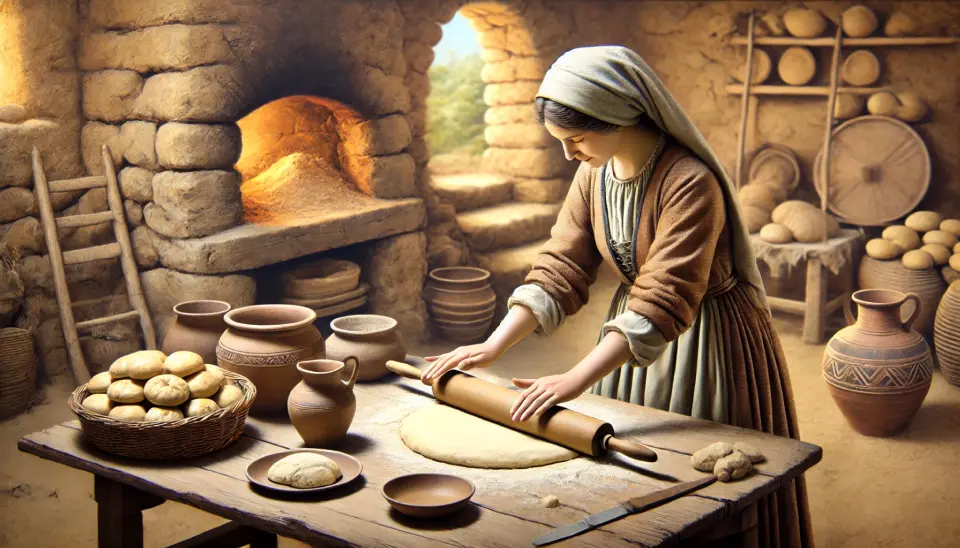
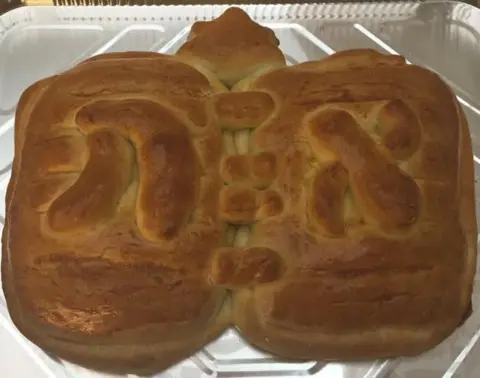
Making bread is likened to offering incense on the Altar.
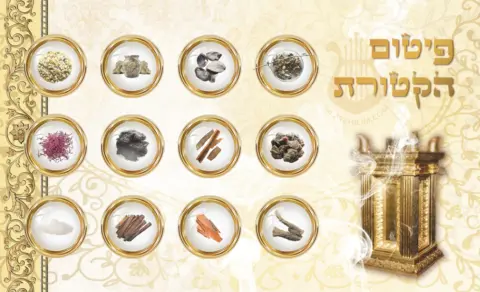
To bake bread, one must perform 11 types of labor, each corresponding to one of the ingredients of the Ketoret.
These labors encompass the process from sowing to baking and constitute the first 11 of the 39 labors performed in the Temple:
- 1. Plowing (חורש)
- 2. Sowing (זורע)
- 3. Reaping (קוצר)
- 4. Gathering sheaves (מעמר)
- 5. Threshing (דש)
- 6. Winnowing (זורה)
- 7. Selecting (בורר)
- 8. Grinding (טוחן)
- 9. Sifting (מרקד)
- 10. Kneading dough (לש)
- 11. Cooking / baking (אופה)
If we take the root letters of these words and add them together, we obtain the gematria of the Name responsible for sustenance:
8 + 7 + 100 + 70 + 4 + 2 + 9 + 200 + 30 + 1 =
431 — the gematria of the Holy Name
דיקרנוסא.
This Name can be found in the insertion in the
16th blessing of the Amidah. During prayer, it is recommended to have the kavanah of
Parnassah Tovah b'zechut the Holy Name.
It now becomes clear why Pitum HaKetoret is considered a segulah for parnassah.
(Based on a lesson by Rabbi Alexander Tzvi Sypkov)
Was this helpful?
100% of readers found this article helpful (34 votes).
Please note: some articles on our site contain the holy Names of the Almighty. If you print these articles, they may not be thrown away or destroyed. Please handle printed copies with care and respect.