Arba Tekufot – The Four Changes of the Seasons
The solar year is divided into four tekufot (periods or seasons): spring –
Tekufat Nisan, summer –
Tekufat Tammuz, autumn –
Tekufat Tishrei, and winter –
Tekufat Tevet.
Each tekufah changes after
91 days and 7.5 hours (Eruvin 56a).
The Rambam taught that the tekufah begins at the beginning of the month of each period – 1 Tammuz, 1 Tishrei, and so on.
The most authoritative opinion is that of
Rav Shmuel and
Rav Ada – they determine the time more precisely, as one quarter of the length of the year.
The
Geonim taught that the time when the tekufot change is extremely dangerous.
The Sages, including
Rav Hai Gaon, revealed that when the seasons of the year change, the angels also change, and during this time it is very dangerous to drink water.
Four angels guard the water from harmful forces. Each angel responsible for guarding the water watches over the cracks at the corners of the world during one quarter of the year. This is the secret of why Jewish men wear tzitzit with corners and four fringes, and why the Kohanim sprinkled sacrificial blood on the four corners of the mizbe'ach (altar).
When the angels change during these periods, the world is, so to speak, left unguarded. This is a time of negative forces, and only Chazal know the precise time when these periods transition.
When the
ma'ayanot (springs) of water are left without the angels' protection, people may not drink the water. Even fishermen said that their nets would tear during these periods.
According to the
Zohar HaKadosh, the time of the tekufot is
zman din ba'olam – the time of judgment for the entire world – and, according to Kabbalah, it is
gevurah shel malchut.
The four tekufot of the year encompass the three mazalot of each period. As the Mekubalim say, the sun revolves through the twelve mazalot, corresponding to the twelve shevatim (tribes), for each tribe had its own flag – a total of four
machanot degalim.
Rabbi Avraham ibn Ezra did everything he could to ensure that the Jewish people would not fear this period and thereby increase the measure of dinim.
Chacham Shmuel Yarchinai did not state the exact time, out of fear that during this period those who hated Am Yisrael would perform all kinds of kishufim.
Maran Rav Ovadia Yosef wrote in his book how to determine the exact time: half an hour before the tekufah and half an hour afterward.
Barzel (iron) itself possesses the power of dinim and shortens one's life. However, when we use the names of the
four Imahot, whose initial letters form the acronym Barzel – Bilhah, Rachel, Zilpah, and Leah – barzel becomes helpful and prolongs life, especially during these tekufot, the changes of the four seasons.
Therefore, during this time, a knife is not left on the table during Birkat Hamazon, or it is covered (if the knife is made of silver or plastic, this is permitted).
One should not sleep at night in pajamas with iron fasteners. This was advised by
the Ben Ish Chai and Rav Chaim Kanievsky.
The Secrets of the Tekufot
Rabbi David Abudarham reveals the secret of each tekufah and its spiritual root.
Tekufat Tishrei is connected with the
Akeidat Yitzchak.
When Avraham prepared the knife for Yitzchak's sacrifice and wanted to wash it, drops of water turned into blood.
Tekufat Tevet is connected with
the judge Yiftach.
A well-known story from
Sefer Shoftim (11:31) tells how Yiftach vowed that, if he won the war against the Ammonites, he would offer to G-d as a sacrifice whoever first came out of the gates of his house to greet him (meaning an animal). But when he returned home, he saw his daughter coming out to greet him. To fulfill his vow, he was forced to offer her as a sacrifice. On the knife prepared for her sacrifice, blood likewise appeared instead of water when the knife was washed.
Tekufat Nisan is connected with the
Ten Plagues of Egypt. The first plague was itself a plague involving water, when water everywhere turned into blood (Va'era 7:17).
Tekufat Tammuz is connected with the way
Moshe Rabbeinu brought water from the rock. Instead of following the Almighty's command to “speak to the rock,” he struck it twice: “Moshe struck the rock with his staff twice” (Chukat 20:11). The Sages say that before the water began to flow, several drops of blood emerged.
Sephardic rabbis, including
Rav Ovadia Yosef (may his merit protect us), urged people to exercise caution during this period.
A tekufah lasts three halachic hours.
The time of the tekufah depends on the halachic time of the region (netz hachamah) and the sha'ah zemanit (the length of a halachic hour).
Why One May Not Drink Water Specifically
It is important not to drink
water during this time.
Only water may not be drunk, because the Sitra Achra is aroused during this period and transfers its power to it (demons drink this water).
One may drink anything thicker than water: freshly squeezed juices, wine, liquid honey, natural syrups, milk – all liquids to which water has not been added (even if they naturally contain water) are permitted. All liquids prepared with added water are forbidden.
Interestingly, demons do not drink liquids thicker than water; they simply cannot digest them.
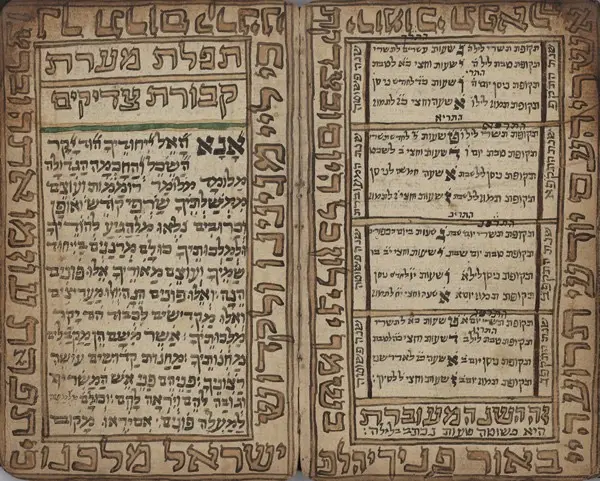
A manuscript of
“Seder Arba Tekufot Esrim Ve-Tesha Shanah” has survived, with a preface by “Moshe, son of Shlomo HaMa'aravi of Jerusalem, son of Rabbi David, a resident of Safed.” The Book of the Times (1794–1839) [with handwritten corrections].
 (Based on the lessons of Rav Yisrael Yakobov and Rav Alexander Tzvi Sypkov)
Please note: some articles on our site contain the holy Names of the Almighty. If you print these articles, they may not be thrown away or destroyed. Please handle printed copies with care and respect.