Skip to content
This English version of the site was translated with AI assistance. We apologise for any errors and are working to improve it.
Esau and Ishmael—A Spiritual Principle
The Hidden Meaning of Tehillim

Esau and Ishmael—A Spiritual Principle

Esau and Ishmael—A Spiritual Principle

The Ox and the Donkey in the Torah

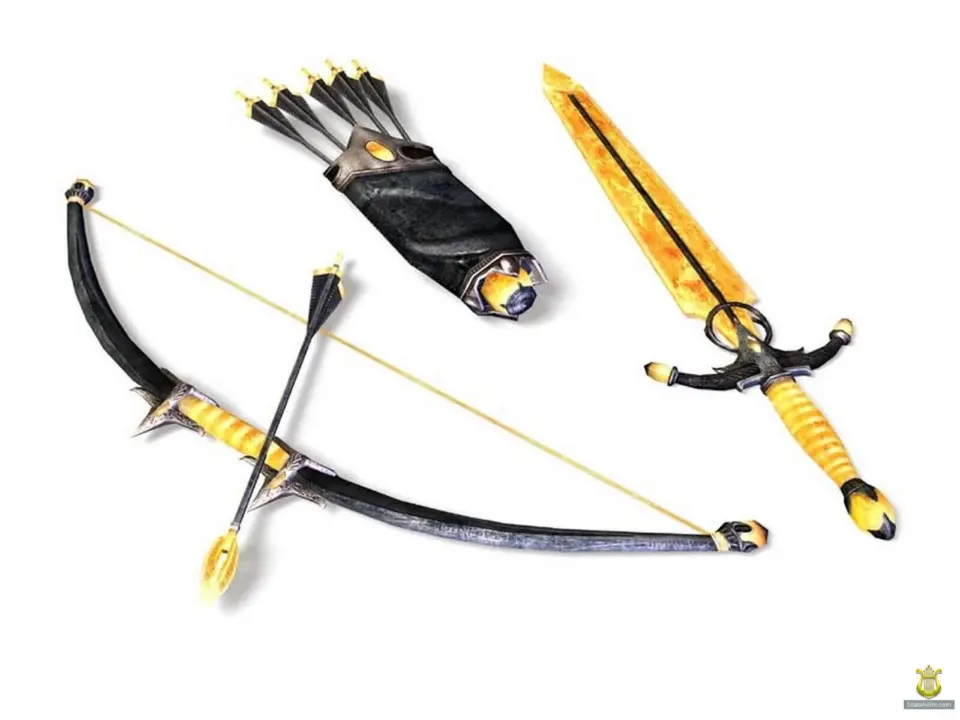
Sefer Devarim speaks of one of the 613 mitzvot of the Torah—the prohibition against using an ox and a donkey together to plow a field: “You shall not plow with an ox and a donkey together” (Devarim 22:10). The Zohar HaKadosh reveals the mystical depth of this mitzvah. According to the Zohar HaKadosh, “shor” (ox) represents Esau—the Western world—while “chamor” (donkey) represents Ishmael—the Arab world. The Torah hints to us through this mitzvah that there is a spiritual principle: if these two forces unite—that is, if the “ox” and the “donkey” plow together—they will be able to destroy the entire world. The mystics add that if the Jewish people collectively do teshuvah and repent for their transgressions, as the prophet exhorts us: “Shuvu banim shovavim”—“Return, wayward children” [Yirmiyahu 3:14], then we will attain “shleimut” (perfection) and thus be able to neutralize the force of “shor ve-chamor” (Esau and Ishmael), which will ultimately lead to “biat HaMashiach” (the coming of Mashiach) speedily, in our days. To see this connection, it is enough to examine the gematria of these expressions: — “Shuvu banim shovavim”— equals 776; — “shleimut”— equals 776; — “shor ve-chamor”— equals 776; — “biat HaMashiach”— equals 776.   Sword and Bow in Tehillim Tehillim 44:7, 9 — “Ki lo vekashti evtach, vecharbi lo toshi'eni... b-Elokim hilalnu kol hayom”— “For I do not trust in my bow, and my sword will not save me... (but) in those who praise G-d all day long.” The great Maharsha teaches that the “sword” and the “bow” are needed to achieve victory over the enemies of Yaakov—Esau and Ishmael. Esau was given the blessing: “You shall live by your sword.” (Bereishit 27:40) As for Ishmael: “And G-d was with the lad. He grew up and dwelt in the wilderness, and he became a skillful archer.” (Bereishit 21:20) The Sages teach that the spiritual principle is as follows: in order to defeat both of them, Yaakov has one course of action—to turn to his own “sword”—prayer and his own “bow”—the Brit. Tehillim 45:4 — “Chagor charbecha al yarech gibor”— (“Gird your sword upon your thigh.”) The Zohar HaKadosh teaches that the word “thigh” alludes to the Brit. In order to acquire the weapon of prayer—the “sword”—one must attain the level of guarding the Brit. G-d gives David HaMelech the promise: “I will place the fruit of your womb upon your throne, if your sons will observe My Brit.” Prayer, symbolized by Mashiach—the descendant of David—will come through the perfection of the Brit (we already know from the Zohar HaKadosh that only the Brit enables Ishmael to remain on the Temple Mount today). The perfection of the Brit of the Jewish people will neutralize the imperfect brit of the Ishmaelites.   (Based on Rabbi Nachman's book Likkutei Moharan, chapter 2)

Was this helpful?

98% of readers found this article helpful (47 votes).

Please note: some articles on our site contain the holy Names of the Almighty. If you print these articles, they may not be thrown away or destroyed. Please handle printed copies with care and respect.

Tags: The Hidden Meaning of Tehillim, The Power of Tehillim, Tehillim 45, Tehillim 44, Jacob’s Prayer, Tehillim 44 and 45: On Prayer and the Brit Against Sword and Spear, Tehillim for a Brit, Tehillim for Prayer and Brit Against Sword and Spear
19 Jul 2018
Share

Related articles