Tehillim 113:2- “Y’hi shem Adonai mevorach me’atah ve’ad olam” - (May the Name of the L-rd be blessed from now and forever!)
In this pasuk, King David (alev ha-shalom) utters the central words of Kaddish.
As we can see, David HaMelech was the first to recite Kaddish.
Later, the connection between Kaddish and King David would be established in the texts of the Heichalot (mystical literature from the era of the Second Temple).
One of these texts stated:
“In the future, the Holy One, blessed be He, will reveal to Israel the full depth of the Torah ... and David will recite a song before G-d, while the righteous will respond after him: ‘Amen, yehei shmei rabbah mevarach le’olam u-le’olmei olmaya yitbarach’ - from the Garden of Eden.And the sinners of Israel will respond, ‘Amen’ - from Gehinnom.Immediately, G-d will say to the angels: ‘Who is this who is answering “Amen” from Gehinnom?’[The angels] will say before Him: ‘Master of the Universe, these are the sinners of Israel who, despite being in great distress, strengthen themselves and say “Amen” before You.’Immediately, G-d will say to the angels: ‘Open the gates of the Garden of Eden for them, so that they may enter and sing before Me.’”Heichalot connects Kaddish (especially its central verse: “May His great Name be blessed forever and for all eternity ...”) with a Heavenly prayer that will be repeated at the end of days, when the souls in Gehinnom finally receive respite.
It is now clear why Kaddish is recited for the souls of those who have departed this world.
The most important part of Kaddish is undoubtedly the verse “Shmei rabbah mevarach le’olam u-le’olmei olmaya.”
The Sages who wrote the Heichalot teach that it is precisely these words of Kaddish that especially awaken G-d’s mercy — rachamim.
The Talmud (Berachot 3a) says the same about the entire congregation that recites aloud “yehei shmei rabbah…”.
We find these same words in the “Book of Daniel” (2:20):
“And Daniel spoke and said:‘May the Name of G-d be blessed forever and ever, for wisdom and might are His.’”
And likewise in the Book of “Job” (1:2), when he learns of the death of his children: “And he said: Naked I came forth from my mother’s womb, and naked shall I return there. The L-rd has given, and the L-rd has taken away. May the Name of the L-rd be blessed.”Rabbi Chaim Vital, in “Sha’ar HaKavanot,” explains that Kaddish is recited between the main sections of the prayer because each part of the prayer is connected to a particular mystical universe and a particular Heavenly Palace, and Kaddish facilitates the ascent from one world to the next.
Moreover, Rabbi Chaim Vital writes that Kaddish is intended to prepare the soul for Techiyat HaMetim (the resurrection of the dead).
He says that Kaddish should be recited every day, including Shabbat and holidays, throughout the entire year following the death of one’s parents. For Kaddish not only helps free the soul from Gehinnom, but, more importantly, helps it attain Gan Eden.
This elevates all souls, even the souls of the righteous. This is why Kaddish is recited even on Shabbat (when the souls in Gehinnom are given respite).
Rabbi Chaim Vital teaches that although Kaddish originated as an Ashkenazic custom (from the time of Rabbi Elazar of Worms (the Rokeach)), the Arizal (may his merit protect us) insisted that it be recited according to the Sephardic custom.
(“Mayim Acharonim,” by Rabbi Ephraim Palvanov)
The Zohar HaKadosh says that whoever does not answer “Amen” is cast down to the lowest levels of Gehinnom, but whoever does not answer “Amen, yehei shmei rabbah” is expelled from the spiritual realm for forty days.
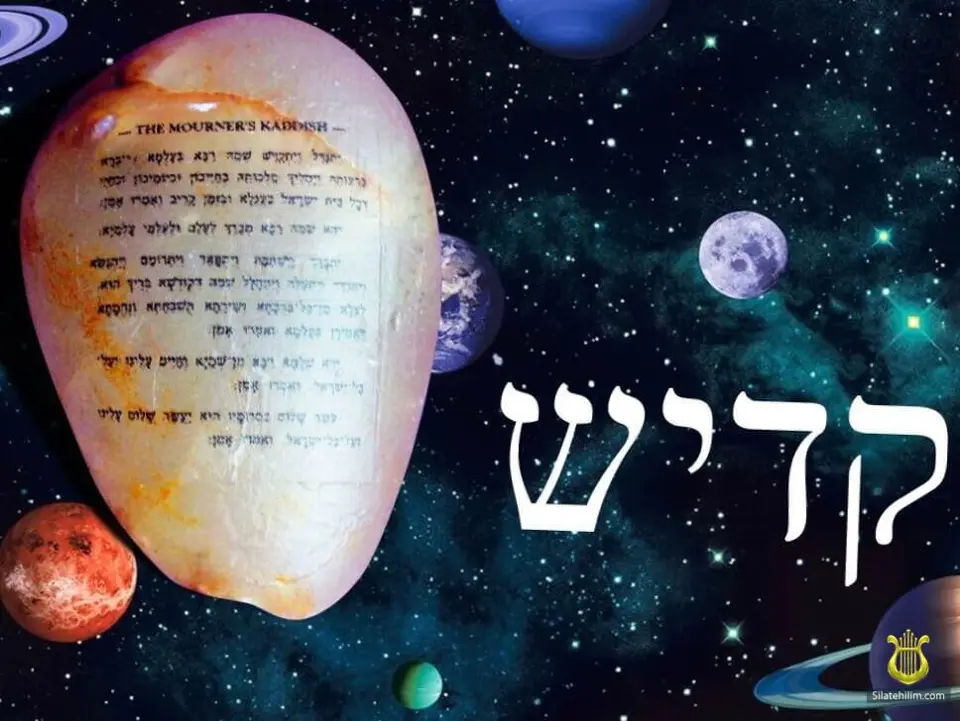
The Text of Kaddish
YITGADAL V’YITKADASH SH’MEI RABBAH, (the response: Amen)
BE’ALMA DI-V’RA CHIRUTEI. V’YAMLICH MALCHUTEI, V’YATZMA’CH PURKANEI, V’YAKAREV MESHICHEI, (AMEN) B’CHAYEICHON, U-V’YOMEICHON, U-V’CHAYEI D’CHOL BEIT YISRAEL, BA’AGALA U-VIZMAN KARIV, V’IMRU AMEN. (Amen)
YEHEI SH’MEI RABBAH M’VORACH LE’ALAM U-L’ALMEI ALMAYA YITBARACH, V’YISHTABACH, V’YITPA’AR, V’YITROMAM, V’YITNASEI, V’YITHADAR, V’YIT’ALEH V’YIT’HALAL, SH’MEI D’KUDSHA B’RICH HU, (Amen)
L’EILA MIN KOL BIRCHATA, SHIRATA, TISHBECHATA V’NECHEMATA,
DA’AMIRAN B’ALMA, V’IMRU AMEN. (Amen)
YEHEI SH’LAMA RABBA MIN SH’MAYA, CHAYIM V’SAVA, V’YESHUA V’NECHAMA, V’SHEIZAVA, U-R’FU’A, U-G’ULA, U-S’LICHA V’CHAPARA, V’REVACH V’HATZALA, LANU U-L’CHOL AMO YISRAEL, V’IMRU AMEN. (Amen)
OSEH SHALOM BIMROMAV, HU V’RACHAMAV YA’ASEH SHALOM ALEINU,
V’AL KOL AMO YISRAEL, V’IMRU AMEN. (Amen)Translation
“May His great Name be exalted and sanctified! (Amen) — in the world that He created according to His will. May He establish His kingship and bring forth His salvation, and bring near the coming of His Mashiach, (Amen) during your lifetime and in your days, and during the lifetime of the entire House of Israel, speedily and soon. And let us say: Amen!”
May His great Name be blessed forever and for all eternity!
May the Name of the Holy One, blessed be He, be blessed, exalted, extolled, glorified and praised, (Amen)
above all blessings, songs, praises and consolations that are uttered in the world. And let us say: “Amen!” (Amen)
May there be abundant peace from Heaven, life and sustenance, salvation and consolation, deliverance and healing, redemption and forgiveness, atonement and relief, for us and for all Israel. And let us say: “Amen!” (Amen).
Was this helpful?
100% of readers found this article helpful (25 votes).
Please note: some articles on our site contain the holy Names of the Almighty. If you print these articles, they may not be thrown away or destroyed. Please handle printed copies with care and respect.
Material from our site may be copied for the purpose of spreading Torah, provided a link to Silatehilim.com is included. Any use of the site's material in print publications or for commercial purposes is prohibited without the rights holder's consent.