A New Knife for Rosh Hashanah — A Segula for Parnassah
A New Knife for Rosh Hashanah — A Segula for Parnassah
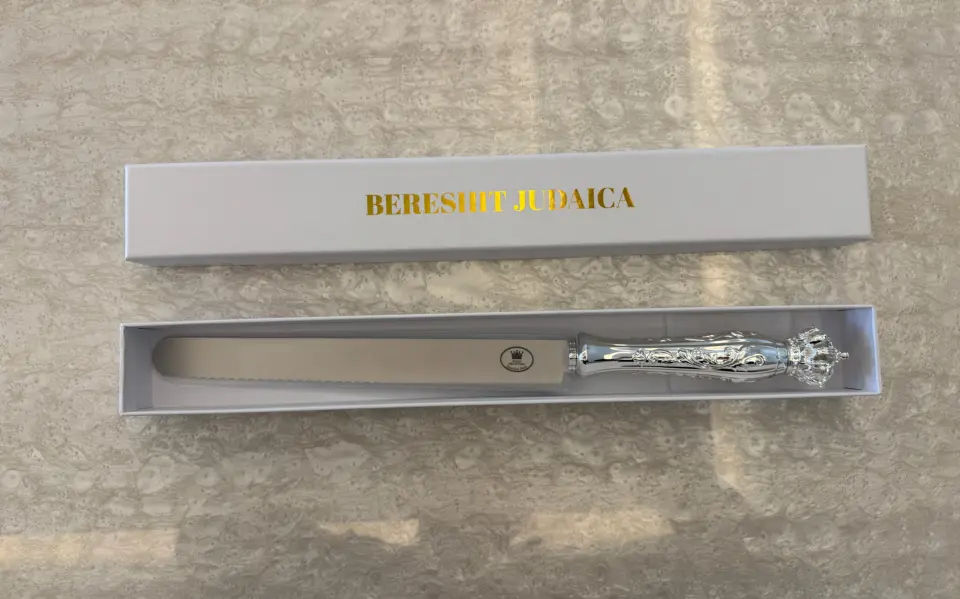
There is a good segula for parnassah (financial sustenance): to buy a new knife for Rosh Hashanah and sharpen it.
The source of this original segula is מהמהרי"א מיזדטשוב יצחק אייזיק אייכנשטיין — (Rabbi Yitzchak Isaac Eichenstein), and it is discussed in the book “Segulot Yisrael” — ר׳ אות ד׳
It is also mentioned in the book “Taamei HaMinhagim”, the final pamphlet רמו.
The meaning of the segula:
Sharpening a knife removes its imperfections, thereby alluding to the removal of imperfections from a person’s heart.
The final letters in the verse from Tehillim 145:16, פותח את ידך:
ח ת ך
form the word חתך — “cut” — and this verse is connected with abundance.
Furthermore, on Rosh Hashanah, G-d is the One Who חותך חיים לכל חי — (“Chotech chaim lechol chai,” Who determines the life of every living creature).
There is another explanation: if a person is careless with bread crumbs, this can lead to poverty. When one has a sharp knife, there are fewer crumbs, and this is a segula for parnassah.
Chatach חתך means “to cut” in Hebrew, and it is the name of the angel responsible for one’s livelihood: נגד השם הפרנסה המרומז בס״ת של פותח את ידיך.
The final letters of the words in Tehillim (145:16), “Poteiach et Yadecha” פותח את ידך — “You open Your hand” — form the word “Chatach”.
The word that follows in this verse, “Umasbia” — (to satisfy) — referring to the desire of every living creature — has the gematria 428, the same as the word “Chatach” — 428. (“Nitei Gavriel” 11:1)
The segula consists of buying a new knife, immersing it in a mikveh, and then sharpening it. One should not buy a knife with notches—a dull or notched knife is a symbol of Gevurah, whereas a smooth, sharp knife is a rectified instrument that does not cause pain, connecting it with the attribute of Chesed.
Such a knife should not be given as a gift. As transmitted in the name of the Baal Shem Tov, a person should purchase such a knife himself.
(Shulchan Aruch, Orach Chaim, סימן קפ, ד, translated by Rabbanit Lea Hizgiyaeva, Aleksandr Tzvi Sypkov)
Was this helpful?
98% of readers found this article helpful (84 votes).
Please note: some articles on our site contain the holy Names of the Almighty. If you print these articles, they may not be thrown away or destroyed. Please handle printed copies with care and respect.
Material from our site may be copied for the purpose of spreading Torah, provided a link to Silatehilim.com is included. Any use of the site's material in print publications or for commercial purposes is prohibited without the rights holder's consent.