How Saying “Shabbat Shalom” Can Overcome the Five Gevurot
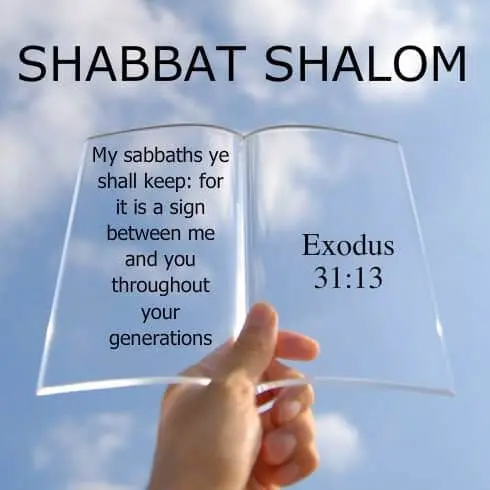
The greeting “Shabbat Shalom” is a mitzvah, and the source of this custom is the Torah’s words: “Remember the Sabbath day to sanctify it.” (Shemot 20:8)
We say this greeting to one another at the beginning of Shabbat, usually after the evening prayer, and throughout the day. This mitzvah should be fulfilled both during the week and on Shabbat itself. In particular, so that we do not forget “where we are,” we even greet one another in a special way—“Shabbat Shalom”!(Rabbi Natan Agres)
The gematria of the phrase “Shabbat Shalom” = 1080; The gematria of the word “Gevurah” (strictness, judgment) = 216. Da'at (one of the supernal sefirot) consists of five Gevurot (representing Strict Judgment) and five Chasadim (Mercy). These five Gevurot are the source of the most difficult trials and decrees of the Heavenly Court (Chas v'Shalom). 216 multiplied by 5 equals 1080. This indicates that the peace and tranquility of Shabbat (Shabbat Shalom) nullify and neutralize the five Gevurot that bring difficult trials. By saying this phrase continually throughout Shabbat, you thereby set this mechanism into motion.
Also, 1080 is the word “Yirah” = 216 (fear of Heaven), repeated five times.
(Rabbi M. Glazerson, “The Hidden Light of Shabbat”)
Shabbat and the Name of Ha-Shem The Zohar ha-Kadosh says that the word “Shabbat” is a Name of the Holy One, blessed be He, and that this word must be treated with great reverence. Shalom and the Name of Ha-Shem The Sages explain that Shalom is one of Ha-Shem’s Names. The Book of Judges describes how Gideon, after carrying out the angel’s command, became frightened: (22) “Woe is me, L-rd G-d, for I have seen the angel of G-d face to face.” (23) “And G-d said to him: ‘Peace (Shalom) be with you; do not fear. You shall not die.’ Gideon understood that he had spoken not with a human being, but with an angel sent by the Almighty, and Gideon built an altar in honor of the fact that the Almighty had told him, “Do not fear”... and named it “Ha-Shem Shalom.” Rashi (of blessed memory) says the following: “Gideon named this altar—‘Ha-Shem Shalom,’ which means that Ha-Shem is our peace, our wholeness.” Malbim, explaining this in greater detail, says that when Gideon fears that he will now die, having seen the angel face to face, the Almighty reassures him by saying: “Peace be with you.” When asked whether the word “shalom” is the opposite of death, he answers in the affirmative. “Shalom” is a state of wholeness, when the entire body is composed of all its parts, when the soul is joined to the body; in this sense, it is the opposite of death, which is disintegration and separation. The explanation of Rashi is fundamental: Gideon gave this altar a name and a motto—that the Almighty Himself is our wholeness, our peace. (Based on the book “May the Power of Shabbat Protect Us” by Rabbi Nissim Yagen and the Machanaim website)