Gedolei HaDor to Jewish Women: On the Importance of Their Prayers
Rabbanit Leah Kolodetsky (daughter of Rav Chaim Kanievsky) has once again updated the appeal of the Gedolei HaDor to Jewish women.
A tried-and-tested segula from the Gaon Rav Aharon Leib Shteinman (may his merit protect us), for any salvation and relief from difficult circumstances.
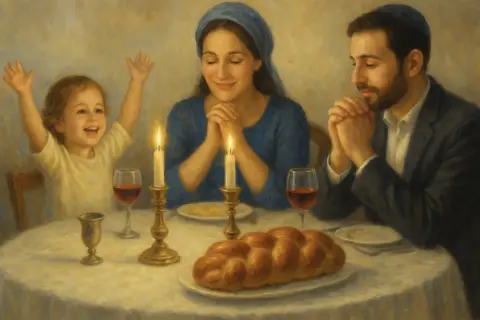
On Friday evening before Shabbat, pray Mincha early and accept Shabbat 10 minutes before the time indicated on the calendar.
Girls who do not light candles should say aloud: “Behold, I accept tosefet Shabbat kodesh.”
Attention!
Women who light candles should not say before lighting that they are accepting Shabbat, because after saying these words they will no longer be able to light the candles. Rather, their acceptance takes place after lighting and reciting the bracha.
As with this acceptance and with any other custom, before undertaking it one should be scrupulous and remember to say “b'li neder” (without making a vow).
These 10 minutes are a particularly auspicious and important time, for several reasons:
1) The time of accepting Shabbat is especially auspicious;
2) Accepting Shabbat is similar to bringing a korban (sacrifice), and the time of bringing a korban is an auspicious time and a time for atonement for sins.
3) All women who accept Shabbat early atone for all those women who accept Shabbat at the last moment, and thereby receive the merit of all of them.
This mitzvah also has the power to bring salvation from any trouble and suffering, as explained in the sefer “Toledot Yaakov” by one of the great sages and experts in the esoteric teachings (who lived approximately 450 years ago), in the chapter “The Secret of Shabbat,” section 7, where he writes: “to add from the weekday to the holy,” to expand the boundaries of holiness, and so on.
One who is meticulous in observing this mitzvah will have Hashem expand His benevolence toward her according to the principle of measure for measure.
The sefer “Sodot” by Rabbi Yosef Gikatilla (also a great sage and expert in the esoteric teachings of that period) is cited in the book “Ner Yisrael”, adding: “And in the merit of this mitzvah, when one turns to Hashem in a time of trouble and suffering, Hashem will expand the boundaries of holiness for her, diminish the boundaries of suffering, and she will merit salvation without limits.”
Therefore, during these 10 minutes, one should pray and ask, and b'ezrat Hashem, it is promised that all requests will be accepted favorably.
One should also study one halachah (law) from the halachot of Shabbat at the Shabbat table.
It is essential to have mezuzot checked every 3.5 years.
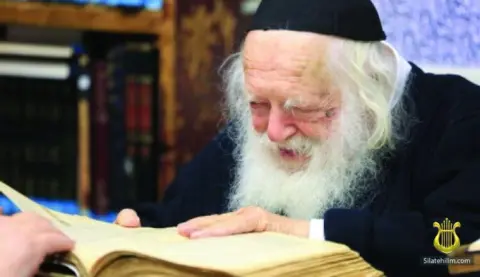
In the name of the Gaon Rav Chaim Kanievsky (may his merit protect us), the following is cited:
“Every married and unmarried woman should pray 3 prayers every day:
Shacharit for at least 25 minutes,
Mincha – 5 minutes,
Maariv – 7 minutes. And even if one is unable to achieve proper concentration during every prayer, praying from the Siddur already provides 50% of the proper intention in prayer.
The Prayer of a Jewish Mother
There is as much difference between the children of a mother who prays and those of a mother who does not pray as there is between Heaven and Earth.
The children of a mother who prays have more Yirat Shamayim (fear of Heaven), better character traits, and fewer trials.
They absorb more during the study of Torah.
And the very best investment in our generation is a mother's prayer.
A mother who has to go to work in the morning and gets up especially early to pray is promised that this will not come at the expense of her sleep. If she has young children, they will sleep better at night; and if she has older children, she will have fewer worries because of them and her sleep will be more restful.
It is also important to emphasize that even if various difficulties arise in fulfilling what was accepted above, overcoming them is worthwhile. Every person is destined to overcome a certain number of difficulties, so it is better to overcome them in matters pertaining to mitzvot and the service of the Almighty, thereby increasing one's merits, than to endure them through other forms of suffering, chas v'chalilah.
As the Chafetz Chaim explained regarding the pasuk in Tehillim (22:6): “Ach tov vachesed yird(e)funi kol yemei chayai” – “Surely goodness and kindness shall pursue me all the days of my life” – David HaMelech prayed that the difficulties he was destined to overcome in his life would be overcome through his being occupied and burdened with good deeds and chesed, rather than with suffering.
May it be pleasing that in the merit of the Holy Shabbat, which is the source of blessing, and in the merit of the prayers of righteous women and girls, we should merit suitable matches in the near future, good fortune, health, a livelihood, joy, and holy offspring—healthy and complete—and that all our wishes should be fulfilled for the best.
With blessings, good fortune, and love,
Rabbanit Leah Kolodetsky.
(Translated by Akiva Edelstein)
P.S. According to the Arizal, adding more time to Shabbat, both at the beginning and at the end, is highly conducive to having children—that is, not waiting until the last moment to light the Shabbat candles, and not beginning work immediately after Shabbat, but rather extending the rest and holiness of Shabbat.”
Was this helpful?
100% of readers found this article helpful (57 votes).
Please note: some articles on our site contain the holy Names of the Almighty. If you print these articles, they may not be thrown away or destroyed. Please handle printed copies with care and respect.
Material from our site may be copied for the purpose of spreading Torah, provided a link to Silatehilim.com is included. Any use of the site's material in print publications or for commercial purposes is prohibited without the rights holder's consent.