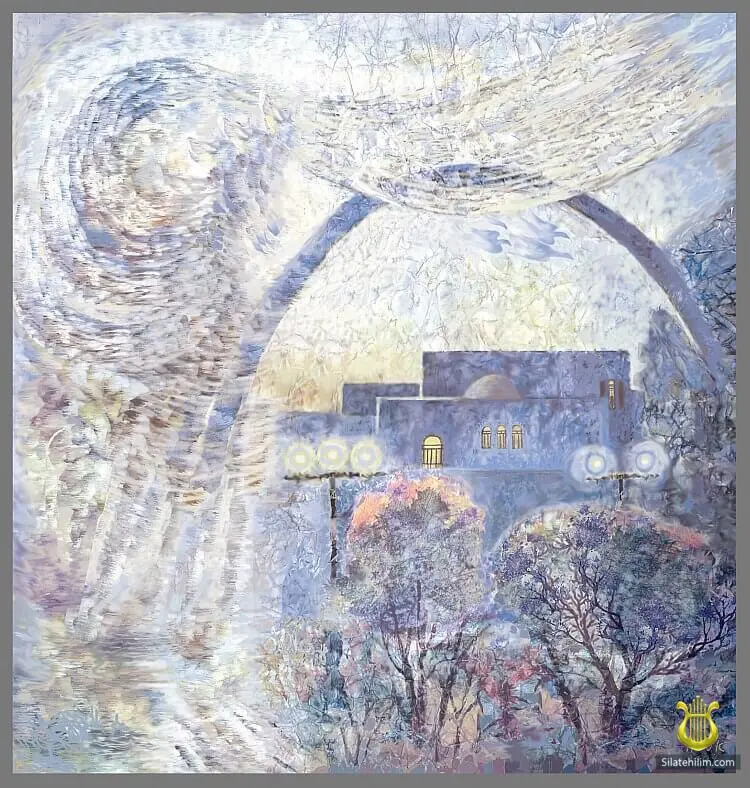
Tehillim 109:4"Va'ani tefilah" — (I am prayer).David HaMelech said in Tehillim: “I am prayer.”
In other words, every movement of his soul found expression in prayer; he lived in a world of prayer. When a person lives in this world, not even fifteen minutes pass without his turning, silently or aloud, to the Master of the universe in prayer. The first thing to understand is that prayer is a way of life, not merely one of the activities to which a person devotes a certain amount of time during the day.
The purpose of prayer is to maintain a constant connection with the Creator throughout the entire day. And if prayer occupies only a short time during the day, how can such prayer create a connection that lasts throughout the entire day? Clearly, the process of prayer must extend throughout the day.
David HaMelech, peace be upon him, spoke of this aspect of prayer: “I am prayer”; in other words, he was prayer in his entirety—in the sense that his entire soul was suffused with prayer, and also in terms of time, for he was constantly immersed in prayer.
To remain in such a state, one must constantly remember that the world has a Creator, and also constantly remember that the world has a Master, and that He alone rules over every detail.
A person's service is to be immersed not in what he is asking for in prayer, but in its inner essence, which is conversation with the Holy One, blessed be He, and closeness to Him.
That is why prayer is called “tefillah”, meaning “connection, union”—alluding to the verse: “Naftulei Elokim niftalti” — (With G-dly bonds I have bound myself). (Bereishit 30:8)
These are the words of Rachel Imeinu, and from them we learn what prayer should be. For this is the entire inner essence of prayer: connection and union with the Holy One, blessed be He.
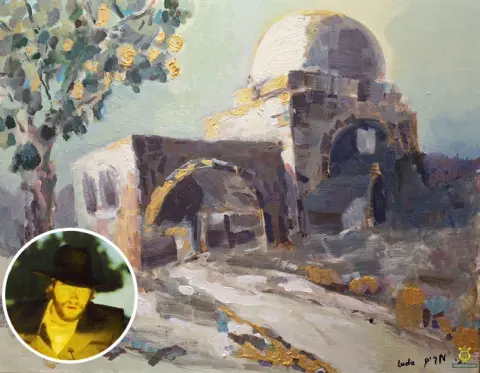
It is well known that the Brisker Gaon primarily visited Meron and the grave of Rachel Imeinu.
But specifically at Rachel's grave he said: “This is a place of tefillah.”(http://www.bilvavi.net)
Was this helpful?
100% of readers found this article helpful (28 votes).
Please note: some articles on our site contain the holy Names of the Almighty. If you print these articles, they may not be thrown away or destroyed. Please handle printed copies with care and respect.
Material from our site may be copied for the purpose of spreading Torah, provided a link to Silatehilim.com is included. Any use of the site's material in print publications or for commercial purposes is prohibited without the rights holder's consent.