Rabbi Yehoshua ben Levi, who saw a person with spotted skin, said: “Blessed is He Who changes the works of creation!”
בָּרוּךְ אַתָּה ה' אֱלהֵינוּ מֶלֶךְ הָעולָם משנה הבריות
- “Baruch Atah Adonai Eloheinu Melech ha-Olam, meshaneh ha-beriyot” - (Blessed are You, G-d, our L-rd, King of the Universe, Who changes the works of creation!)
The following baraita is cited in response:
“Whoever sees a Black person (Kushi), a red-skinned person (gihor), an albino (lavkan), a very tall, hunchbacked person (kipeah), a dwarf (nanas), or a person with a twisted mouth (darnikos) must recite the blessing:
- “Blessed is He Who changes the works of creation!”
Our Sages taught the following baraita:
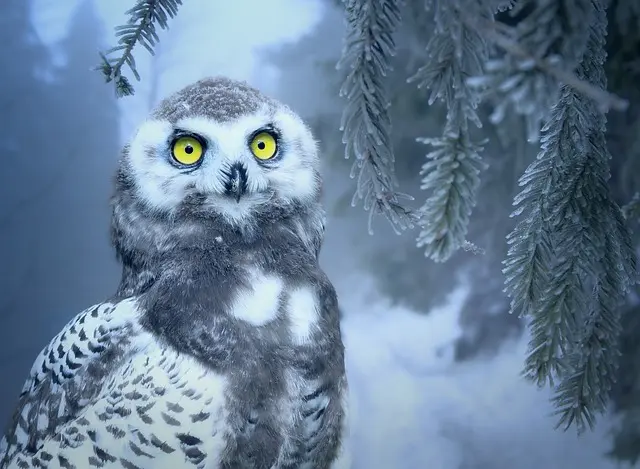
“Whoever sees a monkey, an elephant, or a horned owl recites:
- “Blessed is He Who changes the works of Creation!”Rabbi Eliyahu Ha-Kohen of Izmir, in his book Shevet Musar (47), says that when a person looks at a monkey, he should feel moved to repent. For this animal was once a human being, but Hashem changed it into an animal, which is why it resembles a human being in appearance. What do we see in a monkey? It imitates human behavior.
Why?
Because it strives to return to its original state, of which it still retains a memory.
Nothing Was Created in VainRav Yehuda said in the name of Rav: “Among all that the Holy One, blessed be He, created, there is not a single creature that was created in vain:
- He created the slug for [healing] a wound,
He created a fly for [treating a] wasp sting,
[created] a mosquito for [treating] a snake bite,
[created] a snake for [healing] scabies,
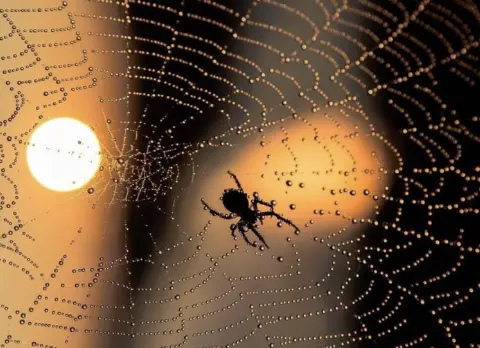
[and created] a spider for [treating] a scorpion sting.
And how does this help? One must take one black creature and one white creature, boil them, and apply the mixture.
Our Sages taught in a baraita: There are five instances of the strong fearing the weak:
the lion fears the mafgia (zorilla),
the elephant fears the mosquito,
the scorpion fears the spider,
the eagle fears the swallow,
and the whale fears the stickleback.”
Rabbi Zeira once encountered Rav Yehuda, who was standing at the entrance to his father-in-law’s house. He noticed that Rav Yehuda was in a cheerful mood, [and understood]: ask him whatever you wish—he will answer [any question]. He asked him:
- Why do the goats walk at the head of the herd, followed by the sheep?
He replied:
- In accordance with the order of Creation: first darkness, and then light.
- Why is [this place on the sheep] covered [by the fat tail], while on [the goats] it is exposed?
- That which we [people] cover ourselves with—their [wool]—is covered, while that whose wool we do not cover ourselves with is exposed.
- Why does a camel have a short tail?
- Because it eats thorns.
Why does an ox have a long tail?
- Because it lives among reeds and must drive away bothersome flies.
- Why are a grasshopper’s antennae soft?
- Because it lives among grasses, and if its antennae were hard, they would break, and the grasshopper would become blind. For Shmuel said: “Whoever wishes to blind a grasshopper should tear off its antennae.”
- Why does the chicken’s lower eyelid cover the upper one?
- Because chickens roost on poles, and smoke rising from the house could blind them [if the lower eyelid did not cover the upper one].
(from the book Ein Yaakov by Rabbi Yaakov ibn Habib, vol. 1, ch. 9; vol. 2, ch. 8)
Was this helpful?
100% of readers found this article helpful (43 votes).
Please note: some articles on our site contain the holy Names of the Almighty. If you print these articles, they may not be thrown away or destroyed. Please handle printed copies with care and respect.
Material from our site may be copied for the purpose of spreading Torah, provided a link to Silatehilim.com is included. Any use of the site's material in print publications or for commercial purposes is prohibited without the rights holder's consent.