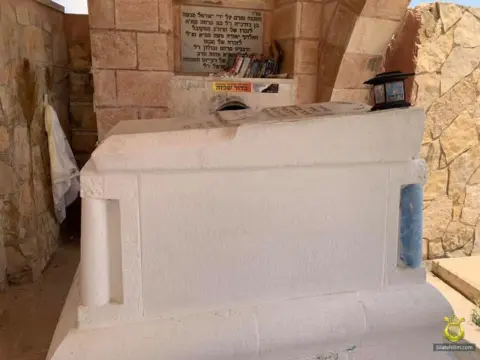
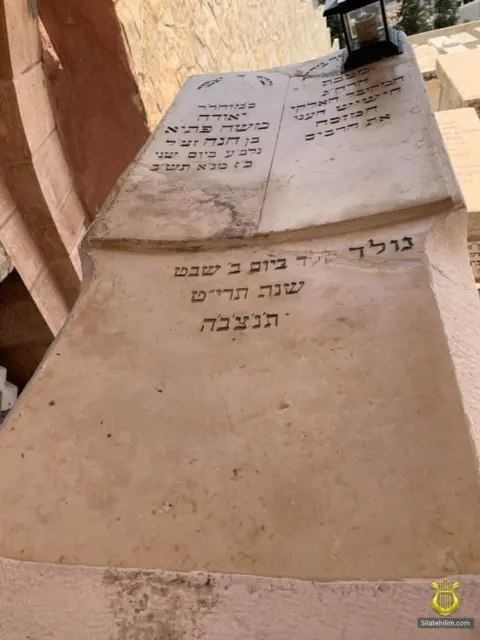
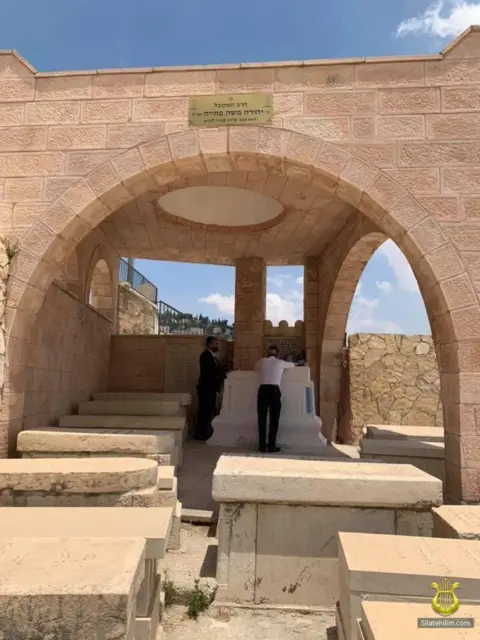
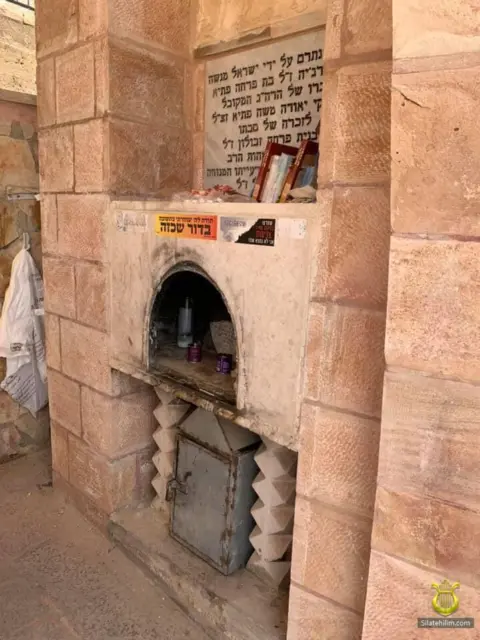
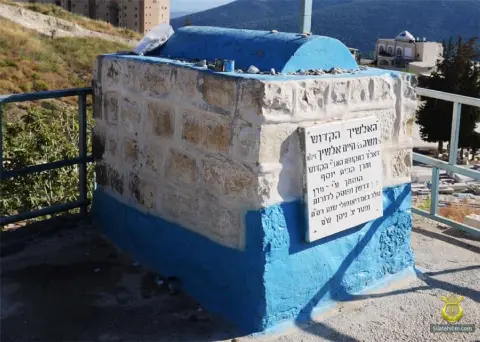
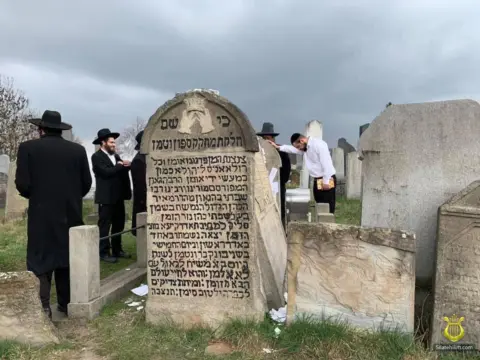
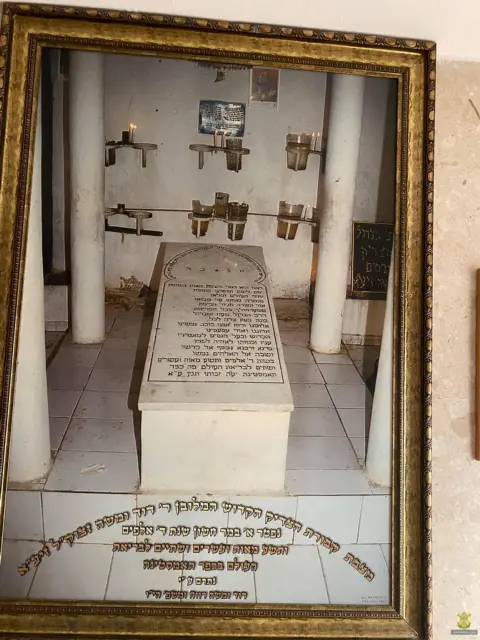
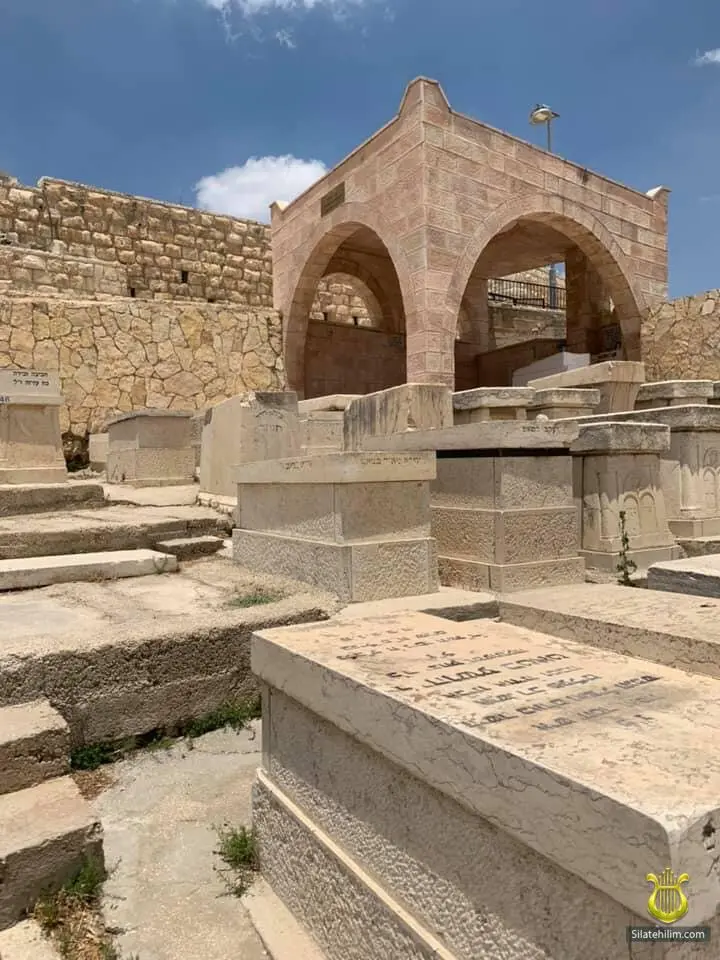
Grave
Yehuda Ftaya
Yahrzeit (Hillula)
- 27 Av — Rabbi Yehuda Fatiya
Rabbi Yehuda bar Moshe Ftaya (5619—5702 /1859—1942/) - a great kabbalist.
He was born in Baghdad, Iraq, on the 2nd of Shevat. His father, Rabbi Moshe, was a well-known Talmid Chacham and Mekubal - he cultivated the spiritual roots and thirst for Torah in the young Yehuda.
Rabbi Yehuda also studied Torah with Chacham Shimon Agassi. Another of his teachers, Chacham Abdallah Somech, held a special love for him. Rabbi Abdallah valued Rabbi Yehuda so highly that, when he was only 17 years old, Rabbi Abdallah gave him semicha (rabbinic ordination) both as a teacher and as a posek.
At the very young age of 25, having studied Gemara and Mishnayot, Rabbi Yehuda wrote his first major work on Kabbalah.
In his works he dealt with Torat HaSod and practical Kabbalah.
Despite his greatness in Torah, he was always extremely humble. He tried to conceal his greatness and spirituality from others, but he became too well known, and many Jews and non-Jews sought his spiritual help and blessings.
Later, Rabbi Yehuda became the foremost student of the great Ben Ish Chai.
He once admitted that he was a reincarnation of Rabbi Yechezkel ben Yehuda Landau (1713–1793), the great Ashkenazic Gaon, author of the responsa "Noda BiYehuda." Rabbi Yehuda said that he needed to return to this world to study Kabbalah. Therefore, in this next lifetime, the study of Kabbalah was his main focus and tikkun.
His main work, "Minchat Yehuda," deals with questions of reincarnation (transmigration of souls), as well as dream interpretation and practical Kabbalah - his accounts of dybbuks and spirits are striking. The book "Ruchot Mesaprot" (Souls Speak) tells of the afterlife of the soul.
Gilgulim
In his book "Minchat Yehuda," Rabbi Ftaya explains:
It is said: "Weep not for the dead, neither bemoan him; but weep sore for him that goes away, for he shall return no more, nor see his native country." [Yirmiyahu 22:10]
The prophet is speaking to people who have gathered to mourn a tzadik who has died - may the Merciful One save us - since there is at least one righteous person in the world whose merit protects his generation. The prophet tells the people: "Do not weep for the dead." The reason is that most righteous people do not merit to participate in all four parts of Pardes and therefore must reincarnate in order to complete their learning in all four aspects. Even one who engaged in three parts of Pardes has not fulfilled his obligations. [Shaar HaGilgulim, Introduction 17]
Tehillim 32:9
In this verse of Tehillim, such a person is mentioned: "Be not like a horse, or like a mule, which have no understanding." [Tehillim 32:9] The letters of the word פרד (mule) allude to three aspects: פשט - the literal meaning, רמז - the allusion, דרוש - the homiletic interpretation. It is written of him: "Behold, G-d does all these things with a man, twice, even three times," [Iyov 33:29] meaning He reincarnates him. Therefore, this is a loss that can be restored in this world and will not be a complete loss for the generation, since he can be reincarnated on that very same day, as mentioned in the Zohar HaKadosh (3, 88b) at the beginning of parashat Emor. (Rabbi Yehuda Ftaya, "Minchat Yehuda," ch. 86)
Gilgulim
Rabbi Yehuda Ftaya, may the memory of the tzadik be blessed, relates in his book "Neshamot Medaberot" (Souls Speak) about a Yemenite woman who mistakenly made the blessing "Borei Pri Ha'adama" over a fig. That night she dreamed that her uncle, who had passed away long ago, told her: "I will never forgive you." She asked him what she had done. He answered that he had been reincarnated into the fig that she ate, but because she said the wrong blessing, he lost the opportunity to rectify his neshama. The adama (earth) brings forth neshamot in order to rectify them. By reciting a blessing that contains the name of Ha-Shem, the neshamot that are reincarnated from the earth are rectified, and the blessing raises them to the spiritual world.
Heavenly Age
Rabbi Yehuda Ftaya, may the memory of the tzadik be blessed, writes in his book "Minchat Yehuda":
"And your children, who today do not know the difference between good and evil - they shall come there."
We see that even though among these "children" there were youths of 19 years old, the verse nevertheless calls them children, since the Heavenly Court does not punish a person until he reaches the age of 20. But all this applies only to living people.
But after a person's passing, he is punished even for sins committed before he turned 13. We find this in the book "Shaar HaGilgulim," where it is mentioned that Yosef was only 17 years old when he told his father about the deeds of his brothers (for which he himself was later punished). We also find it in the fact that the great Arizal told his student, Rabbi Chaim Vital, to fast for three days straight - day and night - before the holiday of Shavuot, in order to rectify the fact that he had struck his mother's breast as an infant.
(Chacham Menachem Menashe, "Ahavat Chaim")
Kashrut and the Epidemic
Rav Yehuda Ftaya tells of a dream he had on the eve of Shabbat parashat "Yitro."
"I saw myself walking through my native Baghdad, along its eastern side, where various beggars and unfortunate people live, and it seemed to me that I had only a few more meters to walk to reach my home.
And I saw a place covered by an awning, without a wall, where forty or fifty soldiers stood, dressed in black woolen clothing, their necks covered with something red. These soldiers stood and surveyed the city, as if trying to understand what was happening in it. And at that time there was an epidemic in the city.
I was close to them, at a distance of ten cubits, but they paid no attention to me.
I walked further and came to the gate of a poor man's house, and there I saw three elderly Jewish beggars.
I approached them and said that in the times when the Beit HaMikdash stood, we had prophets, and before a calamity would come, the prophets would come and proclaim, in the name of the Almighty, which sins and transgressions needed to be repented of, so that the people of Israel could avoid disaster. Everyone would then repent, and the Almighty would forgive them those transgressions, and the decree would be annulled.
And even though later, in the time of the Second Temple, there were no longer prophets, nevertheless there were people who possessed a spirit of holiness, or who heard a voice from Heaven, or who, through true dreams, had the cause of an approaching calamity revealed to them. But now, because of our great transgressions, none of this exists, and when trouble comes, we do not know which path to take in order to annul the decree.
For it happens that such a decree is issued because of a single person (whose actions were not protested).
And, worst of all, it happens that in the houses of the sinners themselves there reigns peace and prosperity, while honest people pay for their sins...
While I was speaking with these old men, three of the destroyers (i.e., the "soldiers") approached me and said: "Know that the decree of the epidemic was issued because the Jews - the residents of the city - eat carrion and treif food, as well as milk with meat, without separating them! And that is not all, for even in Jewish inns forbidden things are cooked as well! That is why from the word 'MA'AKHAL' (food) comes the word 'MALACH' (angel of destruction)." I then said to them:
"If so, let only the transgressors be punished, but not the rest."
They answered: "Know this! Although we are called destroyers, we nevertheless have compassion, and we pity creation, but the fact is that when we are commanded to destroy, we do not know how to distinguish a righteous person from a wicked one."
From this we learn that forbidden food can bring about an epidemic.
(Rabbi Yehuda Ftaya, "Minchat Yehuda")
Gallery