The Shabbat of Parashat “Beshalach” is called “Shabbat Shirah” (the Shabbat of Song).
This Shabbat is an Et Ratzon—a time of Heavenly favor—and it is auspicious to:
1. Fill the home with song and joy.
2. The “Sfat Emet” says that one who merits singing the song will see everything fall into harmonious order.
3. Recite Shirat HaYam (the Song at the Sea) in the synagogue or, if that is not possible, at home. Read it with joy and inspiration, as though you yourself were crossing the sea on dry land at that very moment.
4. On Shabbat Shirah, there is a special segula according to the custom of the holy Arizal —to bake challah in the shape of the vowel sign “segol”. Form 3 challahs in a round shape and arrange them in the form of a “segol” (when baking, the edges of the circles should join together). There should be 4 such sets of challahs (3 challahs in each) — 12 challahs in total.
On Erev Shabbat Shirah, challahs of this shape are arranged as follows:
4 challahs should be placed on both sides of the person reciting the blessing over the bread:
2 challahs (one on top of the other) on the left and 2 challahs (one on top of the other) on the right.
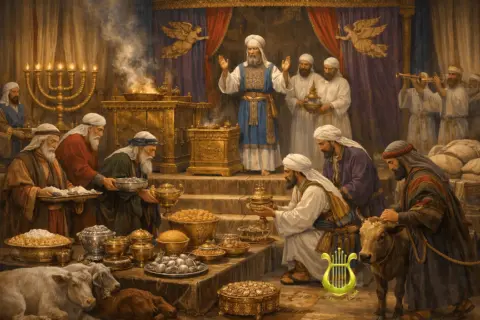
Arizal, of blessed memory, associated this segula with לֶחֶם הַפָּנִים — “lechem ha-panim”, the 12 loaves that were placed on the golden table in the Temple.
At the same time, every Jew should have emunah shleimah, along with a feeling of fullness and abundance, as well as a sense of appreciation and gratitude to the Almighty for all the goodness with which He constantly blesses us all.
5. Tehillim 69 — a segula for prosperity — Tehillim 69 was written by Nachshon ben Aminadav (the leader of the tribe of Judah at the time of the Exodus from Egypt; he was the first to enter the Red Sea).
6. Tehillim 23:5 — “Ta'arokh lefanai shulchan neged tzorerai, dishanta vashemen roshi, kosi revayah” — (You will set a table before me in the sight of my enemies.
The table should be set especially beautifully and abundantly in honor of Shabbat. One should make a special effort to observe Shabbat in every detail.
7. A segula for a shidduch. The first mention of Shabbat is: “See, the L-rd has given you Shabbat...” Shabbat is the partner of the Jewish people. Making an effort for the sake of Shabbat is a wonderful segula for a good shidduch.
8. A segula to feed the birds before Shabbat — scatter bread crumbs for the birds. This is an expression of gratitude to the birds that ate the manna which Dathan and Abiram scattered before Shabbat in order to confuse the people. The birds ate the manna, demonstrating that Moshe and Aharon conveyed the words of the living G-d.
9. “And prepare a timbrel...” The prophetess Miriam, who went out dancing with a timbrel immediately after the splitting of Yam Suf, knew that the gematria of the word timbrel, “tof” = 480. This was precisely the number of camps of impure forces approaching the Jewish camp. Through the timbrel, Miriam dispelled them.
Shabbat Shalom u-mevorach!(from Yeshivat “Kise Rahamim,” by Yura Plishtiev; based on a lesson by Rabbanit Hagit Shirah)
100% of readers found this article helpful (75 votes).
Please note: some articles on our site contain the holy Names of the Almighty. If you print these articles, they may not be thrown away or destroyed. Please handle printed copies with care and respect.
Material from our site may be copied for the purpose of spreading Torah, provided a link to Silatehilim.com is included. Any use of the site's material in print publications or for commercial purposes is prohibited without the rights holder's consent.