Segula for Refuah Shlemah – Rain Between Pesach and Shavuot
Segula for Refuah Shlemah – Rain Between Pesach and Shavuot
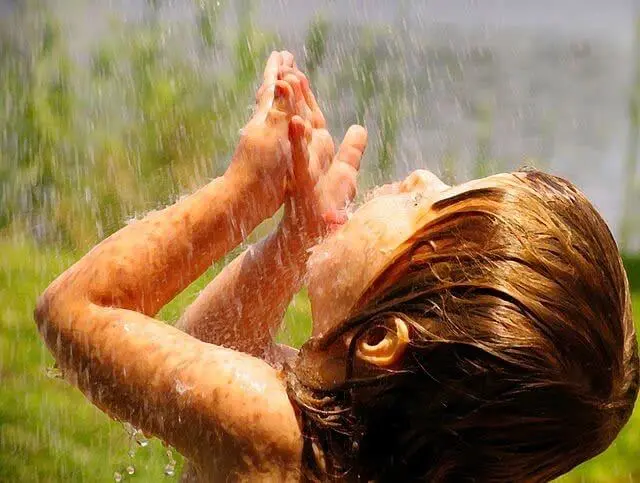
Rabbi Pinchas of Koretz (of blessed memory) taught that rain during the period between Pesach and Shavuot possesses incredible healing power for all illnesses. One should stand in the rain and open one's mouth so that at least a few drops enter.
After Atzeret, rain can also have healing properties if it falls when the earth needs it, as stated in the Zohar (on Metzora): “When the Almighty, blessed be He, sends His kindness into this world, a person should go outside and show everyone that when the Almighty’s kindness spreads throughout this world, it spreads to everything. Therefore, a person should go outside and do good in order to merit Divine kindness.”
In the sefer Segulot Yisrael, Rav Shabtai Lifshitz writes that rain in the month of Iyar is healing. One should go outside so that the rain falls on one's head and allow the raindrops to enter one's mouth. This rain has greater healing power than all other remedies, says Rabbi Shabtai Lifshitz.
Rav Kaduri (zechuto yagen aleinu) advised his students to go outside during rain in Iyar with bottles, try to collect rainwater, and give it to a sick person with a bracha.
It is also transmitted in the name of Hesed Le-Avraham that there are upper [masculine] waters, which bring blessing, and lower [feminine] waters, which bring a curse.
The Gemara (Babylonian Talmud, tractate Ta'anit, 7b) states:
- Great is the day of rain, for when it comes, salvation comes into the world;
- Great is the day of rain, like the day of the revival of the dead;
- Great is the day of rain, just like the day on which Heaven and Earth were created.
“Great is the day of rain, like the day of the revival of the dead”—because when rain falls, the upper [masculine] waters and the lower [feminine] waters return and unite.
So when are waters considered blessed rain?
When the “lower waters” rise to the surface of the earth—“the deep calls to the deep”—and unite with the waters flowing from above, as it says in Tehillim (42:8): “Tehom el tehom kore le-kol tzinorecha”—(The deep calls to the deep at the sound of Your waterfalls).
What does it mean that the deep calls to the deep? When it rains, the rain falls from above. The upper waters call to the lower waters.
(based on a lesson at the Yodei Binah Yeshivah on the sefer of Rabbi Pinchas of Koretz, Imrei Pinchas, ch. 121, translated by Zoya-Chaya Tigay), and on a lesson by Rav Ben-Zion Mutzafi)
Was this helpful?
98% of readers found this article helpful (49 votes).
Please note: some articles on our site contain the holy Names of the Almighty. If you print these articles, they may not be thrown away or destroyed. Please handle printed copies with care and respect.
Material from our site may be copied for the purpose of spreading Torah, provided a link to Silatehilim.com is included. Any use of the site's material in print publications or for commercial purposes is prohibited without the rights holder's consent.