The Secret of the “Vehu Rachum” Prayer
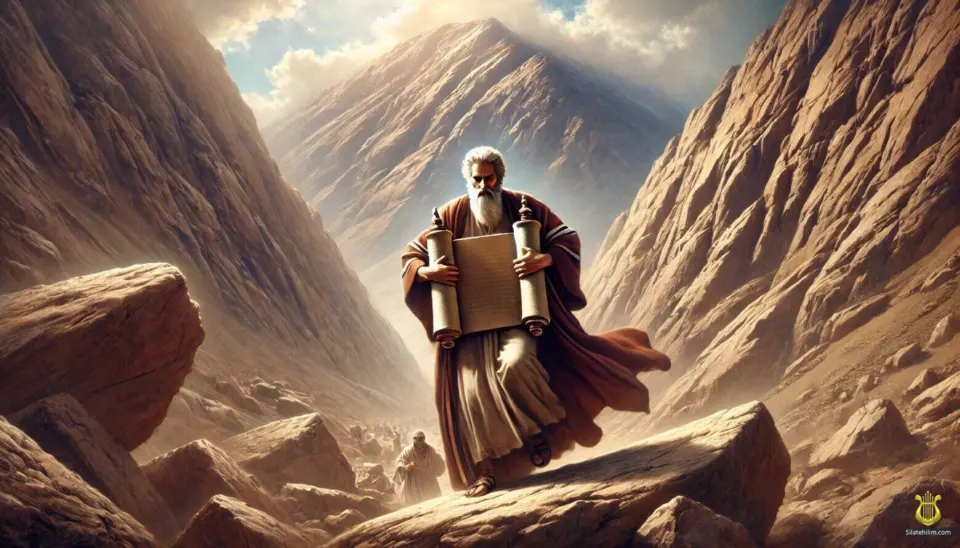
It is written in Sefer Shemot, in the parashah of “Ki Tisa”: “Moses turned and began to descend.”
The Midrash “Yalkut Shimoni” reveals that Moshe descended the mountain walking backward, facing G-d. We do the same when reciting the 18 blessings—we step backward as though we see G-d standing before us.
“Yalkut Shimoni” continues that when Moshe wanted to descend the mountain, five evil angels came toward him, seeking to destroy him. “He became frightened and clung to the throne of the Almighty.” G-d protected him and spread His cloud over him.
From this we see how dreadful this sin—the sin of the Golden Calf—was. Before the Jews sinned, Moshe could ascend to Heaven and no one could impede him; but after Israel’s sin, he became frightened of the five angels. They were called Af, Ketzeph, Mashbit, Mashchit and Chemah. As soon as Moshe recalled the forefathers Avraham, Yitzchak, and Yaakov, three of the evil angels disappeared, leaving only two: Af (anger) and Chemah (wrath). Moshe said to G-d: “Take one angel upon Yourself, and I will deal with the other myself, for it is written: “Kuma Ado-nai be’apekha”—“Arise, O L-rd, in Your anger (be-apekha - באפך)”—stand against the angel whose name was Af (anger).” (“Yalkut Shimoni” on “Ki Tisa”)
The famous verse from Tehillim 78—“Vehu Rachum”—can be found in many prayers: in Shacharit (Pesukei de-Zimra), before the weekday Maariv prayer, in Tachanun, and in Selichot. Tehillim 78:38 וְה֤וּא רַח֨וּם ׀ יְכַפֵּ֥ר עָוֺן֮ וְֽלֹא־יַ֫שְׁחִ֥ית וְ֭הִרְבָּה לְהָשִׁ֣יב אַפּ֑וֹ וְלֹֽא־יָ֝עִיר כָּל־חֲמָתֽוֹ - “Vehu rachum yechaper avon, velo-yashchit, vehirbah lehashiv apo, velo-ya’ir kol-chamato” - (But He, being compassionate, forgave iniquity and did not destroy; many times He turned away His anger and did not stir up all His wrath.)The Kabbalists explain that this pasuk possesses a special power to temper the forces of judgment, which is why it was incorporated into various parts of the prayer service.
Why does it possess such power? The Midrash relates that after the sin of the Golden Calf, evil angels accused Israel and sought to destroy Moshe. These five destroying angels were: אַף Af (anger), קֶצֶף Ketzeph (indignation), מַשְׁבִּית Mashbit (destruction), מַשְׁחִית Mashchit (annihilation), and חֵמָה Chemah (wrath). The “Pirkei de-Rabbi Eliezer” presents a different version: when Moshe invoked the merit of the three forefathers, three angels—Ketzeph, Af, and Chemah—withdrew, while Mashbit and Mashchit remained. Moshe then began to pray: “Master of the Universe! For the sake of the oath You swore to the forefathers, stop the destruction of Israel”—and the angel Mashchit (“destruction”) stopped, as it is written: “But He, being compassionate, will atone for iniquity and will not destroy (yashchit).” The Names of Three Angels in Tehillim 78:38 In the pasuk from Tehillim (78:38): “Vehu rachum yechaper avon, velo-yashchit, vehirbah lehashiv apo, velo-ya’ir kol-chamato” King David encoded the names of three angels: the word “yashchit” contains the name of the angel Mashchit; the word “apo” contains the name of the angel Af; and the word “chamato” contains the name of the angel Chemah. Therefore, at the beginning of the Shabbat Maariv prayer, the passage “Vehu Rachum” is not recited—as it is on weekdays—because it mentions the names of three angels: “Mashchit, Af, Chemah”, who are responsible for punishing sinners in Gehinnom; on Shabbat, however, they have no authority to punish sinners. (Rabbeinu Bachya on Yitro 20:8; “Pirkei de-Rabbi Eliezer,” chapter 45)