Time to Step Out of the Shadows
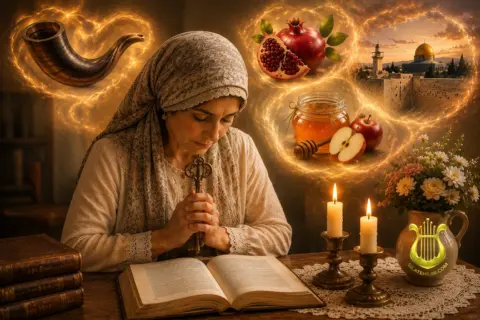
Ten years ago, when I was searching for information about segulot in Russian, there was almost nothing available—and what did exist was already rather worn-out: from an etrog for an easy birth to Shir HaShirim for finding one's soulmate.
Thanks to the English-language Sephardic websites that generously share an important part of our tradition.
They clearly understand the difference between segulot and darkei ha-Emori—the ways of the Amorites (non-Jewish customs).
It is astonishing how contemporary rabbis avoid the word “segula.” They find it easier to replace the Hebrew word given by G-d Himself with non-Jewish terms such as “unique properties,” “remedy,” and so on, while describing the very same segulot.
Until recently, this word was taboo. But the time has come to step out of the shadows and take its place in the centuries-old Jewish tradition. After all, segulot were given by great Mekubalim in order to help the Jewish people and ease their suffering and troubles.
2 Sivan—Yom Ha-Meyuhas (a special day)—the day when G-d said: “You shall be set apart for Me from among the nations,” making our people His segula, His treasured possession.
G-d introduces the concept of a segula in connection with the Jewish people—so why do we ignore this word?
Rabbi Chaim of Volozhin, in his book
Nefesh HaChaim, explains: “Israel is called a segula-nation because, through observing the Torah and mitzvot, it is governed (from Heaven) by wondrous ways, the ways of segula; and its prayers are likewise answered contrary to the laws of nature.”
The Torah uses the word “segula” twice, and both times in connection with the Jewish people:
- “And now, if you will indeed heed My voice and keep My covenant, then you shall be My treasured possession among all the nations (you shall be My possession, more precious than all the nations), for all the earth is Mine”; (Shemot 19:5)
- “For you are a holy people to the L-rd your G-d; the L-rd your G-d has chosen you to be His treasured people from among all the peoples on the face of the earth”; (Devarim 7:6)
David HaMelech continues this theme in Tehillim:
- “Ki Yaakov bachar lo Kah, Yisrael le-segulato”—(For Yaakov, G-d chose for Himself; Israel as His treasured possession); (Tehillim 135:4)
And Shlomo HaMelech supports his father in Kohelet:
- “Segulat melachim ve-ha-med inot”—“I amassed for myself treasures obtained from kings and provinces.” (Kohelet 2:8)
Am HaSegula (The Segula Nation)
The teachings of the
Ba’al Shem Tov defined the essence of segulot more clearly and accurately than anything else. While all the outstanding Sages of earlier generations placed great importance on kavanah (devotion of the heart) in Torah study, prayer, and mitzvot, the Ba’al Shem Tov overturned this perception. He revealed that simple faith in G-d, even on the part of the simplest person, is more effective than any scholarly knowledge. Simple faith means believing that if G-d commanded us to do something, then it is beneficial for us, whether we understand it or not.
“Kavanah”—intention—requires a person to have understanding. But for a mitzvah to be effective, understanding alone is not enough; it works well with simple faith, because a person simply fills himself with the belief that it will work because G-d gave it to us.
This effectiveness itself is what a segula is according to the Ba’al Shem Tov.
This is also demonstrated by the history of the rise of Chassidism. In an era that seemed to be one of total observance (unlike our own times), people did not lack halachot and learning; they lacked simple faith amid their hopeless poverty and troubles. They needed a Rebbe in whom they could place complete trust, a Rebbe who gave advice and segulot that always worked as a reward for that very faith.
For me personally, segulot are the legacy of our great tzadikim, who chose the very best ways to help their people draw closer to G-d and strengthen their connection with Him.
Who are we to dismiss the experience and knowledge of entire generations of Mekubalim?
Segula—Segol and the Triple Blessing
Ben Ish Chai teaches that the soul of Israel was created at the Throne of Glory [of G-d], which belongs to the world of Beriah, as indicated by the words: “Blessed is our G-d, Who created us
שבראנו ‘she-bara’anu’—(for the sake of His Glory).” There, the Name אל ש-די “E-l Sha-dai” radiates—its gematria is 345, the threefold number חסד גדול “Chesed gadol” (great kindness)—whose gematria is
115.
Thus, if the Jewish people are perfect in their service of G-d with threefold love—with love in thought, love in speech, and love in deed—then the Name אל ש-די—
“E-l Sha-dai”—the triple value of “Chesed gadol,” will shine upon them. For love derives from the aspect of Chesed (kindness), as it is written: “The seed of Avraham [the aspect of chesed], who loved Me.” (Yeshayahu 41:8)
And this is also the secret of greatness; therefore, the threefold “Chesed gadol” (great kindness) will shine for them on the levels of nefesh, ruach, and neshamah of their souls.
And it was to this threefold quality that [G-d] alluded when He said to them: “And you shall be for Me a treasured possession
סגולה—‘segula’—from among all the nations.” (Shemot 19:5)
For the word
סגולה “segula” recalls the vowel sign
סגול “segol,” used in the word
חֶסֶד “Chesed” (kindness) and consisting of three dots.
(Ben Ish Chai on Bereishit, Vayeishev)
Segula—Segol and the Four Levels of Torah
The Mekubalim teach that the Holy Torah, given by the Creator, has four levels of understanding:
PaRDeS—
Peshat (the plain meaning),
Remez (allusion),
Drash (commentary based on the Thirteen Principles), and
Sod (the hidden meaning).
Although the other nations of the world may also study Torah, they have access only to its plain meaning—Peshat.
The other three paths of understanding Torah—Remez, Drash, and Sod—to which the three dots of the Segol vowel sign allude, were given to the Jewish people as a
segula.
The Myth That Segulot Replace Observance of the Mitzvot
The book
Sefer HaBrit states: “The mitzvot are precious to us, for each one has its own unique segula tovah:
Tzedakah can save one from death;
The mitzvah of sanctifying the moon can save one from death at the hands of another person;
The mitzvah of Sukkah protects us from lengthy searches for suitable housing and from numerous relocations and moves;
And so it is with all the other mitzvot, each of which possesses a particular segula.”
In other words, a segula is a revelation of the beauty and inner meaning of the mitzvot.
We see that a segula is directed spiritual work: a particular mitzvah that, when observed in the best possible manner, can awaken to the greatest degree precisely those spiritual forces needed to bring about deliverance from a specific problem. It is simply that today we do not always see the connection between things, and a segula takes on an aura of a miracle in our eyes.
Thus, as proof that segulot reveal the beauty of the Torah and its mitzvot and help with teshuvah, here are several segulot arranged by category.
Segulot That Reveal the Inner Essence of the Mitzvot:
- A segula during the brit milah of Rabbi Yaakov Chaim Tzemach, “Zer Zahav” (“Golden Crown”)
Prayer for a Brit Milah – a Segula During an Infant’s Crying
- The segula of “Shiluach HaKen”: “send away the mother, and take the young for yourself”—a segula for longevity and having children;
“Shiluach HaKen” — Sod Torah
- The Steipler Gaon’s segula—Hachnasat Kallah—a segula for healing
Steipler Gaon — The Secret of the Mitzvah of Hachnasat Kallah: How It Adds 22 Years to One’s Life
- Segulot of Hachnasat Orchim
Hachnasat Orchim – Segulot
Segulot Related to Halachot:
- The Tzemach Tzedek’s segula for Refuah Shleimah, which saved a Jew’s life because of the difference between Sephardic and Ashkenazic halachah;
When the Difference Between Sephardic and Ashkenazic Halachah Is a Segula for Healing
- A segula in which, on a tzadik’s yahrzeit, the halachah follows his opinion.
On a Tzadik's Yahrzeit, Halakhah Follows His Opinion Alone
- The Arizal’s segula of reciting Birkat HaMazon immediately after Mayim Acharonim.
Сгулот аризаля переданные мекубали
- The Arizal’s segula of praying Mincha according to David HaMelech.
Tehillim 72 and the Ari's Mincha
Shabbat Segulot:
- The segula of Rabbi Yehoshua Pinto—to read the entire Book of Devarim
Sefer Devarim on Shabbat – 955 P'sukim Corresponding to the 955 Gates of Prayer
- The Arizal’s segula of eating fish on Shabbat
Fish for Shabbat—Deliverance from Judgment
- Segulot for Shabbat Mevarchim
Shabbat Mevarchim – Segulah of the Rebbe of Dzhikov
- The segula of Rabbi Yishmael Kohen Gadol—Et Ratzon of the four Shabbatot on which three Torah scrolls are taken out,
The Segula of Rabbi Ishmael Ha-Kohen Ha-Gadol and Who First Recited Kaddish
Segulot from the Torah:
- The segula of Rabbi Shimshon of Ostropoli against epidemics—the 42 stops or journeys in the wilderness;
42 Encampments in the Wilderness — the Segula of Rabbi Shimshon of Ostropol
- The segula of reading Parashat HaMan on Tuesday of the week of Parashat Beshalach;
Parashat HaMan and the Bracha “Me-Asher Shmenah Lachmo”
- The segula involving duda'im (mandrakes)
Mandrakes—Duda'im and the Tikkun of Esau
Segulot from the Mishnah:
- The segula of Rebbetzin Kanievsky—“Mishnayot Kinnim”;
Mishnayot Kinnim — Rabbanit Kanievsky’s Segula for Salvation
- The segula of Rabbi Moshe Leib of Sassov—18 mishnayot a day
Rabbi Moshe Leib of Sassov – Studying Mishnayot as a Remedy for Madness
- The segula of Rabbi Chaim Palagi—studying Mishnah for parnassah
The Segulah of Rabbi Haim Palagi — Studying Mishnah for Parnassah
Segulot That Open the Gates of Prayer
- The Ramban’s segula—to read the “Iggeret Ramban”
"Iggeret HaRamban" - The Ramban's Letter to His Son
- The segula of the Shelah HaKadosh—to recite the prayer for children on Rosh Chodesh Sivan
Prayer of the Shla HaKadosh for Children on Erev Rosh Chodesh Sivan
- The segula of Rabbi Chaim of Volozhin—“Ein Od Milvado”
“Ein Od Milvado” – The Segula of Rabbi Chaim of Volozhin
- The segula of reading the prayer “Tikun HaNefesh” by Rabbi Naftali HaKohen Katz
Tikun HaNefesh of Rabbi Naftali Katz
- Rabbi Nachman’s segula for rectifying Pegam HaBrit—Tikun HaKlali
Tikkun HaKlali - the Fundamental Rectification of Pgam HaBrit
These are just a few examples—the rest of the segulot can be found in various sections of our website.
Conclusion:
Rabbi Aharon Zakai, author of the book
Segulot veTefillot, taught that the power of segulot depends on faith in the Creator, upon Whom the lives of all creatures depend. We must always turn to Him in supplication, asking Him to hear and answer us, and to guide our steps to the right physician, who will prescribe the appropriate treatment for us.
For the Creator, blessed be His Name, is the One and Only Healer. And it is all the more certain when a tear falls during prayer, since “the gates of tears are never locked.”
Please note: some articles on our site contain the holy Names of the Almighty. If you print these articles, they may not be thrown away or destroyed. Please handle printed copies with care and respect.