Cobweb Segulot: How to Relieve Headaches and Depression
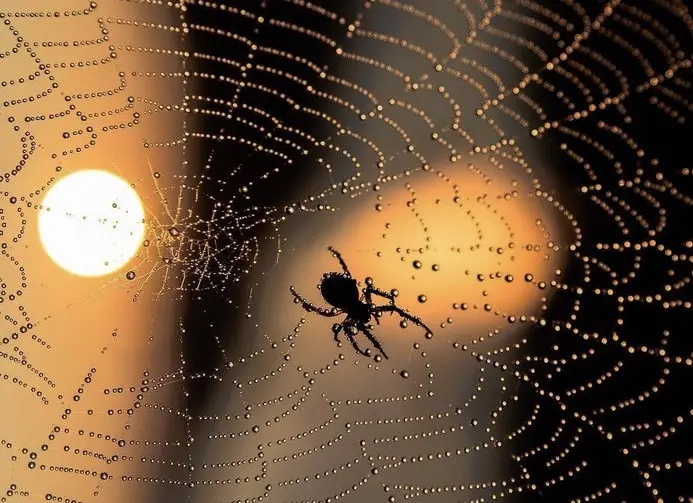
Cobweb Segulot: How to Relieve Headaches and Depression
The Torah places great emphasis on the fact that every creation has its purpose—its mission—and that nothing is accidental or superfluous.
One day, while sitting in a garden, David saw a hornet devouring a spider.
“What purpose do these creatures of Yours serve, O L-rd?” he said. “The hornet damages the honeycombs and produces nothing useful itself; the spider weaves all year long, yet has nothing to wear.“David!” the Creator replied. “Are you mocking My creations? The time will come when you will need them.”
While fleeing from King Saul, David hid in a cave. The L-rd sent a spider, which covered the entrance to the cave with its web. Saul arrived and saw that the entrance was covered with a web. He left without entering the cave.
When David emerged from his refuge and saw what had happened, he was ready to kiss the spider.
“Blessed is He who created you, and may you too be blessed!”
At the same time, the mekubalim reveal another aspect of this master weaver.
In Hebrew, the spider has two names: ak avis and achshuv.
The Torah emphasizes the main characteristic of the ak avis (spider) —its ability to weave a web:
“They hatch the eggs of the tzifoni (viper) and weave the web of the ak avis (…) Their webs are unfit for clothing, and they cannot cover themselves with their works…” (Isaiah 59:5–6)
“His confidence is in a thread, and a spider’s house is his hope.” (Job 8:14)
The Book of Mishlei also mentions the spider: “The spider grasps with its legs, and it is found in royal palaces.” (30:28)
A spider is also mentioned in Tehillim—but from a somewhat different perspective:
“They sharpen their tongues like a nachash (snake); the venom of the achshuv is under their lips.” (Tehillim 140:4)
“Hamat achshuv”—Rashi translates this as “the venom of a tarantula.”Rav David Wali writes that “ak avis” can be written as two words—“ekev shai”—(a delay in the abundance—the gift of the Almighty). The gematria of the word שי—“shai” = 310.
The Mishnah says that the Almighty grants every righteous person “shai olamot”—310 worlds—as a reward. (Based on a lesson by Alexander Tzvi Sypkov.)
It is transmitted from the Kisei Rachamim Yeshiva, in the name of Rabbi Meir Mazuz, that a very powerful segula for “Shalom Bayit” is to remove all cobwebs from the corners of the home with a damp cloth before Shabbat—at midnight on Thursday night, or before noon on Thursday. This is a remedy for arguments, discord, and scandals in the home.
Interestingly, the gematria of “ak avis” (spider)—עכביש = 402—is equal to the gematria of the word “daughter” (bat) בת. (A chiddush from “Sila Tehilim.”)Rabbi Edo Weber also speaks of this segula. Citing the mekubalim, he says that it is a spiritual remedy that helps with mental illness. Before Shabbat, the home of a person suffering from mental disorders should be cleaned and all cobwebs removed from every corner and ceiling. This segula is a spiritual remedy for depression and other mental illnesses. It can help heal the sick person.
In addition, this proven remedy helps relieve headaches and unexplained mood swings.
(Kisei Rachamim Yeshiva, Rabbi Meir Mazuz)
Was this helpful?
95% of readers found this article helpful (66 votes).
Please note: some articles on our site contain the holy Names of the Almighty. If you print these articles, they may not be thrown away or destroyed. Please handle printed copies with care and respect.
Material from our site may be copied for the purpose of spreading Torah, provided a link to Silatehilim.com is included. Any use of the site's material in print publications or for commercial purposes is prohibited without the rights holder's consent.