Kever Rachel Imeinu – Parochet of Nava Epelboim
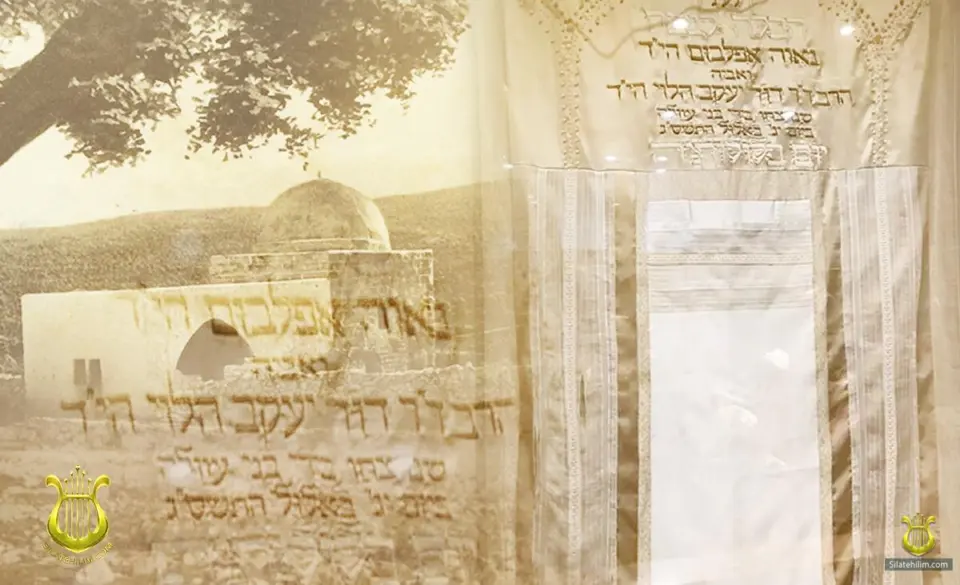
After I began frequently visiting Kever Rachel Imeinu, whose yahrzeit falls on my birthday, two things caught my attention: Why is Kever Rachel Imeinu covered periodically with either a white or a blue covering, and what is the beige curtain (parochet) to the left of the grave?
After some time, I learned that Kever Rachel Imeinu is covered with a white parochet only during the holidays of the months of Tishrei and Nissan, as well as on Rachel Imeinu’s yahrzeit—11 Cheshvan. During the rest of the year, it is generally covered with a blue parochet.
But the story of the beige parochet to the left of the grave touched me deeply.
Nava Epelboim
Nava was the third of David and Devorah Epelboim’s six children.
Her father, David, was an outstanding emergency physician, well known for his work developing methods of providing aid to victims of terrorist attacks.
In 1982, when the family moved from America to Israel, David became head of the Emergency and Trauma Department at Shaare Zedek Medical Center in Jerusalem, while Nava graduated from the Horev girls’ high school. Nava met her fiancé, Hanan Sand, in the Ezra religious youth movement, where they both worked as counselors. A year later they became engaged, but postponed their wedding. As part of her two-year Sherut Leumi service, Nava worked with children suffering from cancer. She planned to study chemistry and genetics at the Hebrew University of Jerusalem and dreamed of finding a cure for cancer.
The wedding was scheduled for September 10, 2003, in Ramat Rachel, a kibbutz south of Jerusalem.
Several hours before the bombing, on September 9, Nava went to the mikveh, as halachah requires of brides before their weddings.
Afterward, her father invited Nava to sit and talk with him at a café before the wedding, and they went to Café Hillel on Emek Refaim Street in Jerusalem. When a suicide bomber detonated a bomb near the entrance to the café, Nava and David were walking in…
Several days after the bombing, another engaged couple decided to hold their Sheva Brachot celebration at the site of the attack. The celebration was conducted by video link with numerous Jewish communities around the world—it was an extraordinary expression of Ahavat Yisrael.
Many years ago, after the Arab pogroms in Tzfat, the wedding dress of a bride who had been killed on the eve of her wedding was brought to Rachel’s Tomb—the dress she never had the chance to wear.
Among Eastern Jewish communities, there was a custom of donating wedding dresses after the wedding to be made into a parochet for the Aron Kodesh.
Upon learning this, Devorah Epelboim also decided to donate Nava’s wedding dress to Kever Rachel.
The upper part of Nava’s wedding dress was sewn into a parochet for the Aron Kodesh. Later, it was used as a parochet between the women’s and men’s sections, and was eventually hung separately behind glass to the left of Rachel’s grave. It bears the inscription:
“Eternal Bride—Nava Epelboim, murdered by evildoers on 13 Elul 2003.”
The lower part of the wedding dress—the skirt—was fashioned into a wedding canopy, so that other couples could stand beneath it during their chuppah ceremony.
Our tradition tells us that in the Temple, the parochet, embroidered with gold and silver thread, bore images of angels—she is that angel… Nava Epelboim.
The Parochet in the Temple
When describing the structure of the Temple, the Creator calls the entrance to the Holy of Holies
“bet.”
We read in the Book of Shemot (26:33):
“You shall bring it inside, from ‘bet’ to the curtain behind which is the Ark of the Covenant”—(ve-heveita shamah mi-bet la-parochet).
The Sanctuary built by the Jews in the wilderness consisted of a large courtyard,
chatzer, and within the courtyard stood an enclosed structure, the Mishkan, with two chambers: the larger one, the Kodesh, and the smaller one, the Kodesh Kodashim, the Holy of Holies. (Shemot 31:7–8; 36:8–38; 39:33–43)
In the courtyard they erected the altar of burnt offerings, behind which stood a copper basin, the
kiyor, a special vessel for the kohanim to wash their hands and feet.
In the Kodesh chamber, to the left of the entrance, on the southern side, they placed the Menorah. Opposite it, on the northern side, stood the golden table for the showbread. Between them, on the western side, was the golden altar for incense, while directly ahead was the entrance to the Holy of Holies, the Kodesh Kodashim, containing the Ark of the Covenant, the Aron HaKodesh.
The entrance to the Kodesh Kodashim was concealed by the
parochet (curtain). (Shemot 26:31–33)
The name
parochet (in the Gemara,
pargod) comes from the Akkadian language: “peh-resh-chaf,” meaning
“closed or concealed,” while Rashi translates it as
mechitzah (a partition).
The Torah explains that, by
opening the curtain, we can make the transition from the wisdom of
“Bet Chochmah”—to an understanding of what wisdom contains, to intellect—
“Bet Binah.”
The wisdom in the Temple lifted the veils of material nature and led the Jews to the Kodesh Kodashim, to G-d. On behalf of the Jewish people, once a year, on Yom Kippur, the Kohen Gadol would lift the parochet, enter the Kodesh Kodashim, and return to the Jewish people with G-d’s secret Name on his lips.
The parochet—a curtain, a partition, a transition from wisdom to understanding… from the transient to the eternal.
May the Almighty avenge such a wondrous soul as Nava Epelboim!
(translated by “Sila Tehilim” from http://dreamingofmoshiach.blogspot.com)
Please note: some articles on our site contain the holy Names of the Almighty. If you print these articles, they may not be thrown away or destroyed. Please handle printed copies with care and respect.