Zohar on Tehillim 22 – Ayelet HaShachar
Tehillim 22:1
לַ֭מְנַצֵּחַ עַל־אַיֶּ֥לֶת הַשַּׁ֗חַר מִזְמ֥וֹר לְדָוִֽד
– “La-menatze’ach al Ayelet HaShachar, mizmor le-David” – (“For the conductor; upon the dawn hind, a psalm of David”)
The word “la-menatze’ach” is understood as comprising two themes: the letters ל-מ, whose gematria is 70 (ל – 30 and מ – 40), and the word “netzach,” meaning eternity, which is a symbol of the Shechinah (ל-מ and netzach – la-me-natze’ach). These are the 70 voices crying out to “Ayelet HaShachar” (the hind of the dawn) – her suffering children. For darkness is closing in around them, just as a woman in labor begins to cry out at the onset of childbirth.
“Night” is compared to galut, while “morning” is compared to Geulah.
And “Ayelet HaShachar” cries out, awaiting the Geulah, which will last 70 years. Before the Geulah comes to pass, the galut will intensify, bringing the most terrible period of all the times of exile. As it is said regarding the Egyptian exile and the first Geulah: “Make the work heavier for these people, so that they will perform it and not pay attention to false words” – and this itself hastens the Geulah, as it is said: “Agra de-Kallah duchka” (the reward is for enduring the crowding). This refers to the many people who gather in Jerusalem on Shabbat and festivals to listen to the Torah sages; even if they do not understand, they will be rewarded simply for enduring the crush. Darkness always grows deepest just before dawn. These 70 years are called “Chevlei Mashiach” (the birth pangs of Mashiach). (The Vilna Gaon on Tikkunei Zohar, 36)
The Hind and the Jewish People
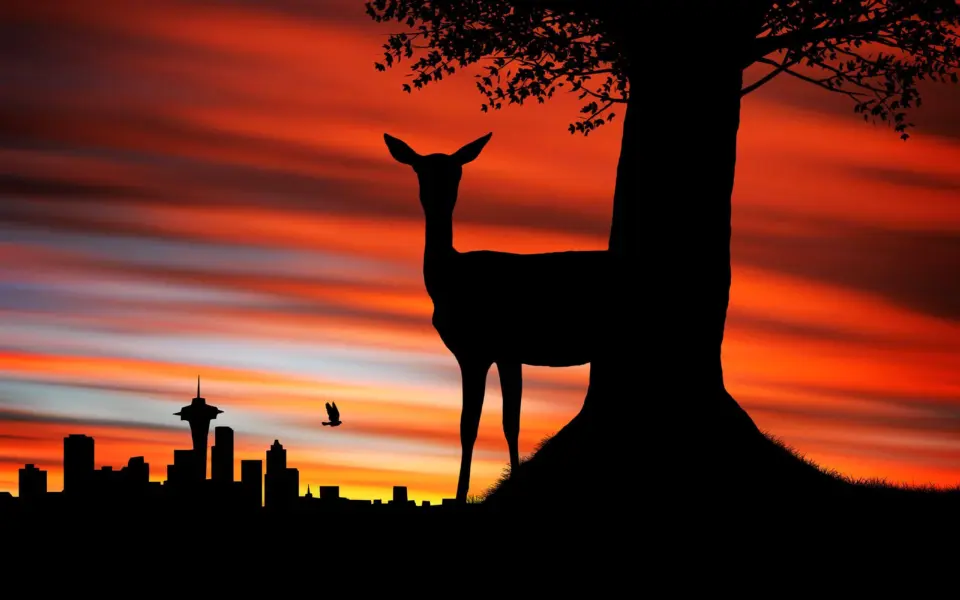
For this reason, “Ayelet HaShachar” is compared by Radak to a pre-dawn hind, which symbolizes the Jewish people in exile and cries out for help.
Tehillim 42:2
– “Ke-ayyal ta’arog al afikei mayim” – (As a hind longs for streams of water).
The hind lives in a waterless desert and therefore is always thirsty for water; when overheated, it seeks water all the more to cool itself. When hounds pursue a hind, it runs toward deep streams, and, exhausted, plunges into the water to escape its pursuers. (Rabbi David Kimchi – Radak)
The mekubalim relate a tradition that when the animals are thirsty and suffering from thirst, they gather around the hind and beg her to ask for water. The hind then raises her head and cries out to G-d, and the Creator takes pity on her, causing water to rise from the depths. Knowing this, David HaMelech says: “Just as the hind pleads not only for herself but for all the other animals, so I ask You not only for myself, but for the entire Jewish people.”
(Translation by the site based on “Sha’arei Chaim” by the Gaon Rabbi Chaim Sofer)