Tehillim 119 – Shemirat Einayim (Guarding the Eyes)
Tehillim 119 – Shemirat Einayim (Guarding the Eyes)
Tehillim 119:37 - “Ha'avar einai me'reot shav, bid'rachecha hayeini” – (Turn my eyes away from seeing vanity; give me life in Your ways).“Kav HaYosher” (chapter 2) writes that David HaMelech says in Tehillim: הַעֲבַעֲר עֵינַי מֵרְאוֹת שָׁוְא – “Ha'avar einai me'reot shav, bid'rachecha hayeini” – (turn my eyes away from seeing vanity; give me life in Your ways).
The word שָׁוְא , according to its gematria, is שז, which is an acronym for שכבתזרע (the spilling of seed).
The verse can therefore be read as follows:
“Turn my eyes away from seeing things that may cause שכבת זרע.”Tur , in the first section of “Orach Chaim”, mentions this verse and says that one should constantly pray with these words.
In the portion of Shelach there is a verse: וְלֹא-תָתוּרוּ אַחֲרֵי לְבַבְכֶם וְאַחֲרֵי עֵינֵיכֶם אֲשֶׁר-אַתֶּם זֹנִיֶם (and you shall not follow after your heart and after your eyes, after which you go astray). (Shelach 15:39)
Rashi quotes a Midrash that says: “The eyes see, the heart desires, and the body sins.”
Chazal teach that the yetzer hara is stronger in the summer, although Shemirat Einayim is relevant throughout the entire year. Perhaps this is why the portions of Beha'alotcha and Shelach, where we learn the aforementioned lessons, appear at the beginning of the summer months.
In the portion of Shelach (13:20), it says: וְהַיָּמִים-יְמֵי בִּכּוּרֵי עֲנָבִים – “It was the season of the first ripe grapes.”
This refers to the time when the meraglim (spies) set out on a mission to scout the Land of Israel.
Rabbeinu Chida (may his merit protect us) says in the name of Rabbi Shimshon of Ostropoli (may his merit protect us) that if each letter in the word עֲנָבִים is replaced with the letter that follows it in the alphabet, the result is the word סמאל (Samael). Chida explains why the letter yud is not used here in the word עֲנָבִים – the letter mem is stronger here than it is ordinarily during the months of Tammuz and Av, because these are the months of Esav; this is why the incident with the meraglim occurred. (Pnei David)
Rashi, commenting on the verse וְלֹא-תָתוּרוּ אַחֲרֵי לְבַבְכֶם וְאַחֲרֵי עֵינֵיכֶם , says that the eyes are called “meraglim.”
This is understandable, since we know that Shemirat Einayim is more difficult in the summer. Just as Satan was able to lead the meraglim astray, so too does he cause the eyes to sin.
Tanna Rabbi Matya ben Harash
Chazal relate a well-known story about the Tanna Rabbi Matya ben Harash, who would always sit in the Beit Midrash and study Torah. The radiance of his face resembled the radiance of the sun, and his countenance resembled that of the angels, because he never raised his eyes to look at women.
One day, an angel of G-d looked upon the tzadik and thought: “Could it be that this man never sins?”
The angel of G-d then went and asked G-d: “What do You think of Rabbi Matya ben Harash?”
G-d replied: “He is a perfect tzadik.”
Then the angel of G-d said: “Give me permission to test him.”
G-d said to the angel: “Go.”
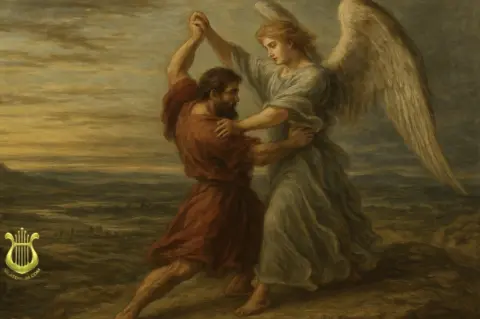
The angel of G-d appeared to Rabbi Matya in the form of a beautiful woman, whose beauty was unparalleled in the world. When the tzadik saw her, he immediately turned away from the woman. The woman then quickly moved to the side toward which Rabbi Matya had turned, and he again turned away from her.
The tzadik then thought: “I am afraid that my yetzer hara (evil inclination) will overcome me and cause me to sin.”
What did the tzadik do? He called for the student who was with him and ordered him to bring red-hot nails. The student brought him the nails, and the tzadik blinded himself with them. When the angel of G-d saw this, he trembled and fell.
At that moment, the Holy One, blessed be He, called the angel Raphael—for he is responsible for healing—and said to him: “Go and heal Rabbi Matya ben Harash.”
The angel Raphael approached Rabbi Matya and stood before him, but he asked: “Who are you?” The angel replied: “I am Raphael, an angel. G-d sent me to heal your eyes.”
Rabbi Matya answered: “Leave me alone. What has been done should remain as it is.” Raphael returned to the Holy One, blessed be He, and said: “Master of the Universe, this is how Matya replied.” G-d said to him: “Return to him and tell him that I personally guarantee that the yetzer hara will have no power over him.”
Immediately, Raphael went and healed Rabbi Matya.
From here our Sages teach: “Whoever is careful not to look at women will not be under the control of the yetzer hara.”The Arizal teaches that Rabbi Matya ben Harash was the reincarnation of a man named Palti ben Laish, to whom King Saul gave his daughter Michal, the wife of King David, because Saul mistakenly believed that their marriage was invalid and that his daughter was unmarried. Palti drove a sword into the bed between them and did not touch her. Nevertheless, he should not have kept her in his home; he should have told King Saul that he did not wish to marry her because of her questionable status.
Although King Saul was a Torah scholar, and Palti Laish was obligated to treat him with respect, it is said: “When the desecration of the Almighty’s Name is involved, one does not show deference even to a rabbi.” Furthermore, although Palti did not touch Michal, he nevertheless derived some pleasure from looking at something that did not belong to him, since she sat and lay beside him. Therefore, in his next life he wished to rectify this, and was reincarnated as Rabbi Matya ben Harash.
When Satan tried to seduce him, he restrained himself and did not even wish to look at the beautiful woman. Both Rabbi Matya ben Harash and Palti ben Laish were sparks of the soul of the righteous Joseph, the son of our forefather Jacob.
HaChalban – Rabbi Chaim Avishalom ben Ezra Cohen Perachia – was exceptionally meticulous in observing the mitzvah of “Shemirat Einayim” (guarding the eyes). Those close to Rabbi Chaim Ezra relate that if his eyes happened to fall accidentally upon a woman, he would immediately perform Tikkun Einayim: he would mix salt into a glass of water and wipe his eyes with it.
(“Ahavat Chaim” on Shemot, Rabbi Yitzchak Ginsburgh, “Body, Mind and Soul”)
Was this helpful?
100% of readers found this article helpful (10 votes).
Please note: some articles on our site contain the holy Names of the Almighty. If you print these articles, they may not be thrown away or destroyed. Please handle printed copies with care and respect.
Material from our site may be copied for the purpose of spreading Torah, provided a link to Silatehilim.com is included. Any use of the site's material in print publications or for commercial purposes is prohibited without the rights holder's consent.