Iggeret of Rabbi Shimshon of Ostropoli
The Iggeret of Rabbi Shimshon of Ostropoli is a great and awesome secret mentioned in his writings. It teaches that anyone who studies it even once a year—especially on the day preceding Passover—is guaranteed to be saved that year from all kinds of troubles and from an unnatural death. No one will rule over him, all his enemies will fall before him, and he will triumph over them. Wherever he turns, good fortune will accompany him, and all his endeavors will prosper until the coming of the Redeemer. Amen, Selah!
[Caution! This great segula contains the Names of angels—both holy and impure—which we do not pronounce. The names of angels that we do not customarily use or frequently mention in prayer must not be pronounced; they may only be visualized as they are written in the text of the prayer.]
אגרת רבי שמשון מאוסטרופולי
שָׁלוֹם לְרַבָּנֵי אֶרֶץ, גּוֹדְרֵי גָדֵר וְעוֹמְדִים בַּפֶרֶץ, יַצִילֵם ה‹ מֵכִּלְיוֹן וָחֶרֶץ, כּוּלָּם קְדוֹשִׁים אֲשֶׁר הֵמָה בָּאָרֶץ, כׇּל־חד לְפוּם חוּרְפֵיהּ מַקְשֶׁה וּמְתָרֵץ, אָמֵן סֶלָה, בְּתַּכְלִית הָעִנְיָן מַה שֶׁכָּתַב הָאֲרִ"י זַ»ל בַּקוּנְטְרֶס שֶׁלוֹ הַנִּקְרָא «פְּלָאוֹת רַבּוֹת» בָּשַׁעַר הַנִּקְרָא
:יְצִיאַת־מִצְרַיִם, פֵּרֶק ג‹ דַף מ»ב ע»א וְזֶה לְשׁוֹנוֹ
הִנֵּה כְּבָר הוֹדַעְתִּיךָ שֶׁפַּרְעֹה נִלְקָה בְּמִצְרַיִם בְּעֶשֶׂר מַכּוֹת אֵלּוּ עַל יְדֵי שְׁלֹשָׁה אֲלָפִים וּמָאתַיִם וּשְׁמוֹנִים מַלְאֲכֵי חַבָּלָה, הַמְמֻנִּים בִּשְׁלֹשָׁה רְקִיעִים שֶׁל טֻמְאָה, הָאֶחָד נִקְרָא שרע וְהַשֵּׁנִי נִקְרָא תמוך, וְהַשְּׁלִישִׁי נִקְרָא בישהא, וַעֲלֵיהֶם הַשַֹּר הַנִּקְרָא דלפקט, וַעֲלֵיהֶם וְעַל כֻּלָּם
הַשַֹּר הַנִּקְרָא תקא
בְּרֵאשִׁית – חָסֵר מִן הַשְּׁלִישִׁי עֲשָׂרָה, וְחָסֵר מִן הָרְבִיעִי שִׁשָּׁה, וְחָסֵר מִן הַתְּשִׁיעִי שִׁשָּׁה כַּכָּתוּב
וְהִנֵּה מַה שֶּׁלָּקוּ הַמִּצְרִיִּים בְּמִצְרַיִם עֶשֶׂר מַכּוֹת, וְעַל הַיָּם לָקוּ חֲמִשִּׁים מַכּוֹת, הַשֵּׁם שפ»ו שֶׁבּוֹ אָחַז דָּוִד בֶּן יִשַׁי, וְהַשֵּׁם אָמַר וְהִכָּה. וּמִצַּד הַשֵּׁם תק»ל לָקוּ הַמִּצְרִיִּים בְּמִצְרַיִם אַרְבָּעִים מַכּוֹת, וְעַל הַיָּם לָקוּ מָאתַיִם מַכּוֹת, וְהַשֵּׁם אָמַר וְהִכָּה. וּמִצַּד הַשֵּׁם אשצ»ה לָקוּ הַמִּצְרִיִּים בְּמִצְרַיִם חֲמִשִּׁים מַכּוֹת, וְעַל הַיָּם לָקוּ מָאתַיִם וַחֲמִשִּׁים מַכּוֹת, וּבְמַה שֶּׁהַקָּדוֹשׁ בָּרוּךְ הוּא מַכֶּה, בּוֹ מְרַפֵּא הַגָּלוּת. מַה פָּשְׁעוּ וּמֶה חָטְאוּ, וּמָה הַמַּעַל אֲשֶׁר מָעֲלוּ אֲבוֹתֵינוּ, לִהְיוֹת בְּכוּר הַבַּרְזֶל הַזֶּה, עַד שֶׁגְּאָלָם בְּשֵׁמוֹת אֵלּוּ
:דע»ב צד»א כשח»ב
:עַד כָּאן לְשׁוֹן הָאֲרִ»י־זַ»ל
וְהִנֵּה מוֹרַי וְרַבּוֹתַי קְדוֹשֵׁי־יִשְׂרָאֵל, הַדְּבָרִים הָאֵלֶּה פְּלָאִים הֵם, סְתוּמִים וַחֲתוּמִים סָגוּר וְאֵין פּוֹרֵשׂ אוֹתָם. וּכְבָר שְׁאָלוּנִי גְּדוֹלֵי יִשְׂרָאֵל לְבָאֵר לָהֶם דִּבְרֵי הָאֲרִ»י זַ»ל וְלֹא הִגַּדְתִּי. וּמִגֹּדֶל אַהֲבַת מוֹרַי וְרַבּוֹתַי אֲגַלֶּה רָז זֶה שֶׁנִּתְגַּלָּה לִי בַּחֲלוֹם חֶזְיוֹן לַיְלָה וְעַכְשָׁו אֲגַלֶּה הַדָּבָר בְּרֶמֶז לִפְנֵי כְבוֹד תּוֹרָתוֹ, וְהוּא רַחוּם יְכַפֵּר
:וְזֹאת הָעִנְיָן
מַה שֶּׁכָּתַב הָאֲרִ»י זַ»ל שֶׁפַּרְעֹה נִלְקָה בְּמִצְרַיִם עֶשֶׂר מַכּוֹת וְכוּ, כַּוָּנָתוֹ כָּךְ
כִּי אָמְרוּ בַּעֲלֵי קַבָּלָה מַעֲשִׂית, שֶׁיֵּשׁ שְׁלֹשָׁה
אֲלָפִים וּמָאתַיִם וּשְׁמוֹנִים מַלְאֲכֵי חַבָּלָה הַמְמֻנִּים לְהַכּוֹת אֶת הָרְשָׁעִים וּלְהַעֲנִישָׁם בְּגֵיהִנָּם וּלְטַהֲרָם מֵעֲוֹנוֹתֵיהֶם. וְעַל זֶה נֶאֱמַר: «וּלְהַכּוֹת בְּאֶגְרֹף רֶשַׁע», כִּי אֶגְרֹף, רֶמֶז שְׁלֹשָׁה אֲלָפִים מָאתַיִם וּשְׁמוֹנִים, וְעַל יָדָם נִלְקָה גַּם פַּרְעֹה הָרָשָׁע. וְאוֹמֵר אֲנִי הַכּוֹתֵב שֶׁזֶּהוּ סוֹד נִפְלָא כַּאֲשֶׁר הוּא נִכְתָּב בְּמִנְיָן וּבְמִסְפָּר
.דָּם. צְפַרְדֵּעַ. כִּנִּם. עָרב. דֶּבֶר. שְׁחִין. בָּרָד. אַרְבֶּה. חֹשֶׁךְ
:מַכַּת בְּכורוֹת
אֵלּוּ עֶשֶׂר מַכּוֹת כַּאֲשֶׁר כָּתַבְתִּי אוֹת בְּאוֹת, עוֹלִים שְׁלֹשָׁה אֲלָפִים וּמָאתַיִם וּשְׁמוֹנִים מַלְאֲכֵי חַבָּלָה, הַמְמֻנִּים לְטַהֵר אֶת הָרְשָׁעִים
:וְהוּא פְּשַׁט נִפְלָא, עַיִן לֹא רָאֲתָה
:וְהִנֵּה הַחֶשְׁבּוֹן מְכֻוָּן
.כַּאֲשֶׁר נִכְתָּב כִּנִּם חָסֵר יו»ד
.גַּם עָרֹב חָסֵר וא»ו
.גַּם חֹשֶׁךְ חָסֵר וא»ו
וְאָז הַחֶשְׁבּוֹן מַמָּשׁ, לֹא פָּחוֹת וְלֹא יוֹתֵר מִשְּׁלֹשָׁה אֲלָפִים וּמָאתַיִם וּשְׁמוֹנִים מַלְאֲכֵי חַבָּלָה, שֶׁמַּעֲנִישִׁין אֶת הָרְשָׁעִים
וְהַיְנוּ מַה שֶּׁכָּתַב הָאֲרִ»י זַ»ל: «כַּכָּתוּב», פֵּרוּשׁ כַּכָּתוּב בְּסֵפֶר תּוֹרָה, וְלֹא כַּאֲשֶׁר כָּתוּב בַּסִּדּוּרִים וּבַעַל הַהַגָּדָה, כִּי שָׁם נִכְתְּבוּ כֻּלָּם מְלֵאִים. אֶלָּא צָרִיךְ לִהְיוֹת חָסֵר כְּמוֹ שֶׁכָּתוּב בַּסֵּפֶר תּוֹרָה. וְגַם רַבִּי יְהוּדָה לֹא כָּתַב סִימָנִים כֻּלָּם רַק רָאשֵׁי תֵיבוֹת, דצ»ך
:עד»ש באח»ב, כְּמוֹ שֶׁכָּתַב הָרַב יִצְחָק אַבַּרְבָּנֵאל וּכְמוֹ שֶׁכָּתַבְתִּי לְעֵיל
:וְהַיְנוּ מַה שֶּׁכָּתַב הָאֲרִ»י זַ»ל
:בְּרֵאשִׁית חָסֵר מִן הַשְּׁלִישִׁי עֲשָׂרָה», פֵּרוּשׁ»
:מַכָּה שְׁלִישִׁית שֶׁהִיא כִּנִּם – חָסֵר יו»ד
:מִן הָרְבִיעִי שִׁשָּׁה» שֶׁהִיא מַכַּת עָרב – גַּם חָסֵר וָא»ו»
:וְחָסֵר מִן הַתְּשִׁיעִי שִׁשָּׁה», שֶׁהִיא מַכַּת חֹשֶׁךְ – גַּם כֵּן חָסֵר וָא»ו»
:וּמַה שֶּׁאָמַר «כַּכָּתוּב», רוֹצֶה לוֹמַר שֶׁכֵן כָּתוּב בְּסֵפֶר תּוֹרָה חָסֵר, כַּנִּזְכַּר לְעֵיל
וְזֶהוּ סוֹד «אֵלּוּ עֶשֶׂר מַכּוֹת שֶׁהֵבִיא הַקָּדוֹשׁ בָּרוּךְ הוּא בְּמִצְרַיִם», מְכֻוָּן מַמָּשׁ שְׁלֹשָׁה
:אֲלָפִים וּמָאתַיִם וּשְׁמוֹנִים מַלְאֲכֵי חַבָּלָה שֶׁהִכּוּ אֶת פַּרְעֹה וְאֶת הַמִּצְרִיִּים בְּמִצְרַיִם
הַמְמֻנִּים בְּאֵלּוּ שְׁלֹשָׁה רְקִיעִים: אֶחָד נִקְרָא שרע, וְאֶחָד נִקְרָא תמוך, וְאֶחָד נִקְרָא
:בישהא
גַּם בָּזֶה יֵשׁ סוֹד גָּדוֹל וְנִפְלָא, אֵלּוּ שְׁלֹשֶׁת אֲלָפִים וּמָאתַיִם וּשְׁמוֹנִים מַחֲנוֹת שֶׁהִכּוּ אֶת פַּרְעֹה וְאֶת הַמִּצְרִיִּים בְּמִצְרַיִם כָּאָמוּר, שֶׁמְּמֻנִּים בְּאֵלּוּ שְׁלֹשָׁה רְקִיעִים שֶׁל טֻמְאָה, אָמַר לָנוּ הַכָּתוּב סוֹד נִפְלָא וְנוֹרָא, וְתִקֵּן הַמַּגִּיד כְּמוֹ שֶׁשָּׁנָה «אֵלוּ עשר מכות שהביא» שֶׁבְּאֵלּוּ שָׁלֹשׁ תֵּיבוֹת נִרְמָזִים הַשְּׁלֹשָׁה רְקִיעִים שֶׁל טֻמְאָה, וּשְׁלֹשֶׁת אֲלָפִים וּמָאתַיִם וּשְׁמוֹנִים מַלְאֲכֵי חַבָּלָה שֶׁהִכּוּ אֶת פַּרְעֹה וְאֶת הַמִּצְרִים בְּמִצְרַיִם, כְּמִנְיַן עֶשֶׂר
.מַכּוֹת
:דְּהַיְנוּ
:עש»ר אוֹתִיּוֹת שרע
:מכו»ת אוֹתִיּוֹת תמוך
:שהבי»א אוֹתִיּוֹת בישהא
רֶמֶז לְאֵלּוּ שְׁלֹשָׁה רְקִיעִים שֶׁל טֻמְאָה שֶׁבָּהֶם יֵשׁ מְמֻנִּים כְּמִנְיַן שְׁלֹשָׁה אֲלָפִים וּמָאתַיִם וּשְׁמוֹנִים מַלְאֲכֵי חַבָּלָה מַמָּשׁ, כְּמִנְיַן עֶשֶׂר מַכּוֹת דָּם צְפַרְדֵּעַ וְכוּ’, וְהֵם שֶׁהִכּוּ אֶת פַּרְעֹה וְאֶת הַמִּצְרִיִּים בְּמִצְרַיִם, כִּי מַלְאֲכֵי חַבָּלָה מְמֻנִּים לְהַכּוֹת אֶת הָרְשָׁעִים לְטַהֲרָם מֵעֲוֹנוֹתֵיהֶם כָּאָמוּר. וְעַל יָדָן הִכָּה אֶת פַּרְעֹה וְאֶת הַמִּצְרִיִּים בְּמִצְרַיִם מִנְיַן
:עֶשֶׂר מַכּוֹת אֵלּוּ, וְהוּא פֶּלֶא גָּדוֹל
:וּמַה שֶּׁכָּתַב הָאֲרִ»י זַ»ל
וַעֲלֵיהֶם הַשַֹּר דלפקט», כַּוָּנָתוֹ הוּא שֶׁשֵּׁם זֶה שָׁרְשׁוֹ יוֹצֵא מִמִּלַּת הַמִּצְרִים, וְהַיְנוּ»
שֶׁשְּׁלֹשָׁה רְקִיעִים הֵם: עש»ר מכו»ת שהבי»א וּכְפֵרוּשׁ הַגָּאוֹן, וְנִמְשַׁךְ עַל הַמִּצְרִים שֶׁהוּא שֵׁם דלפקט בָּאוֹתִיּוֹת הַקּוֹדְמוֹת לְאוֹתִיּוֹת הַמִּצְרִים, והמ»ם אַחֲרוֹנָה הִיא מ»ם הָרִבּוּי וְאֵינָהּ מִן הַשֹּׁרֶשׁ, וְרָמַז לָזֶה הַמַּגִּיד בַּמַּאֲמָר: «אֵלּוּ עֶשֶׂר מַכּוֹת שֶׁהֵבִיא הַקָּדוֹשׁ בָּרוּךְ הוּא עַל הַמִּצְרִים בְּמִצְרַיִם», כְּלוֹמַר הָאוֹתִיּוֹת שֶׁהֵם קוֹדְמוֹת עַל
:אוֹתִיּוֹת הַמִּצְרִים
וּמַה שֶּׁכָּתַב הָאֲרִ»י זַ»ל: «וַעֲלֵיהֶם וְעַל כֻּלָּם הַשַֹּר הַנִּקְרָא תקא, כַּוָּנָתוֹ, כִּי רָאשֵׁי תֵיבוֹת שֶׁל אֵלּוּ עֶשֶׂר מַכּוֹת, דצ»ך עד»ש באח»ב, בְּגִימַטְרִיָּא תקא, כְּמִנְיַן
.הַשַֹּר מַמָּשׁ, וּכְמִנְיַן אש»ר
וְזֶהוּ סוֹד כַּוָּנַת הַכָּתוּב בְּסֵדֶר בֹּא: «וּלְמַעַן תְּסַפֵּר בְּאָזְנֵי בִנְךָ וּבֶן בִּנְךָ אֵת אש»ר הִתְעַלַּלְתִּי בְּמִצְרַיִם», אשר דַּיְקָא, שֶׁהוּא כְּמִסְפַּר תקא, וְכַיּוֹצֵא בּוֹ הַרְבֵּה פְּסוּקִים אֶלֶף, שֶׁמּוֹרִים עַל זֶה לְסוֹד אש»ר, כְּמִנְיַן רָאשֵׁי תֵיבוֹת שֶׁל עֶשֶׂר מַכּוֹת כְּמוֹ שֶׁבֵּאַרְנוּ
:וְיֵשׁ לָנוּ בָּזֶה סוֹדוֹת נִפְלָאִים. וּכְבוֹד אֱלֹהִים הַסְתֵּר דָּבָר
וּמַה שֶּׁכָּתַב רַבֵּנוּ הָאֲרִ»י זַ»ל: «הַשֵּׁם שפ»ו שֶׁבּוֹ אָחַז דָּוִד בֶּן יִשַׁי, וְהַשֵּׁם אָמַר וְהִכָּה
.אוֹתָם בְּמִצְרַיִם עֶשֶׂר מַכּוֹת, וְעַל הַיָּם לָקוּ חֲמִשִּׁים מַכּוֹת
וְהַשֵּׁם תק»ל אָמַר וְהִכָּה אוֹתָם בְּמִצְרַיִם אַרְבָּעִים מַכּוֹת, וְעַל הַיָּם לָקוּ מָאתַיִם
:מַכּוֹת
וְהַשֵּׁם אשצ»ה אָמַר וְהִכָּה אוֹתָם בְּמִצְרַיִם חֲמִשִּׁים מַכּוֹת, וְעַל הַיָּם לָקוּ מָאתַיִם
:וַחֲמִשִּׁים מַכּוֹת
:כַּוָּנָתוֹ לְסוֹד נִפְלָא וְנוֹרָא
.פְּלֻגְתָּא דְּרִבִּי יוֹסֵי הַגָּלִילִי וְרִבִּי אֱלִיעֶזֶר וְרִבִּי עֲקִיבָא הַמֻּזְכָּר בַּהַגָּדָה
.רִבִּי יוֹסֵי הַגָּלִילִי אוֹמֵר: מִנַּיִן
.וְרִבִּי אֱלִיעֶזֶר אוֹמֵר: מִנַּיִן
.וְרִבִּי עֲקִיבָא אוֹמֵר: מִנַּיִן
וְזֶהוּ שֶׁכָּתַב הָאֲרִ»י זַ»ל: וְהַשֵּׁם שפ»ו אָמַר וְהִכָּה אוֹתָם בְּמִצְרַיִם עֶשֶׂר מַכּוֹת, וְעַל הַיָּם לָקוּ חֲמִשִּׁים מַכּוֹת, רֶמֶז לְרִבִּי יוֹסֵי הַגָּלִילִי. כִּי רִבִּ»י יוֹסֵ»י הַגָּלִילִ»י בְּגִימַטְרִיָּא שפ»ו, וּמַה שֶּׁכָּתַב שֶׁבּוֹ אָחַז דָּוִד בֶּן יִשַׁי, רָמַז גַּם כֵּן, דָּוִ»ד בֶּ»ן יִשַׁ»י גִּימַטְרִיָּא שֵׁם שפ»ו, שֶׁבְּאוֹתוֹ הַשֵּׁם דַּוְקָא בָּא דָּוִד בֶּן יִשַׁי. וְרָמַז גַּם כֵּן מַה שֶּׁכָּתַב בְּסֵפֶר סוֹדִי רָזָא
.שֶׁרִבִּי יוֹסֵי הַגָּלִילִי נִצּוֹץ דָּוִד בֶּן יִשַׁי. וְזֶה הַשֵּׁם הִכָּה אוֹתָם
וּמִצַּד הַשֵּׁם תק»ל לָקוּ הַמִּצְרִים בְּמִצְרַיִם אַרְבָּעִים מַכּוֹת, וְעַל הַיָּם לָקוּ מָאתַיִם מַכּוֹת, רָמַז לְסוֹד רִבִּ»י אֱלִיעֶזֶ»ר בְּגִימַטְרִיָּא תק»ל, וְהַיְנוּ רִבִּי אֱלִיעֶזֶר אוֹמֵר, דַּוְקָא, שֶׁהוּא שֵׁם תק"ל, לָקוּ הַמִּצְרִיִּים בְּמִצְרַיִם אַרְבָּעִים מַכּוֹת, וְעַל הַיָּם לָקוּ מָאתַיִם
.מַכּוֹת
וּמַה שֶּׁכָּתַב הַשֵּׁם אשצ»ה לָקוּ בְּמִצְרַיִם חֲמִשִּׁים מַכּוֹת, וְעַל הַיָּם לָקוּ מָאתַיִם וַחֲמִשִּׁים מַכּוֹת, רָמַז לְסוֹד רִבִּ»י עֲקִיבָ»א, שֶׁהוּא בְּגִימַטְרִיָּא אשצ»ה עִם הַכּוֹלֵל
שֶׁהַשֵּׁם הַזֶּה אָמַר שֶׁיֻּכּוּ הַמִּצְרִיִּים בְּמִצְרַיִם חֲמִשִּׁים מַכּוֹת, וְעַל הַיָּם לָקוּ
.מָאתַיִם וַחֲמִשִּׁים מַכּוֹת
הֲרֵי מְרֻמָּזִים אֵלּוּ שְׁלֹשָׁה שֵׁמוֹת: שפ»ו תק»ל אשצ»ה בְּאֵלּוּ
:הַשְּׁלֹשָׁה תַּנָּאִים
.רִבִּי יוֹסֵי הַגָּלִילִי – בְּגִימַטְרִיָּא שפ»ו
.רִבִּי אֱלִיעֶזֶר – בְּגִימַטְרִיָּא תק»ל
.רִבִּ»י עֲקִיבָ»א בְּגִימַטְרִיָּא אשצ»ה
.וְהוּא סוֹד נִפְלָא וְנוֹרָא, רָזָא דְרָזִין, סִתְרָא דְּסִתְרִין
:הַיְנוּ: כַּאֲשֶׁר כָּתַבְתִּי לְמַעֲלַת כְּבוֹד תּוֹרָתוֹ, וְהוּא רַחוּם יְכַפֵּר עָוֹן
וּמַה שֶּׁכָּתַב רַבֵּנוּ הָאֲרִ»י זַ»ל: בְּמַה שֶּׁהַקָּדוֹשׁ בָּרוּךְ הוּא מַכֶּה, בּוֹ מְרַפֵּא הַגָּלוּת, מַה פָּשְׁעוּ מֶה חָטְאוּ אֲבוֹתֵינוּ וְכוּ, כַּוָּנָתוֹ: בְּאֵלּוּ עֶשֶׂר מַכּוֹת שֶׁהֵם דצ»ך עד»ש באח»ב, נִרְמָזִים בְּאֵלּוּ אוֹתִיּוֹת סוֹד וְטַעַם יְרִידַת אֲבוֹתֵינוּ לְמִצְרַיִם, כְּמוֹ שֶׁכָּתַבְתִּי לְמַעֲלַת כְּבוֹד תּוֹרָתוֹ. וְהִנֵּה בְּאֵלּוּ הַמַּכּוֹת הִכָּה אוֹתָם, וַיְרַפֵּא אוֹתָנוּ הַקָּדוֹשׁ בָּרוּךְ הוּא וְהִכָּה בָּהֶם מַכָּה רַבָּה אֶצְבַּע אֱלֹהִים הִיא, וּמִן הַמַּכָּה עַצְמָהּ בָּאָה רְפוּאָה
.לְיִשְׂרָאֵל, שֶׁגְּאָלָם הַקָּדוֹשׁ בָּרוּךְ הוּא, וּכְמוֹ שֶׁכָּתַבְתִּי
וּמַה שֶּׁכָּתַב: «מַה פָּשְׁעוּ» וְכוּ’, רוֹצֶה לוֹמַר: בְּאֵלּוּ הַמַּכּוֹת נִרְמַז הַחֵטְא שֶׁל אֲבוֹתֵינוּ שֶׁגָּרַם יְרִידַת מִצְרַיִם. וְיֵשׁ לָנוּ סוֹד נִפְלָא וְנוֹרָא לְתָרֵץ קֻשְׁיָא זוֹ מַה שֶּׁהִקְשׁוּ מַעֲלַת כְּבוֹד תּוֹרָתָם עָלַי, אֲבָל גַּם זֶה נִיחָא כַּאֲשֶׁר כָּתַבְתִּי לְמַעֲלָתָם, נִפְלָאוֹת מִתּוֹרָתוֹ
:הַקְּדוֹשָׁה וְהַטְּהוֹרָה
וּמַה שֶּׁכָּתַב הָאֲרִ»י זַ»ל: שֶׁהַקָּדוֹשׁ בָּרוּךְ הוּא גָּאַל אוֹתָנוּ בְּשֵׁמוֹת אֵלּוּ דע»ב צד»א
:כשח»ב, כַּוָּנָתוֹ
.כִּי הָאוֹתִיּוֹת רִאשׁוֹנוֹת שֶׁל דצ»ך עד»ש באח»ב – הֵם דע»ב
.וְהָאוֹתִיּוֹת שְׁנִיּוֹת הֵם צד»א
.וְהָאוֹתִיּוֹת הָאַחֲרוֹנוֹת הֵם כשח»ב
וְנִרְמָזִים בְּאֵלּוּ הַשְּׁלֹשָׁה שְׁמוֹת הָרְפוּאָה שֶׁרִפָּא הַקָּדוֹשׁ בָּרוּךְ הוּא
,לְיִשְׂרָאֵל, שֶׁגָּאַל אוֹתָנוּ בָּהֶם, הֲרֵי בְּאוֹתָן הַמַּכּוֹת שֶׁהֻכּוּ בָּהֶם הַמִּצְרִיִּים
:נִרְמָזִים הַגְּאֻלָּה וְהָרְפוּאָה לְיִשְׂרָאֵל
וִיהֵא רַעֲוָא לִפְנֵי הַקָּדוֹשׁ בָּרוּךְ הוּא שֶׁיַּרְאֵנוּ בִּיאַת מְשִׁיחֵנוּ בִּמְהֵרָה בְיָמֵינוּ, עִם הַמַּלְאָכִים הַשַּׁיָּכִים לַגְּאֻלָּה, וִיקֻיַּם בָּנוּ מִקְרָא שֶׁכָּתוּב: כִּימֵי צֵאתְךָ מֵאֶרֶץ מִצְרָיִם אַרְאֶנּוּ נִפְלָאוֹת
:אָמֵן נֶצַח סֶלָה
Iggeret of Rabbi Shimshon of Ostropoli
Transliteration:
Shalom le-rabbaney eretz, godrey gader ve-omdim ba-peretz, yatzilem Ha-Shem mi-kilyon va-cheretz, kulam kedoshim asher hemah ba-aretz, kol chad lefum churfeih makhsheh u-metaretz: Amen sela, be-takhlit ha-inyan ma she-katav Arizal ba-kuntres shelo ha-nikra “Pelaot Rabbot” ba-sha’ar ha-nikra “Yetziat Mitzrayim”, perek Gimel daf Mem-Bet, amud Alef, ve-zeh leshono:
Hineh kvar hoda’tikha she-Par’oh nilkah be-Mitzrayim be-eser makot elu al yedei shelosha alafim u-matayim u-shemonim malakhei chabbalah, ha-memunim bi-shlosha reki’im shel tumah, ha-ekhad nikra ShRaA, ve-ha-sheni nikra TaMoKH, ve-ha-shelishi nikra BiSHHa, va-aleihem ha-sar ha-nikra DaLFaKaT, va-aleihem ve-al kulam ha-sar ha-nikra TaKA.
Bereshit—chaser min ha-shelishi asarah, ve-chaser min ha-revi’i shishah, ve-chaser min ha-teshi’i shishah ka-katuv:
Ve-hineh mah she-laku ha-Mitzrim be-Mitzrayim eser makot, ve-al ha-yam laku chamishim makot, ha-Shem ShFO she-bo achaz David ben Yishai, ve-ha-Shem amar ve-hikah. U-mi-tzad ha-Shem TaKaL laku ha-Mitzrim be-Mitzrayim arba’im makot, ve-al ha-yam laku matayim makot, ve-ha-Shem amar ve-hikah. U-mi-tzad ha-Shem EShTzEH laku ha-Mitzrim be-Mitzrayim chamishim makot, ve-al ha-yam laku matayim va-chamishim makot, u-ve-mah she-ha-Kadosh Barukh Hu makeh, bo merapeh ha-galut. Mah pashu u-meh chatu, u-mah ha-ma’al asher ma’alu avoteinu, lihyot be-khur ha-barzel ha-zeh, ad she-ge’alam be-shemot elu DaAV TzeDA ChaSHChaV.
Ad kan leshon Arizal.
Ve-hineh morai ve-rabotai kedoshei Yisrael, ha-devarim ha-eleh pela’im hem, setumim va-chatumim sagur ve-ein poresh otam. U-khvar she’aluni gedolei Yisrael leva’er lahem divrei Arizal ve-lo higadti. U-mi-godel ahavat morai ve-rabotai agaleh raz zeh she-nitgaleh li ba-chalom, chezyon laylah, ve-akhshav agaleh ha-davar be-remez lifnei kevod Torato, ve-hu rachum yekhaper.
Ve-zot ha-inyan:
Mah she-katav Arizal she-Par’oh nilkah be-Mitzrayim eser makot ve-khu, kavanato kakh:
Ki amru ba’alei Kabbalah ma’asit, she-yesh shelosha alafim u-matayim u-shemonim malakhei chabbalah ha-memunim le-hakot et ha-resha’im u-leha’anisham be-Gehinnom u-letaharam me-avonoteihem.
Ve-al zeh ne’emar: “U-lehakot be-egrof resha,” ki egrof, remez shelosha alafim matayim u-shemonim, ve-ala yadam nilkah gam Par’oh ha-rasha. Ve-omer ani ha-kotev she-zehu sod nifla ka-asher hu nikhtav be-minyan u-ve-mispar Dam, Tzefarde’a, Kinim, Arov, Dever, Shechin, Barad, Arbeh, Choshekh, Makat Bekhorot.
Eleh eser makot ka-asher katavti ot be-ot, olim shelosha alafim u-matayim u-shemonim le-taher et ha-resha’im.
Ve-hu peshat nifla, ayin lo ra’atah.
Ve-hineh ha-cheshbon mekhuvan:
Ka-asher nikhtav Kinim chaser yod.
Gam Arov chaser vav.
Gam Choshekh chaser vav.
Ve-az ha-cheshbon mamash, lo pachot ve-lo yoter mi-shelosha alafim u-matayim u-shemonim malakhei chabbalah, she-ma’anishin et ha-resha’im.
Ve-hayenu mah she-katav Arizal: “ka-katuv,” perush ka-katuv be-Sefer Torah, ve-lo ka-asher katuv ba-sidurim u-va’al ha-Haggadah, ki sham nikht[e]vu kulam mele’im. Ela tzarikh lihyot chaser kemo she-katuv ba-Sefer Torah. Ve-gam Rabbi Yehudah lo katav simanim kulam rak rashei tevot, DaTzaKh ADaSh BaKhaB, kemo she-katav ha-rav Yitzchak Abarbanel u-khemo she-katavti le-eil.
And this is what the Arizal wrote: “Bereishit is deficient by ten from thirteen,” meaning:
The third plague, which is kinim—lice—is missing a yud.
“From the fourth, six”—which is the plague of arov—wild beasts—is also missing a vav.
“And from the ninth, six,” which is the plague of choshech—darkness—is likewise missing a vav.
And when he said “as it is written,” he meant that this is how it is written in the Torah—the deficient spelling, as mentioned above.
And this is the secret of “These are the ten plagues that the Holy One, blessed be He, brought upon Egypt,” referring precisely to three thousand two hundred and eighty ministering angels of destruction who struck Pharaoh and the Egyptians in Egypt.
The angels appointed over these three firmaments are: one called SHRaA, one called TaMOCH, and one called BISHHa.
There is also a great and wondrous secret in this: these three thousand two hundred and eighty camps that struck Pharaoh and the Egyptians in Egypt, as stated, are appointed over these three firmaments of impurity. The verse revealed to us a wondrous and awesome secret, and the Maggid explained it, as he taught: “These are the ten plagues that He brought”—for within these three words are hinted the three firmaments of impurity and the three thousand two hundred and eighty ministering angels who struck Pharaoh and the Egyptians in Egypt, corresponding to the numerical value of “ten plagues.”
That is:
Esser—the letters of SHRaA.
Makot—the letters of TaMOCH.
She-hevia—the letters of BISHHa.
This hints at these three firmaments of impurity, over which are appointed precisely three thousand two hundred and eighty ministering angels, corresponding to the numerical value of the ten plagues—blood, frogs, and all the rest. They are the ones who struck Pharaoh and the Egyptians in Egypt, for ministering angels are appointed to strike the wicked in order to cleanse them of their sins, as stated. Through them Pharaoh and the Egyptians in Egypt were struck by these ten plagues, and this is a great wonder.
And regarding what the Arizal wrote:
“And over them is the prince Dalfakat.” His intention is that the root of this name derives from the word referring to the Egyptians, and this means that these three firmaments are: ESSER MAKOT SHE-HEVIA. The Gaon explained that it is connected with the Egyptians, since the name Dalfakat is composed of the letters preceding the letters of ha-Mitzrim. The final mem is the plural suffix and is not part of the root. The Maggid alluded to this in the statement: “These are the ten plagues that the Holy One, blessed be He, brought upon the Egyptians in Egypt”—that is, the letters preceding the letters of ha-Mitzrim:
And this is what the Arizal wrote: “And over them and over all of them is the prince called Teka.” His intention is that the initial letters of the names of these ten plagues, DaTzaCH ADaSH BaCHaB, have the same numerical value as Teka, corresponding precisely to the numerical value of the prince, and also to the numerical value of Asher.
And this is the secret of the verse’s meaning: “So that you may tell your child and your grandchild how ASHER I made a mockery of Egypt,” meaning that “how” has the numerical value of Teka. Likewise, thousands of other verses allude to the secret of the word Asher, corresponding to the initial letters of the ten plagues, as we have explained, and there are many wondrous secrets here. But the glory of G-d is to conceal a matter.
And regarding what our teacher, the Arizal, wrote: “The Name SHFO, which David son of Ishai grasped,” and the Name was pronounced, and He struck them in Egypt with ten plagues, while at the sea they were struck with fifty plagues.
And the Name TaKaL was pronounced, and He struck them in Egypt with forty plagues, while at the sea they were struck with two hundred plagues.
And the Name ESHtza was pronounced, and He struck them in Egypt with fifty plagues, while at the sea they were struck with two hundred and fifty plagues.
His intention is a wondrous and awesome secret:
The dispute among Rabbi Yosei HaGelili, Rabbi Eliezer, and Rabbi Akiva mentioned in the Haggadah.
Rabbi Yosei HaGelili says: From where?
Rabbi Eliezer says: From where?
Rabbi Akiva says: From where?
And this is what the Arizal wrote: The Name SHFO was pronounced, and He struck them with ten plagues in Egypt, while at the sea He struck them with fifty plagues—an allusion to Rabbi Yosei HaGelili. For Rabbi Yosei HaGelili has the numerical value of SHFO. The earlier statement that David son of Ishai grasped it is also an allusion: David son of Ishai has the same numerical value as the Name SHFO, and David son of Ishai came through that Name. This is also hinted at in the book Sodei Razah, which says that Rabbi Yosei HaGelili was an aspect of David son of Ishai. And this Name struck them.
From the aspect of the Name TaKaL, the Egyptians were struck in Egypt with forty plagues, while at the sea they were struck with two hundred plagues. This alludes to the secret of Rabbi Eliezer, whose numerical value is TaKaL. Thus Rabbi Eliezer specifically said this, because he is connected with the Name TaKaL: the Egyptians were struck in Egypt with forty plagues, and at the sea with two hundred plagues.
And what is written regarding the Name ESHtza—that the Egyptians were struck in Egypt with fifty plagues, and at the sea with two hundred and fifty plagues—is an allusion to the secret of Rabbi Akiva, whose numerical value equals ESHtza with the kolel, by adding one. For this Name was pronounced, and the Egyptians were struck in Egypt with fifty plagues, while at the sea they were struck with two hundred and fifty plagues.
Thus, within these three Names—SHFO TaKaL ESHtza—the names of the three sages are hinted:
Rabbi Yosei HaGelili—the numerical value of SHFO.
Rabbi Eliezer—the numerical value of TaKaL.
Rabbi Akiva—the numerical value of ESHtza.
And this is a wondrous and awesome secret, the secret of secrets and the mystery of mysteries.
That is, as I wrote above in honor of his Torah, “He is merciful and shall atone for iniquity”:
Regarding what our teacher, the Arizal, wrote: “Through that with which the Holy One, blessed be He, strikes, He heals the exile”—what sin, guilt, and transgression did all our forefathers commit, and why were they in this iron furnace until they were redeemed through these Names:
דע"ב צד"א כשח"ב
Up to this point are the words of the Arizal.
And now, my teachers and mentors, the holy ones of Israel: these words are wondrous, concealed, and sealed, and there is no one to explain them. The great men of the people of Israel had already asked me to explain these words of the Arizal, but I did not reveal them to them. Yet the love of my teachers and mentors has grown so great that I will now disclose this secret, which was revealed to me in a nighttime dream. I will now reveal this matter by way of allusion before those honored for their Torah, and He, the Merciful One, will redeem—forgive—me.
And this is its meaning:
What the Arizal wrote about Pharaoh, who was struck in Egypt with ten plagues, means the following:
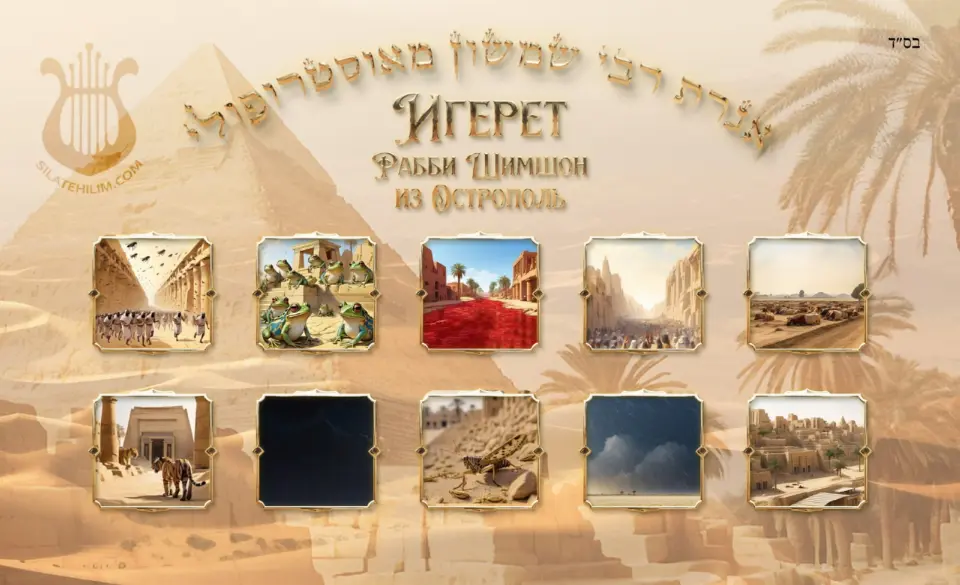
The sages of practical Kabbalah taught that there are three thousand two hundred and eighty angels of destruction appointed to strike the wicked, punish them in Gehinnom, and cleanse them of their sins. Concerning this it is said: “to strike the wicked with a fist.” For the fist (אגרף) alludes to 3,280, and through them the wicked Pharaoh was also struck. And I, the one writing these words, say that this is a wondrous secret concealed in the numerical calculation of the names of the ten plagues: Blood (דם), Frogs (צפרדע), Lice (כנם), Wild Beasts (ערב), Pestilence (דבר), Boils (שחין), Hail (ברד), Locusts (ארבה), Darkness (חשך), and the Plague of the Firstborn (מכת בכורות).
These ten Egyptian plagues, which I copied from the Torah letter by letter, have the numerical value 3,280, equal to the number of angels of destruction appointed to cleanse the wicked.
And this is a simple yet wondrous meaning, such as the eye has never seen.
The calculation is exact when the word כנם (kinim—lice) is written without the letter י (yud), the word ערב (arov—wild beasts) without the letter ו (vav), and the word חשך (choshech—darkness) likewise without the letter ו (vav).
Then the calculation is exact—neither less nor more than three thousand two hundred and eighty angels of destruction who punish the wicked.
And this is what the Arizal wrote: “As it is written,” explaining that this is how it is written in the Torah, unlike the usual spelling in the siddurim and the Haggadah, where everything is written plene. It must instead be written defectively, as it appears in the Torah. Rabbi Yehudah likewise did not write the mnemonic signs in full, but only the initial letters: דצ"ך עד"ש באח"ב, as Rabbi Yitzchak Abarbanel wrote, and as I explained earlier.
And this is what the Arizal wrote: “Initially, the third is missing ten.” The explanation is:
The third plague, lice (כנם), is missing ten from the word—that is, the letter “י,” whose numerical value is 10.
“The fourth, six”—this is the fourth plague, wild beasts (ערב), which is missing six, namely the letter “ו,” whose numerical value is 6.
“The ninth is missing six”—the ninth plague, darkness (חשך), is missing six, namely the letter “ו,” whose numerical value is 6. This is what the Arizal wrote: “As it is written,” meaning that it is written in the Torah scroll with deficient spelling, as mentioned above.
This is the secret of the words: “These are the ten plagues that the Holy One, blessed be He, brought upon Egypt,” meaning that their value precisely equals 3,280 angels of destruction who struck Pharaoh and the Egyptians in Egypt and, as stated, rule over these three firmaments of impurity. Here we have a wondrous and awesome secret. The angelic Maggid corrected it, as he taught: “These are the ten plagues that He brought…” For within these three words are hinted the three firmaments of impurity and the 3,280 angels of destruction who struck Pharaoh and the Egyptians in Egypt, corresponding to the numerical value of the ten plagues, namely:
The letters of עש"ר (“ten”) form the Name שרע.
The letters of מכו"ת (“plagues”) form the Name תמוך.
The letters of שהבי"א (“that He brought”)—
form the Name בישהא.
This hints at the three firmaments of impurity, over which precisely these 3,280 angels of destruction rule, corresponding to the gematria of the verse “ten plagues: blood, frogs, and so forth.” They struck Pharaoh and the Egyptians in Egypt, for the angels of destruction are appointed to strike the wicked in order to cleanse them of their sins, as stated. Through them Pharaoh and the Egyptians in Egypt were struck according to the number of these ten plagues, and this is a great wonder.
And this is what the Arizal wrote: “And over them is the prince דלפקט (Dalfakat).” He meant that the root of this name emerges from the word המצרים (“the Egyptians”), namely from the three firmaments: עש"ר מכו"ת שהבי"א.
As the Gaon explained, it is connected with the Egyptians because the name דלפקט (Dalfakat) is composed of the letters preceding those of the word “Egyptians” (המצרים):
ד precedes ה
ל precedes מ
פ precedes צ
ק precedes ר
ט precedes י
The final letter ם in מצרים indicates the plural and is not part of the root. This is hinted at in the words of the Haggadah: “These are the ten plagues that the Holy One, blessed be He, brought upon the Egyptians in Egypt”—that is, the letters preceding the letters of המצרים (“the Egyptians”).
And this is what the Arizal wrote: “And over them and over all of them is the prince called תקא.” This means that the initial letters of the names of the ten plagues, דצ"ך עד"ש באח"ב, have the same gematria as תקא, corresponding to the numerical value of this prince’s Name and to the numerical value of the word “how” (אשר).
This is the secret meaning of the verse: “So that you may tell your child and your grandchild how (אש"ר) I made a mockery of Egypt.” It says specifically “how,” because it has the numerical value of the Name תקא. Likewise, thousands of other verses point to the secret of the word “how” (אשר), corresponding to the initial letters of the ten plagues, as we have explained; and there are many wondrous secrets here. But the glory of G-d is to conceal a matter.
And this is what our teacher, the Arizal, wrote: “The Name שפ"ו, which David son of Ishai grasped; the Name was pronounced, and they were struck in Egypt with ten plagues, while at the sea they were struck with fifty plagues.
The Name תק"ל was pronounced, and the Egyptians were struck in Egypt with forty plagues, while at the sea they were struck with two hundred plagues.
The Name אשצ"ה was pronounced, and the Egyptians were struck in Egypt with fifty plagues, while at the sea they were struck with 250 plagues.
The meaning of this secret is wondrous and awesome:
The statements of Rabbi Yosei HaGelili, Rabbi Eliezer, and Rabbi Akiva, mentioned in the Haggadah, represent different opinions:
Rabbi Yosei HaGelili said: From where?
Rabbi Eliezer said: From where?
Rabbi Akiva said: From where?
And this is what the Arizal wrote: The Name שפ"ו was pronounced and struck them with ten plagues in Egypt, while at the sea it struck them with fifty plagues. This alludes to Rabbi Yosei HaGelili (רבי יוסי הגלילי), whose numerical value equals שפ"ו. The earlier statement that David son of Ishai grasped it is also an allusion: the numerical value of David son of Ishai equals that of the Name שפ"ו. David son of Ishai came through that Name. This is also hinted at in the book Sodei Razah (סודי רזא), which says that Rabbi Yosei HaGelili was a spark of David son of Ishai. And this Name struck them.
From the aspect of the Name תק"ל, the Egyptians were struck in Egypt with forty plagues, while at the sea they were struck with two hundred plagues—an allusion to the secret of Rabbi Eliezer (רבי אליעזר), whose numerical value equals תק"ל. This is why Rabbi Eliezer specifically said this, because he is connected with the Name תק"ל: the Egyptians were struck in Egypt with forty plagues, while at the sea they were struck with two hundred plagues.
And what is written regarding the Name אשצ"ה—that the Egyptians were struck in Egypt with fifty plagues, while at the sea they were struck with 250 plagues—is an allusion to the secret of Rabbi Akiva (רבי עקיבא), whose numerical value equals אשצ"ה with the kolel, by adding one. For this Name was pronounced, and the Egyptians were struck in Egypt with fifty plagues, while at the sea they were struck with 250 plagues.
Thus, within these three Names—שפ"ו תק"ל אשצ"ה—the names of the three sages are hinted:
Rabbi Yosei HaGelili—the numerical value of שפ"ו
Rabbi Eliezer—the numerical value of תק"ל
Rabbi Akiva—the numerical value of אשצ"ה
And this is a wondrous and awesome secret, the secret of secrets and the mystery of mysteries. I have written this for the honor of your Torah, and He, the Merciful One, will atone for the sin.
As our teacher, the Arizal, wrote: “With the very thing with which the Almighty strikes, He heals the exiles.” What did our fathers transgress, and what did they sin? The meaning of this is concealed in these ten plagues דצ"ך עד"ש באח"ב, in whose letters the mystery and reason for our fathers’ descent into Egypt are hinted at, as I have already written above, out of respect for your Torah. And with the very plagues with which He struck them, the Holy One, blessed be He, healed us. He struck them with a great plague, with the finger of G-d, yet healing came to Israel through the very plague, for the Holy One, blessed be He, redeemed them, as I have written about this.
And what is written—“What did they transgress?”—seeks to tell us that these plagues contain a hint of the sin of our fathers that led to their descent into Egypt. We possess a great and awesome secret that enables us to answer the difficult question that confounded you, esteemed teachers of the holy and pure Torah.
And this is what the Arizal wrote: that the Holy One, blessed be He, redeemed us through these Names: דע"ב צד"א כשח"ב.
For the first letters of דצ"ך עד"ש באח"ב form the Name דע"ב
And the second letters form צד"א
And the final letters form כשח"ב
These three contain, by way of allusion, the Names of Healing through which the Holy One, blessed be He, healed Israel when He redeemed them through those Names. Thus, the very plagues with which the Egyptians were struck contain a hint of Redemption and healing for Israel.
May it be the will of the Holy One, blessed be He, to reveal to us the coming of our Mashiach, speedily and in our days, with the angels associated with the Redemption. And may the words of Scripture be fulfilled for us: “As in the days of your going forth from the land of Egypt, I will show him wonders.” Amen, Netzach, Selah!
P.S. The prayer “Iggeret of Rabbi Shimshon of Ostropol” has been recited around the clock for all six months since October 7, in Zoom groups of 50–100 people, under the direction of Rav Daniel Stavsky (shlita), for the complete salvation of Am Yisrael.
(The text of the prayer was provided by the Beit Baal Shem Tov organization under the direction of the Gaon, Rav Daniel Stavsky. Translation and transliteration by Rav Alexander Tzvi Sypkov for Silatehilim)
[© All rights to the transliteration and translation belong to Silateilim.com. No part of this publication may be reproduced, stored in a retrieval system, or transmitted in any form or by any means without the prior written permission of the copyright holder]