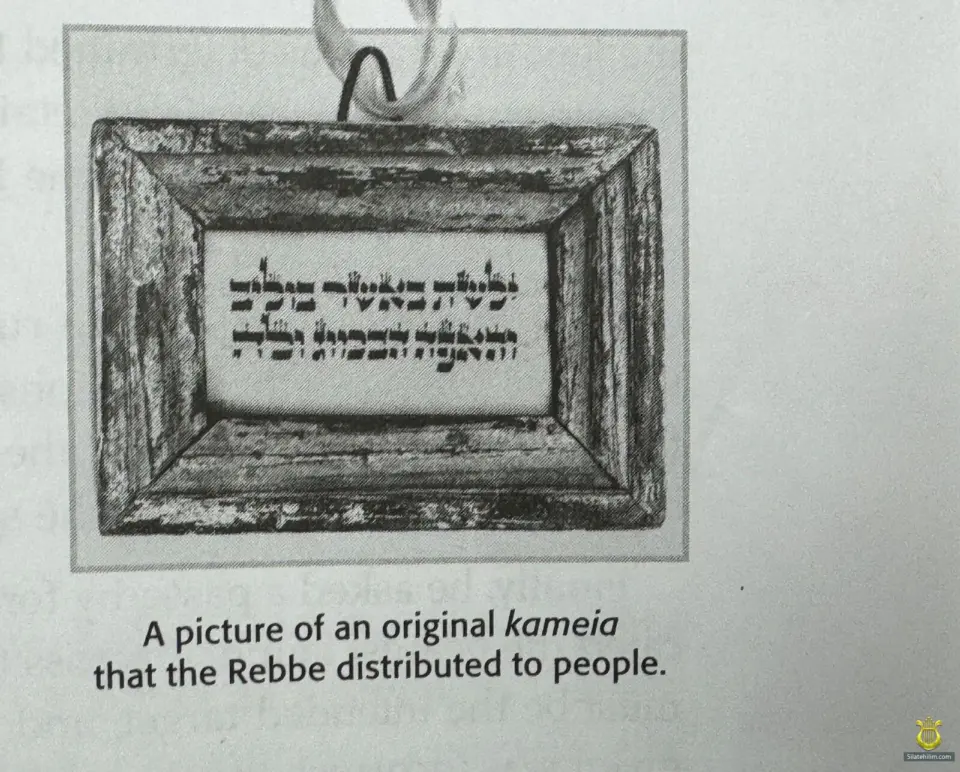
Rabbi Shayele of Kerestir received this tradition from his Rebbe, Rav Hershel of Liska, who in turn received it from his Rebbe, the great Rabbi Moshe Teitelbaum, the Yismach Moshe: to distribute holy kameot that served as a source of protection and salvation for the Jewish people.
Rav Yitzchak Weiss of Verbó revealed the secret of one kamea, in which the first line combined the rashei tevot of pesukim (speaking of protection and salvation) from two chapters of Tehillim, while the second line consisted of rashei tevot from the Torah.
It is remarkable that all three pesukim speak of a home—of its protection and safeguarding from harmful forces.
1. Tehillim 122:7יְהִֽי־שָׁל֥וֹם בְּחֵילֵ֑ךְ שַׁ֝לְוָ֗ה בְּאַרְמְנוֹתָֽיִךְ׃
— “Yehi shalom b'cheilech, shalva b'armonotayich” — (May there be peace within your walls, tranquility within your palaces.)
2. Tehillim 91:10לֹֽא־תְאֻנֶּ֣ה אֵלֶ֣יךָ רָעָ֑ה וְ֝נֶ֗גַע לֹא־יִקְרַ֥ב בְּאָהֳלֶֽךָ׃
— “Lo te'une eilecha ra'ah, venega lo yikrav b'aholecha” — (No harm will befall you, nor will any plague come near your tent.)
3. Bereishit 19:11ואֶת-הָאֲנָשִׁים אֲשֶׁר-פֶּתַח הַבַּיִת הִכּוּ בַּסַּנְוֵרִים מִקָּטֹן וְעַד-גָּדוֹל וַיִּלְאוּ לִמְצֹא הַפָּתַח
“Ve'et ha-anashim asher petach ha-bayit hiku basanverim mikaton ve'ad-gadol vayil'u limtzo ha-patach” —
(The men at the entrance of the house they struck with blindness, from the youngest to the oldest, so that they struggled to find the entrance.)
This kamea brought salvation to many Jews during the turbulent years of the First World War.
Segulot
1. Protection of the home;
2. Protection of family members from negative situations and salvation from tzarot (troubles);
3. Protection of a business;
4. For shalom bayit;
It is advisable to ask a sofer to write the rashei tevot of the three pesukim from Tehillim and the Torah on klaf (parchment), in the same order as they appear on the kamea in the photograph [the photograph shows Rabbi Shayele of Kerestir’s original kamea].
If it is not possible to commission a sofer, recite these three pesukim daily 17/24 times.
A story of how this kamea saved a Jewish man’s business in America
At the beginning of the previous century, a Hungarian immigrant in America had an idea.
At that time, the washing machine was a new invention, and only a few people could afford one. Our Jewish friend decided to open a laundromat and invested in washing machines. The small business he had envisioned flourished from the very beginning.
Some of the shop owners near his laundromat envied his success, and one of them decided to open a laundromat of his own. He opened a similar establishment directly across the street and urged his predominantly non-Jewish customers to patronize him rather than the Jew.
At that time, a tzedakah collector from Hungary was staying in the Jewish man’s home. The host confided in his guest, sharing his difficult situation. The collector leapt to his feet: “Reb Shayele lives in Kerestir—he is a miracle-working Rebbe, with a gift from Heaven to help people. I am returning home in just a few days. If you write a kvitel and a pidyon, I would be happy to take them to the Rebbe.”
The host was grateful for the opportunity and wrote a detailed account of his situation to the Rebbe.
The messenger returned home and traveled to Kerestir, where he delivered the kvitel from America.
Reb Shayele gave him four kameot and instructed him to send them to New York, with directions for the Jewish man to hang them on the four walls of his laundromat. The American was delighted to receive the package from Hungary and immediately hung the kameot as instructed.
Meanwhile, his competitor across the street continued scheming. A few customers who remained loyal to the Jew, and he was determined to win them over as well.
One day, he hired a thug and paid him to burn down the Jewish laundromat, thereby securing a monopoly for himself.
Late on Friday afternoon, the thug came to carry out his deed. He followed the directions he had been given, but could not find the address. He looked at the piece of paper again and again, but there was no laundromat at the specified location.
Finally, he asked a passerby for help. A helpful young man pointed out the nearest laundromat, across the street. Deciding that this must be the intended target and that the address he had been given was incorrect, the arsonist got to work, and soon the building was ablaze. After the firefighters managed to contain the fire, the police began an investigation.
They quickly apprehended the perpetrator and called him in for questioning.
Threatened with imprisonment, he explained that he had been hired to burn down a Jewish establishment and named the instigator, who was arrested and sentenced to prison.
The owner of the Jewish laundromat breathed a sigh of relief when he realized how close he had come to losing his entire business.
Years later, after the passing of Reb Shayele, he opened his kamea and saw a multitude of letters. He was told that these were rashei tevot, including those of the pasuk from Bereishit (19:11): “The men at the entrance of the house they struck with blindness, from the youngest to the oldest, so that they struggled to find the entrance.” He recalled the mysterious “blindness” that had afflicted the arsonist and saved his business.
After the Second World War, Rav Yissachar Berish Rubin, the great-grandson of Reb Shayele who had survived the Holocaust, arrived in America.
Word of the arrival of the great Rebbe’s descendant spread quickly.
Several days after an announcement appeared in the newspapers, a wealthy gentleman from Bridgeport, Connecticut, came to the Rebbe’s home.
He explained that he was the son of the laundromat owner and had come to thank the descendant of the great Rebbe Yeshaya of Kerestir, who had helped his father. In addition to a generous donation, he left Rav Yissachar Berish a precious gift: one of the four kameot written by Reb Shayele.
(From the book “Reb Shayele - the warmth and wonder of Kerestir”)
Was this helpful?
100% of readers found this article helpful (78 votes).
Please note: some articles on our site contain the holy Names of the Almighty. If you print these articles, they may not be thrown away or destroyed. Please handle printed copies with care and respect.
Material from our site may be copied for the purpose of spreading Torah, provided a link to Silatehilim.com is included. Any use of the site's material in print publications or for commercial purposes is prohibited without the rights holder's consent.