It is stated in Tehillim (45:14):
כָּל־כְּבוּדָּ֣ה בַת־מֶ֣לֶךְ פְּנִ֑ימָה מִֽמִּשְׁבְּצ֖וֹת זָהָ֣ב לְבוּשָֽׁהּ
- “Kol kevudah vat melech פנימה mi-mishbetzot zahav levushah” - (All the glory of the king’s daughter is within; her garment is embroidered with golden settings.)
The body is a holy creation of G-d; it is the sacred home of the soul. Disregard for the body makes the soul vulnerable.
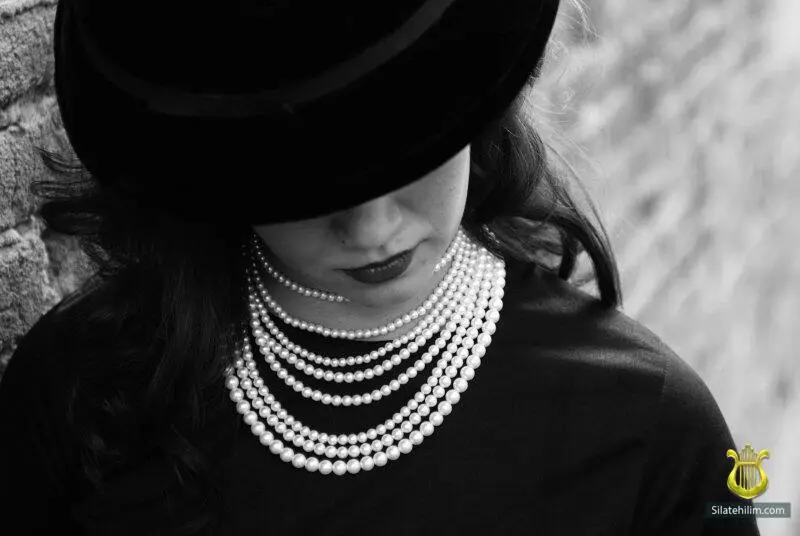
“Tzniut” (modesty) in Judaism entails a particular standard of etiquette for Jewish women in their clothing and in appearing in public, in order to preserve the soul.
The Sefer Yetzirah states in Mishnah 4: “The Creator made one corresponding to the other: good corresponding to evil, evil corresponding to good, good from good, evil from evil...”
It is well known that words with identical gematriot are connected to one another. If one word has a negative aspect and the other a positive one, the opposition between these concepts is revealed; if both have positive meanings, this indicates a profound connection between them.
Let us examine the gematriot of those parts of the body that Judaism instructs women to cover.
The word צניעות – “tzniut” (modesty) has the gematria 626.
Interestingly, 626 is also the gematria of קליפות - “kelipot”—negative shells that obstruct the descent of G-dly light. This means that a woman dressed immodestly attracts kelipot to herself.
626 is also the gematria of the names of the ancestors of the twelve tribes: יעקב לאה רחל בלהה וזלפה—Jacob, Leah, Rachel, Zilpah, and Bilhah. By failing to observe the laws of tzniut, a Jewish woman breaks the chain that extends from our ancestors.
The main parts of the body that must be covered are the hair, knees, collarbone, and elbows. A woman should also not wear tight-fitting clothing. The Torah prohibits her from wearing men’s clothing.
Kneesברכיים “birkaim” (knees) has the gematria 282.
The gematria 282 is also that of האיסור “issur” (prohibition), an explicit hint that displaying the knees is forbidden. The word עזרה “ezrah” (help) has the same gematria as well: those who cover their knees are assured of help from Heaven.
Elbows
The Hebrew word for elbow is מרפק “marpek”, whose gematria is 420.
420 is the gematria of קידוש “Kiddush” (sanctification).
The plural form of elbow, מרפקים “marpekim”, has the value 470.
The gematria 470 is also that of הסתה “hasatah” (incitement). The most famous inciter is the Nachash. Interestingly, נָחָשׁ “Nachash” (serpent) has the value 358, while “Satan” שטן has the value 359—identical gematriot when the kollel is added.
470 is also the gematria of תנך - Tanakh.
Collarbone
The Hebrew term for collarbone is עצם הבריח - “etzem ha-beriach”, whose gematria is 425.
425 is the gematria of יהדות “Yahadut” (Judaism).
425 is also the gematria of קישוט “kishut” (ornament)—but an ornament that is not displayed publicly.
In its positive aspect, 425 is the gematria of משיח בן דוד - Mashiach ben David—[whose gematria is 424, with the kollel (1) added].
In its negative aspect, סדם עמורה - Sodom ve-Gomorrah also equals 425.
Moreover, the girls in the Sila Tehilim group discovered the following while praying for soldiers during the “Iron Swords” war.
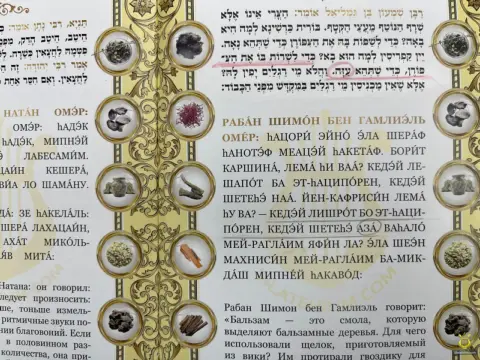
In Pitum HaKetoret, there is the following pasuk in the paragraph attributed to Rabbi Shimon ben Gamliel:
כדי לשרות בו את הצפורן , כדי שתהא עזה – “kedei lishrot bo et ha-tziporen, kedei she-tehe azah” – (and they soaked the clove so that [its fragrance] would be stronger).
עזה is the name of an enclave hostile to us, but in this context the word עזה means (stronger, more powerful).
The word עזה “stronger” thus appears together with the word הצפורן (clove), which must be soaked.
The gematria of הצפורן (clove) corresponds to the following words:
מרפק—elbow—420—צפרן (without the definite article)
עצם הבריח—collarbone—425—הצפרן (with the definite article).
This brings us to the parts of the body that a Jewish woman must cover. It hints that exposing these parts of the body makes עזה stronger.
Tight-Fitting Clothing
The Hebrew term for tight-fitting clothing is בגד צמוד - “beged tzamud”, whose gematria is 149.
149 is the gematria of words such as דליקה “dlekah” (arson) and החילוצ “ahilutz” (rescue).
Head Covering
The head covering with which a Jewish woman covers her hair is called כיסוי ראש “kisui rosh”, whose gematria is 607.
607 is also the gematria of תואר “toar”—status; that is, a covered head defines the status of a Jewish woman.
Hair—שיער “se'ar”—has the gematria 580.
580 is the gematria of היצר הרע “yetzer hara” (the evil inclination).
But it is also the gematria of such positive expressions as מעשי נסים - “ma'asei nissim” (miracles) and תפיליןtefillin.
Now the statement in the Sefer Yetzirah, in Mishnah 4—“The Creator made one corresponding to the other: good corresponding to evil, evil corresponding to good, good from good, evil from evil...”—becomes perfectly clear: the Almighty created good corresponding to evil, and it is up to us alone to determine what we attract to ourselves—evil or good.
(Based on a lecture by Marina Fein at the synagogue on Bolshaya Bronnaya for “Silatehilim.com”; based on materials from “Silatehilim.com”; photo from the Metlika.club album)
Was this helpful?
100% of readers found this article helpful (67 votes).
Please note: some articles on our site contain the holy Names of the Almighty. If you print these articles, they may not be thrown away or destroyed. Please handle printed copies with care and respect.
Material from our site may be copied for the purpose of spreading Torah, provided a link to Silatehilim.com is included. Any use of the site's material in print publications or for commercial purposes is prohibited without the rights holder's consent.