Tikkun Refuah Shleimah with the Prayer of Moshe Rabbeinu
Tikkun Refuah Shleimah
Siman 16 1. A segula for the healing of a sick person.
Let a kosher person who is G-d-fearing come and study these words of Torah concerning the principle of kal vachomer, “the lenient and the stringent.” It is best for him to undertake this study and prayer during a time of favor (et ratzon)—at dawn. He should do the same for someone suffering from an eye ailment.
Mishnah (tractate Chullin 12:5):
לֹא יִטֹּל אָדָם אֵם עַל הַבָּנִים, אֲפִלּוּ לְטַהֵר אֶת הַמְּצֹרָע. וּמָה אִם מִצְוָה קַלָּה שֶׁהִיא כְאִסָּר, אָמְרָה תוֹרָה, לְמַעַן יִיטַבלָךְ וְהַאֲרַכְתָּ יָמִים, קַל וָחֹמֶר עַל מִצְוֹת חֲמוּרוֹת שֶׁבַּתּוֹרָה:
“Lo yitol adam em al ha-banim, afilu le-taher et ha-metzora. U-ma im mitzvah kalah she-hi che-isar, amrah Torah: ‘Lema'an yitav lach ve-ha'arachta yamim,’ kal va-chomer al mitzvot chamurot she-ba-Torah.”
(A person may not take the mother bird together with her young, even in order to purify a leper. If, concerning a relatively minor mitzvah—worth only an issar, a small coin—the Torah says, “so that it will be good for you and you will prolong your days” (Deuteronomy 22:7), how much more does this apply to the stringent mitzvot of the Torah.)
Mishnah (tractate Nega'im 12:5): (The Mishnah is quoted in abbreviated form)
וְצִוָּה הַכֹּהֵן וּפִנּוּ אֶת הַבַּיִת. אָמַר רַבִּי מֵאִיר, וְכִי מָה מִטַּמֵּא לוֹ. אִם תֹּאמַר, כְּלֵי עֵצָיו וּבְגָדָיו וּמַתְּכוֹתָיו, מַטְבִּילָןוְהֵן טְהוֹרִים. עַל מֶה חָסָה הַתּוֹרָה. עַל כְּלֵי חַרְסוֹ וְעַל פַּכּוֹ וְעַל טִפְיוֹ. אִם כָּךְ חָסָה הַתּוֹרָה עַל מָמוֹנוֹ הַבָּזוּי, קַלוָחֹמֶר עַל מָמוֹנוֹ הֶחָבִיב. אִם כָּךְ עַל מָמוֹנוֹ, קַל וָחֹמֶר עַל נֶפֶשׁ בָּנָיו וּבְנוֹתָיו. אִם כָּךְ עַל שֶׁל רָשָׁע, קַל וָחֹמֶר עַלשֶׁל צַדִּיק:
“Ve-tzivah ha-kohen u-finu et ha-bayit. Amar Rabbi Meir: Ve-chi mah mitame lo? Im tomar: kley etzav u-vegadav u-matachtav, matbilam ve-hem tehorim. Al mah chasah ha-Torah? Al kley cheresoo ve-al pacho ve-al tipyo. Im kach chasah ha-Torah al mamono ha-bazui, kal va-chomer al mamono ha-chaviv. Im kach al mamono, kal va-chomer al nefesh banav u-venotav. Im kach al shel rasha, kal va-chomer al shel tzaddik.”
(“The kohen shall command, and they shall clear the house” (Leviticus 14:36). Rabbi Meir said: What would become impure in it? If you say, its wooden vessels, garments, and metal vessels, they can be immersed in a mikveh and will be pure. What, then, did the Torah spare? Its earthenware vessels, jugs, and jars. If the Torah thus spared his meager possessions, how much more does it spare his precious possessions. If it spares his possessions, how much more does it spare the lives of his sons and daughters. If it does so for a wicked person, how much more for a righteous person.)
Gemara (tractate Chagigah, 27a):
אמר ריש לקיש אין אור של גיהנם שולטת בפושעי ישראל קל וחומר ממזבח הזהב מה מזבח הזהב שאין עליואלא כעובי דינר זהב כמה שנים אין האור שולטת בו פושעי ישראל שמלאין מצות כרמון דכתיב כפלח הרמוןרקתך אל תקרי רקתך אלא רקנין שבך על אחת כמה וכמה:
“Amar Reish Lakish: Ein or shel Gehinnom sholetet be-posh'ei Yisrael, kal va-chomer mi-mizbe'ach ha-zahav. Mah mizbe'ach ha-zahav, she-ein alav ela ke-ovi dinar zahav—kamah shanim ein ha-or sholetet bo—posh'ei Yisrael, she-mele'im mitzvot ke-rimon, de-ktiv: ‘Ke-pelach ha-rimon rakatech.’ Al tikrei ‘rakatech,’ ela ‘reikanin she-bach’; al achat kamah ve-kamah.”
(Rabbi Shimon ben Lakish said: The fire of Gehinnom does not prevail over the sinners of Israel. This is derived by means of kal vachomer from the Golden Altar. If the fire did not prevail over the Golden Altar, which was covered with no more than the thickness of a golden dinar, even though fire burned upon it for many years, how much more so does it not prevail over the sinners of Israel, who are filled with mitzvot like a pomegranate, as it is written: “Your temples are like a slice of a pomegranate” (Song of Songs 4:3). Do not read “your temples” [rakatech], but rather “the empty ones among you” [reikanin she-bach]. The Altar was protected by virtue of a single mitzvah; how much more so are the sinners of Israel, who have many mitzvot, protected.)
Gemara (tractate Pesachim, 87b):
ויאמר ה' אל הושע לך קח לך אשת זנונים וילדי זנונים וכתיב וילך ויקח את גומר בת דבלים גומר אמר רבשהכל גומרים בה בת דבלים דבה רעה בת דבה רעה ושמואל אמר שמתוקה בפי הכל כדבלה ורבי יוחנן אמרשהכל דשין בה כדבלה.
“Va-yomer Adonai el Hoshea: Lech, kach lecha eshet zenunim ve-yaldei zenunim. U-chtiv: Va-yelekh va-yikach et Gomer bat Divlaim. Gomer? Amar Rav: She-ha-kol gomrim bah. Bat Divlaim? Dibb ah ra'ah, bat dibbah ra'ah. U-Shmuel amar: She-metukah be-fi ha-kol ke-divlah. Ve-Rabbi Yochanan amar: She-ha-kol dashin bah ke-divlah.”
(And the L-rd said to Hosea: “Go, take for yourself a wife of harlotry and children of harlotry” (Hosea 1:2), and it is written: “So he went and took Gomer the daughter of Diblaim” (Hosea 1:3). Why was she called Gomer? Rav said: Because everyone had relations with her. “The daughter of Diblaim” means a woman of ill repute, the daughter of a woman of ill repute. Shmuel said that her lips were sweet to everyone like a dried fig. Rabbi Yochanan said that everyone trampled her like a dried fig. (Dried figs were traditionally trodden into cakes or round loaves.)
דבר אחר גומר אמר רבי יהודה שבקשו לגמר ממונן של ישראל בימיה רבי יוחנן אמר בזזו וגמרו שנאמר כיאבדם מלך ארם וישימם כעפר לדוש ותהר ותלד לו בן ויאמר ה' אליו קרא שמו יזרעאל כי עוד מעט ופקדתיאת דמי יזרעאל על בית יהוא והשבתי ממלכות בית ישראל ותהר עוד ותלד בת ויאמר לו קרא שמה לא רוחמהכי לא אוסיף עוד ארחם את בית ישראל כי נשא אשא להם ותהר ותלד בן ויאמר (ה' אליו) קרא שמו לא עמיכי אתם לא עמי ואנכי לא אהיה לכם.
“Davar acher: Gomer? Rabbi Yehudah said: Because during her lifetime they sought to destroy the possessions of Israel. Rabbi Yochanan said: They plundered and destroyed them, as it is stated: ‘For the king of Aram had destroyed them and made them like dust to be trampled.’ ‘She conceived and bore him a son. And the L-rd said to him: Name him Jezreel, for in a little while I will punish the house of Jehu for the blood of Jezreel, and I will put an end to the kingdom of the house of Israel.… She conceived again and bore a daughter. And He said to him: Name her Lo-Ruhamah, for I will no longer have compassion on the house of Israel or forgive them.… She conceived and bore a son. And He said: Name him Lo-Ammi, for you are not My people, and I will not be with you.’”
(Another interpretation: What does “Gomer” mean? Rabbi Yehudah said: In her days, they sought to destroy the wealth of Israel. Rabbi Yochanan said: They plundered and destroyed it, as it is stated: “For the king of Aram had destroyed them and made them like dust to be trampled” (II Kings 13:7). “She conceived and bore him a son. And the L-rd said to him: Name him Jezreel, for in a little while I will punish the house of Jehu for the blood of Jezreel, and I will put an end to the kingdom of the house of Israel.… She conceived again and bore a daughter. And He said to him: Name her Lo-Ruhamah (Not Shown Mercy), for I will no longer have compassion on the house of Israel or forgive them.… She conceived and bore a son. And He said: Name him Lo-Ammi (Not My People), for you are not My people, and I will not be with you.)
לאחר שנולדו [לו] שני בנים ובת אחת אמר לו הקב'ה להושע לא היה לך ללמוד ממשה רבך שכיון שדברתיעמו פירש מן האשה אף אתה בדול עצמך ממנה אמר לו רבש'ע יש לי בנים ממנה ואין אני יכול להוציאה ולאלגרשה א'ל הקב'ה ומה אתה שאשתך זונה ובניך [בני] זנונים ואין אתה יודע אם שלך הן אם של אחרים הןכך ישראל שהן בני בני בחוני בני אברהם יצחק ויעקב אחד מארבעה קנינין שקניתי בעולמי תורה קנין אחדדכתיב ה' קנני ראשית דרכו שמים וארץ קנין אחד דכתיב קונה שמים וארץ בית המקדש קנין אחד דכתיב הרזה קנתה ימינו ישראל קנין אחד דכתיב עם זו קנית ואתה אמרת העבירם באומה אחרת.
“Le-achar she-noldu lo shnei banim ve-bat achat, amar lo ha-Kadosh Baruch Hu le-Hoshea: Lo hayah lecha lilmod mi-Moshe rabbecha, she-keivan she-dibarti imo, פירש מן ha-ishah? Af atah bedol atzmecha mimenah. Amar lo: Ribono shel Olam! Yesh li banim mimenah, ve-ein ani yachol le-hotzi'ah ve-lo le-garshah. Amar lo ha-Kadosh Baruch Hu le-Hoshea: U-ma atah, she-isht'cha zonah u-vanecha bnei zenunim, ve-ein atah yode'a im shelcha hen o im shel acherim hen—kach Yisrael, she-hem banai, bnei bechunai, bnei Avraham, Yitzchak ve-Yaakov, echad me-arba'ah kinyanim she-kaniti be-olami. Torah—kinyan echad, di-chtiv: Adonai kanani reishit darko. Shamayim va-aretz—kinyan echad, di-chtiv: Koneh shamayim va-aretz. Beit HaMikdash—kinyan echad, di-chtiv: Har zeh kantah yemino. Yisrael—kinyan echad, di-chtiv: Am zu kanita. Ve-atah amarta: Ha'aviram be-umah acheret.”
After his two sons and one daughter were born, the Holy One, blessed be He, said to Hosea: “You should have learned from your teacher Moses that when I began speaking with him, he separated from his wife. You, too, should separate yourself from her.” He replied: “Master of the Universe! I have sons by her, and I cannot send her away or divorce her.” The Holy One, blessed be He, said to Hosea: “Just as you—whose wife is a harlot, whose sons are children of harlotry, and who do not know whether they are yours or another man's—so too Israel are My children, the children of My beloved ones, Abraham, Isaac, and Jacob. They are one of the four acquisitions that I acquired in My world. The Torah is one acquisition, as it is written: ‘The L-rd acquired me at the beginning of His way’ (Proverbs 8:22). Heaven and earth are one acquisition, as it is written: ‘Master of heaven and earth’ (Genesis 14:19). The Temple is one acquisition, as it is written: ‘This mountain His right hand acquired’ (Psalms 78:54). Israel is one acquisition, as it is written: ‘This nation You acquired’ (Exodus 15:16). And you said: ‘Exchange them for another nation!’”
כיון שידע שחטא עמד לבקש רחמים על עצמו אמר לו הקב'ה עד שאתה מבקש רחמים על עצמך בקש רחמיםעל ישראל שגזרתי עליהם שלש גזירות בעבורך עמד ובקש רחמים ובטל גזירה והתחיל לברכן שנאמר והיהמספר בני ישראל כחול הים וגו' והיה במקום אשר יאמר להם לא עמי אתם יאמר להם בני אל חי ונקבצו בנייהודה ובני ישראל יחדו וגו 'וזרעתיה לי בארץ ורחמתי את לא רוחמה ואמרתי ללא עמי עמי אתה.
“Keivan she-yada she-chata, amad levakesh rachamim al atzmo. Amar lo ha-Kadosh Baruch Hu: Ad she-atah mevakesh rachamim al atzmecha, bakash rachamim al Yisrael, she-gazarti aleihem shalosh gezerot ba-avurecha. Amad u-vikesh rachamim, u-vitel gezerah, ve-hitchil levarchan, she-ne'emar: ‘Ve-hayah mispar bnei Yisrael ke-chol ha-yam.… Ve-hayah bimkom asher ye'amer lahem lo ami atem, ye'amer lahem bnei E-l Chai. Ve-nikbetzu bnei Yehudah u-vnei Yisrael yachdav.… U-zera'tiha Li ba-aretz, ve-richamti et Lo-Ruhamah, ve-amarti le-Lo-Ammi: Ami atah.’”
(When Hosea realized that he had sinned, he arose and began asking mercy for himself. The Holy One, blessed be He, said to him: “Before you ask mercy for yourself, ask mercy for Israel, for because of you I decreed three harsh decrees against them.” Hosea arose and asked for mercy, and the decree was annulled. He then began blessing them, as it is stated: “The number of the children of Israel shall be like the sand of the sea.… And it shall be that in the place where it was said to them, ‘You are not My people,’ it shall be said to them, ‘The children of the living G-d.’ The children of Judah and the children of Israel shall assemble together.… I will sow her for Myself in the land, and I will have compassion on Lo-Ruhamah, and I will say to Lo-Ammi: You are My people” (Hosea 2:1–2, 25).
Gemara (tractate Berakhot, 5a):
אשרי הגבר אשר תיסרנו יה ומתורתך תלמדנו. אמר רבי חייא בר אבא אמר רבי יוחנן מה ת'ל ומתורתךתלמדנו אל תקרי תלמדנו אלא תלמדנו דבר זה מתורתך תלמדנו ק'ו משן ועין מה שן ועין שהן אחד מאבריושל אדם עבד יוצא בהן לחרות יסורין שממרקין כל גופו של אדם על אחת כמה וכמה.
“Ashrei ha-gever asher tisrenu Yah, u-mi-Toratecha telamdנו.” Amar Rabbi Chiya bar Abba amar Rabbi Yochanan: Mah talmud lomar “u-mi-Toratecha telamdenu”? Al tikrei “telamdenu,” ela “telamdenu.” Davar zeh mi-Toratecha telamdenu: kal va-chomer mi-shen va-ayin. Mah shen va-ayin, she-hem echad me-eivarav shel adam, eved yotzei bahem le-cherut; yissurin she-memarkin kol gufo shel adam, al achat kamah ve-kamah.”
(“Praiseworthy is the person whom You discipline, O L-rd, and teach from Your Torah” (Psalms 94:12). Rabbi Chiya bar Abba said in the name of Rabbi Yochanan: What is the meaning of “and teach him from Your Torah”? Do not read “you teach him” [telamdenu], but rather “you teach us” [telamdenu]. This matter is taught to us from the Torah by means of kal vachomer, from a tooth and an eye: if a tooth and an eye, which are only two of a person's limbs, can set a slave free, then suffering that afflicts a person's entire body can certainly do so.)
After this, recite the following prayer:
יְהִי רָצוֹן מִלְפָנֶיךָ יְהוָה )יאהדונהי( אֱלֹהֵינוּ וֵאלֹהֵי אֲבוֹתֵינוּ, שֶׁתַּעֲשֶׂה לְמַעַן רַחֲמֶיךָ וַחֲסָדֶיךָ ,ולמען לְמוּד קַל וָחֹמֶראֲשֶׁר אָמַרְתִּי, וּלְמַעַן מִדַּת "אֵל" שֶׁהִיא מִדָּה הָרִאשׁוֹנָה מִשְׁלֹשׁ עֶשְׂרֵה מִדּוֹת רַחֲמִים, וּלְמַעַן תְּפִלַּת מֹשֶׁה עַבְדּךְשהתפַּלֵּל וְאָמַר לְפָנֶיךָ
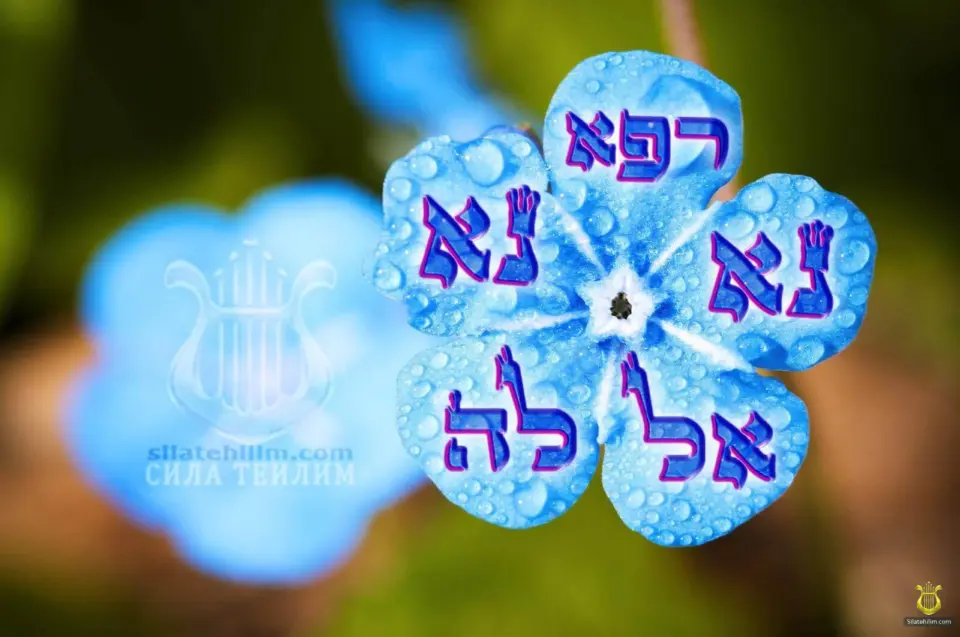
אֵל נָא רְפָא נָא לָהּ
“Yehi ratzon milfanecha Adonai Eloheinu ve-Elohei avoteinu, she-ta'aseh lema'an rachamecha va-chasadecha, u-lema'an limud ‘kal va-chomer’ asher amarti, u-lema'an midat ‘E-l,’ she-hi middah ha-rishonah mi-shlosh esrei middot rachamim, u-lema'an tefilat Moshe avdecha she-hitpalel ve-amar lefanecha: ‘E-l na refa na lah.’
(May it be Your will, O L-rd, our G-d and G-d of our fathers, that You act for the sake of Your compassion and kindness, for the sake of the kal vachomer teaching that I have recited, for the sake of the attribute of “E-l,” the first of the Thirteen Attributes of Mercy, and for the sake of the prayer of Moshe, Your servant, who prayed before You and said: “Please, G-d, please heal her.”)
וּלְמַעַן סוֹד הַתְּפִלָּה הַזֹּאת וְשֵׁמוֹת הַקדֶשׁ הָרְמוּזִים בָּהּ וּמְצרָפִים בָּהּ, תָּחוּס וְתַחְמֹל וּתְרַחֵם עַל
“U-lema'an sod ha-tefilah ha-zot ve-Shemot ha-Kodesh ha-remezim bah u-metzurfim bah, tachus ve-tachmol u-terachem al.”
(And for the sake of the secret of this prayer and the Holy Names alluded to and combined within it, may You have pity, compassion, and mercy upon…)
[For a man to recite]:
עַבְדְּךָ) פְּלוֹנִי בֶּן פְּלוֹנִית( וּתְרַפְּאֵהוּ רְפוּאָה שְׁלֵמָה, רְפוּאַת הַנפֶשׁ וּרְפוּאַת הַגּוּף וְהַעֲלֶה אֲרוּכָה וּמַרְפֵא לְכָל־תַּחֲלוּאָיווּלְכָל־מַכּוֹתָיו, וְתִתֶּן־לוֹ כֹּחַ בְּכָל־אבְרָיו וְגִידָיו ,וּבְרִיאוּת וְחֹזֶק וְאֹמֶץ וּתְרַחֲמֵהוּ וּתְחַיָּהוּ חַיִּים אַרֻכִּים טוֹבִים וּמְתֻקָּנִים, תבְרְכֵהוּלְחַיִּים טוֹבִים ולשָׁלוֹם, כִּי אֵל רוֹפֵא רַחֲמָן וְנֶאֱמָן אתָּה. יִהְיוּ לְרָצוֹן אִמְרֵי פִי וְהֶגְיוֹן לִבִּי לְפָנֶיךָ יְהוָה צוּרִי וְגֹאֲלִי
“Avdecha (name), ben (mother’s name), u-terape'ehu refuah shleimah, refuat ha-nefesh u-refuat ha-guf, ve-ha'aleh aruchah u-marpe le-chol tachalu'av u-le-chol makkotav, ve-titen lo koach be-chol eivarav ve-gidav, u-vri'ut ve-chozek ve-ometz, u-terachem alav u-techayyehu chayim arukim, tovim u-metukanim, tevarechehu le-chayim tovim u-le-shalom, ki E-l Rofeh, Rachaman ve-Ne'eman atah. Yihyu le-ratzon imrei fi ve-hegyon libi lefanecha, Adonai tzuri ve-go'ali.”
(Your servant (name), son of (mother’s name); heal him with a complete healing, a healing of soul and body. Grant him recovery and healing from all his illnesses and ailments. Give him strength in all his limbs and sinews, health, vigor, and courage. Have compassion on him and restore him to a long, good, and proper life; bless him with a good life and peace, for You are G-d, the compassionate and faithful Healer. May the words of my mouth and the meditation of my heart find favor before You, O L-rd, my Rock and Redeemer.)
[For a woman to recite]:
אֲמָתְךָ) פְּלוֹנִית בַּת פְּלוֹנִית), וּתְרַפְּאָהּ רְפוּאָה שְׁלֵמָה, רְפוּאַת הַנֶּפֶשׁ וּרְפוּאַת הַגּוּף, וְהַעֲלֵה אֲרוּכָה וּמַרְפֵּא לְכָל־תַּחֲלוּאֵיהָ וּלכלימַכּוֹתֶיהָ, וְתִתֶּן־לָהּ כֹּחַ וּבְרִיאוּת וּחֹזֶק וּאֹמֶץ בְּכָל־אֲבְרֵיהָ וּגִידֶיהָ, וּתְרַחֲמָהּ וּתְחַיָּה חַיִּים אַרֻכִּים טוֹבִים וּמְתֻקָּנִים .וּתְבָרְכָהּלְחַיִּים טוֹבִים וּלְשָׁלוֹם, כִּי אֵל רוֹפֵא רַחֲמָן וְנֶאֱמָן אָתָּה. יִהְיוּ לְרָצוֹן אִמְרֵי פִי וְהֶגְיוֹן לִבִּי לְפָנֶיךָ יְהוָה צוּרִי וְגֹאֲלִי:
“Amatecha (name), bat (mother’s name), u-terape'eha refuah shleimah, refuat ha-nefesh u-refuat ha-guf, ve-ha'aleh aruchah u-marpe le-chol tachalu'eha u-le-chol makkoteha, ve-titen lah koach be-chol eivareha ve-gideha, u-vri'ut ve-chozek ve-ometz, u-terachem aleha u-techayyeha chayim arukim, tovim u-metukanim. U-tevarecheha le-chayim tovim u-le-shalom, ki E-l Rofeh, Rachaman ve-Ne'eman atah. Yihyu le-ratzon imrei fi ve-hegyon libi lefanecha, Adonai tzuri ve-go'ali.”
(Your maidservant (name), daughter of (mother’s name); heal her with a complete healing, a healing of soul and body. Grant her recovery and healing from all her illnesses and ailments. Give her strength in all her limbs and sinews, health, vigor, and courage. Have compassion on her and restore her to a long, good, and proper life; bless her with a good life and peace, for You are G-d, the compassionate and faithful Healer. May the words of my mouth and the meditation of my heart find favor before You, O L-rd, my Rock and Redeemer.)
2. A segula for healing to be performed over a period of ten days:
Add eleven drops of water to a glass of water, and have kavannah regarding the eleven letters of the verse:
אֵל נָא רְפָא נָא לָהּ
In addition, as you drip the water, recite this verse aloud, with its vowels and cantillation:
אֵל נָא רְפָא נָא לָהּ“E-l na refa na lah” - (G-d, please heal her, please).
Repeat it 10 times. Each time, add 11 drops, for a total of 110, corresponding to the gematria of the word “miracle” (נס). Then take the glass of water in your hand and recite this prayer:
יהי רָצוֹן מִלְפָנֶיךָ יְהוָה, יאהדונהי אֱלֹהֵינוּ וֵאלֹהִי אֲבוֹתֵינוּ, שֶׁיִּמָּשַׁךְ שֶׁפַע רְפוּאָה וְחַיִּים, עַל- טפּוֹת הַמַּיִם הָאֵלּוּ, שֶׁכּוּנְתִּי בָהֶםבְּאוֹתִיּוֹת "אל נא רְפָא נָא לָהּ". וִירַפְּאוּ רְפוּאָה שלמה
“Yehi ratzon milfanecha Adonai, Eloheinu ve-Elohei avoteinu, she-yimashech shefa refuah ve-chayim al tipot ha-mayim ha-eleh, she-kivanti bahem be-otiot ‘E-l na refa na lah’, ve-yirpe'u refuah shleimah.”
(May it be Your will, O L-rd, our G-d and G-d of our fathers, that an abundance of healing and life be drawn upon these drops of water, for which I had kavannah regarding the letters of the verse, “G-d, please heal her, please,” and may they bring complete healing.)
[For a man to recite]:
לְעַבְדְּךָ (פְּלוֹנִי בֶּן פְּלוֹנִית( הַשׁוֹתֶה אוֹתָם. וְיִהְיוּ רְפוּאָה וְחַיִּים) לִפְלוֹנִי בֶּן פְּלוֹנִית ,(רְפוּאָה וְחַיִּים (לִפְלוֹנִי בֶּן פְּלוֹנִית) .אָנָּאיְהוָה, יאהדונהי, לְמַעַן תְּפִלַּת משֶׁה עַבְדָּךְ עַבְדָּךְ אֲשֶׁר התפלל לפניךְ וְאָמַר אֵל נָא רְפָא נָא לָהּ: רְפָא נָא רְפוּאָה שְׁלֵמָה) פלוניבֶּן פְּלוֹנִית), וְהַעֲלֵה אֲרוּכָה וּמַרְפֵא לְכָל־תַּחֲלוּאָיו וּלְכָל־מַכּאויו וּלְכָל־מַכּוֹתָיו. כִּי אֵל רוֹפֵא רַחֲמָן וְנֶאֱמָן אתָּה.
“To Your servant (name), son of (mother’s name), who drinks them. May they bring healing and life to (name), son of (mother’s name). Please, O L-rd, for the sake of the prayer of Your servant Moses, who prayed before You and said: ‘E-l na refa na lah.’ Please grant complete healing to (name), son of (mother’s name), and grant recovery and healing from all his illnesses, all his pains, and all his ailments, for You are G-d, the compassionate and faithful Healer.”
[For a woman to recite]:
לְאַמָתְךָ (פְּלוֹנִית בת פְּלוֹנִית( הַשׁוֹתָה אוֹתָם. וְיִהְיוּ רְפוּאָה וְחַיִּים )לִפְלוֹנִית בת פְּלוֹנִית( אָנָּא יְהוָה, יאהדונהי, לְמַעַן תְּפִלַּתמשֶׁה עַבְדָּךְ עַבְדָּךְ אֲשֶׁר התפלל לפניךְ וְאָמַר אֵל נָא רְפָא נָא לָהּ: רְפָא נָא רְפוּאָה שְׁלֵמָה )פְּלוֹנִית בת פְּלוֹנִית), וְהַעֲלֵה אֲרוּכָהוּמַרְפֵא לְכָל־תַּחֲלוּאָיה וּלְכָל־מַכּאויה וּלְכָל־מַכּוֹתָיה. כִּי אֵל רוֹפֵא רַחֲמָן וְנֶאֱמָן אתָּה.
“To Your maidservant (name), daughter of (mother’s name), who drinks them. May they bring healing and life to (name), daughter of (mother’s name). Please, O L-rd, for the sake of the prayer of Your servant Moses, who prayed before You and said: ‘E-l na refa na lah.’ Please grant complete healing to (name), daughter of (mother’s name), and grant recovery and healing from all her illnesses, all her pains, and all her ailments, for You are G-d, the compassionate and faithful Healer.”
After this, the sick person drinks the water, and, with G-d’s help, will be healed and saved.
(This prayer was provided by Rabbi Yisrael Yakobov from the book Lashon Chachamim, for a journey to the graves of tzadikim in Morocco, where this Tikkun was practiced; translation and transliteration for Silatehilim.com by Rabbi Alexander Tzvi Sypkov)
Was this helpful?
100% of readers found this article helpful (93 votes).
Please note: some articles on our site contain the holy Names of the Almighty. If you print these articles, they may not be thrown away or destroyed. Please handle printed copies with care and respect.
Material from our site may be copied for the purpose of spreading Torah, provided a link to Silatehilim.com is included. Any use of the site's material in print publications or for commercial purposes is prohibited without the rights holder's consent.