
Purim Segulot
Purim Segulot
1. Before reading Megillat Esther, while the Chazan recites the berachot, one should ask the Almighty to grant us the merit of becoming powerful vessels for receiving the Holy Light, and the strength of Mordechai and Esther, which descend at this moment. This light remains with us until the following Purim.
2. During the reading of Megillat Esther, this Holy Light begins to envelop us, as though we were reliving these events. Pray to the Almighty that all difficulties leave your life. Try to connect the events of the Megillah with your personal life; for example, Haman's hanging can be viewed as the hanging of all your sorrows, troubles, hardships, and problems, with the desire to part with them forever.
3. At the end of the reading of Megillat Esther, ask Hashem for a shidduch, shalom bayit, parnassah—whatever you need.
4. After reading Megillat Esther, set the festive table.
5. Before the meal, Rabbeinu Chida (Lev David, ch. 30) writes about a custom for both men and women—to light two candles:
- lekhvod Mordechai ben Yair ben Shimi ben Kish
- lekhvod Esther HaMalka bat Avichayil.
These candles will bring their Holy Light into your homes.
The night before Purim is a special time—but even more so at Chatzot Layla (midnight).
6. At Chatzot Layla, one should read Psalm 22 seven times. At these moments, all seven Sha'arei Shamayim (Gates of Heaven) are open to us. Just as Esther stood before the Almighty at this hour, so too do we stand before Him, blessed be He.
7. On the Purim fast, it is good to read the entire Book of Tehillim. The yetzer hara will try to interfere and distract you so that you become tired and go to sleep—but do not miss this opportunity: once a year, you have an incredible chance to pray.
Those who read the entire Book of Tehillim three times—it is as if they fasted from one Shabbat to the next, teaches the Gaon Rav Yaniv Assuri—are following a tradition of Rabbi Elimelech of Lizhensk.
Mordechai HaTzadik gathered 22,000 children on this night and prayed with them to G-d to annul the harsh decree against the Jewish people. We, too, must pray with the same mesirut nefesh (self-sacrifice) with which Esther HaMalka brought about the annulment of the decree against us.
Among Breslovers, it is customary to spend six hours in secluded prayer—hitbodedut—from Chatzot Layla. This is the only night of the year when all decrees and judgments can be neutralized through prayer.
The Purim Seudah
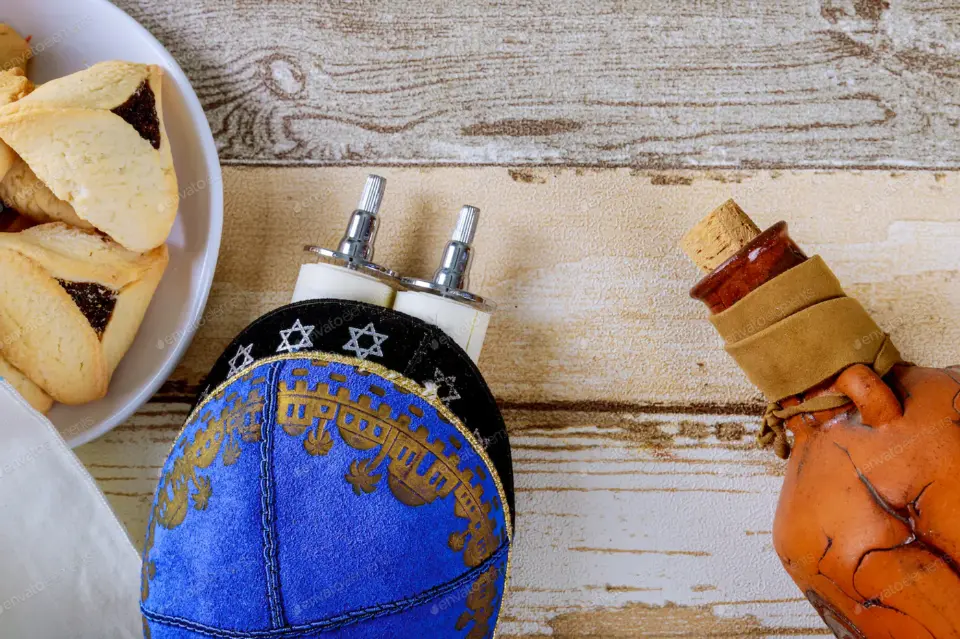
The Purim meal is a mitzvah. The meal is traditionally preceded by dumplings—a symbol of enveloping gevurah, judgment (red meat), in chesed (white dough). There should be an abundance of delicious food on the table. The long challah should recall the long gallows on which Haman was hanged. The table should also include a dish containing a mixture of various nuts and seeds, since Esther HaMalka ate nuts in the palace of Achashverosh. The traditional festive dish of the day is “Haman's ears”—among Mountain Jews, “Asido”—a halva named after Hadassah.
It is good to recite during the meal:
- 120 times “Baruch Mordechai” (blessed is Mordechai),
- 24 times “Beruchah Esther bat Avichal” (blessed is Esther bat Avichal).
(from the “Shirat Dvora” website, based on a class by Anat ben Ari for Sila Tehilim)
Was this helpful?
100% of readers found this article helpful (85 votes).
Please note: some articles on our site contain the holy Names of the Almighty. If you print these articles, they may not be thrown away or destroyed. Please handle printed copies with care and respect.
Tags: Segulot, Purim, Purim Segulot