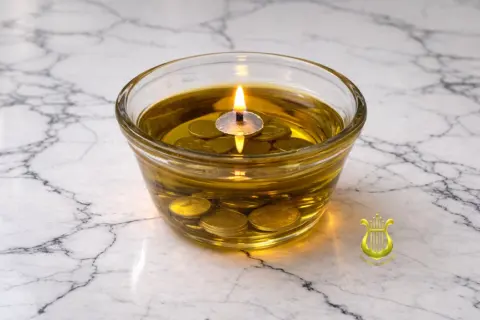
Many Mekubalim advise reciting pesukim from Tanakh after the blessing over the Havdalah wine, with specific kavannot and meaningful actions containing profound significance. They serve as a good foundation for the coming week.
Thus, at the conclusion of Havdalah, after the candle has been extinguished in the wine, the following segulot are performed.
1. Forehead
While applying wine to the forehead, one should have the kavanah that the coming week will be successful, since the Hebrew word for forehead is “metzach” מצח, whose gematria is 138, the same as the word “hatzlachah” (success) הצלחה. In addition, a person's sins are recorded on his forehead. Therefore, while performing this action, recite the following pasuk:
מחיתי כעב פשעיך וכענן חטאותיך
– “Machiti ka'av pesha'echa vecha'anan chatotecha” –
(I have erased your transgressions like a cloud, and your sins like a mist); (Isaiah 44:22)
2. Eyes
While applying wine to the eyes, with the kavanah that they be protected from anything impure and granted healing and purity, recite:
מִצְוַ֥ת יְהוָ֥ה בָּ֝רָ֗ה מְאִירַ֥ת עֵינָֽיִם
– “Mitzvat Ado-nai barah, me'irat einayim” –
(The commandment of the L-rd is pure, illuminating the eyes); (Tehillim 19:9)
3. The “Luz” bone (there are two opinions as to its location: the seventh cervical vertebra or the coccyx, depending on the tradition)
While applying wine to the “Luz” bone, and keeping in mind the resurrection of the dead (the Rambam taught that one who does not believe in the resurrection of the dead does not merit Olam Ha-Ba), recite:
הריני מאמין בתחיית המתים
– “Hareini ma'amin be-techiyat ha-metim” –
(I believe in the resurrection of the dead); (from the Rambam's [Maimonides'] Thirteen Principles of Faith)
4. Mouth
While applying wine to the mouth, with the kavanah of maintaining pure speech—specifically, avoiding empty conversations and discussions about others, since anyone who speaks lashon hara about another person gives that person his merits and takes his sins upon himself (Chafetz Chaim)—recite:
בורא ניב שפתים שלום שלום לרחוק ולקרוב אמר ה׳ ורפאתיו
– “Borei niv sefatayim, shalom shalom larachok velakarov, amar Ado-nai, ur'efativ” –
(The Creator of the speech of the lips: Peace, peace, to the distant and to the near, says the L-rd, and I will heal him); (Isaiah 57:19)
5. Throat
While applying wine to the throat for a refuah shleimah, recite:
רפאות תהיה לשרך ושיקוי לעצמותיך
– “Refa'ot tihyeh lesharekha veshikui le'atzmotekha” –
(This will be healing for your body and an elixir for your bones); (Proverbs 3:8)
6. Pockets
While applying wine to the pockets for parnassah (if there are no pockets, it is beneficial for a woman to dip into the Havdalah wine “kesef ve-zahav”—the jewelry she wore on Shabbat), recite:
ברכת ה' היא תעשיר
– “Birkat Ado-nai hi ta'ashir” –
(The blessing of the L-rd—it enriches); (Proverbs 10:22)
וַיִּזְרַע יִצְחָק בָּאָרֶץ הַהִוא וַיִּמְצָא בַּשָּׁנָה הַהִוא מֵאָה שְׁעָרִים וַיְבָרֲכֵהוּ יְהוָה
– “Vayizra Yitzchak ba'aretz hahi vayimtza bashanah hahi me'ah she'arim vayevarekhehu Ado-nai” –
(And Isaac sowed in that land, and found in that year a hundredfold; and the L-rd blessed him).
(Compiled from a lecture by Rabbanit Sarit Gaz)
Was this helpful?
100% of readers found this article helpful (54 votes).
Please note: some articles on our site contain the holy Names of the Almighty. If you print these articles, they may not be thrown away or destroyed. Please handle printed copies with care and respect.
Material from our site may be copied for the purpose of spreading Torah, provided a link to Silatehilim.com is included. Any use of the site's material in print publications or for commercial purposes is prohibited without the rights holder's consent.