A Segula with Challah at the Kever of Tzadik Rabbi Aryeh Levin
Rabbi Aryeh Levin, known as the Rav of the Prisoners, was beloved and revered by the Jewish people, and was also known as the Tzadik of Jerusalem.
He was the beloved grandfather of Rabbanit Batsheva Kanievsky, who learned much from him. She especially recalled Rabbeinu Hida's segula of reciting 11 pesukim beginning with the letter
“nun” every day.
11 verses of protection beginning with the letter Nun — against the 13 negative days
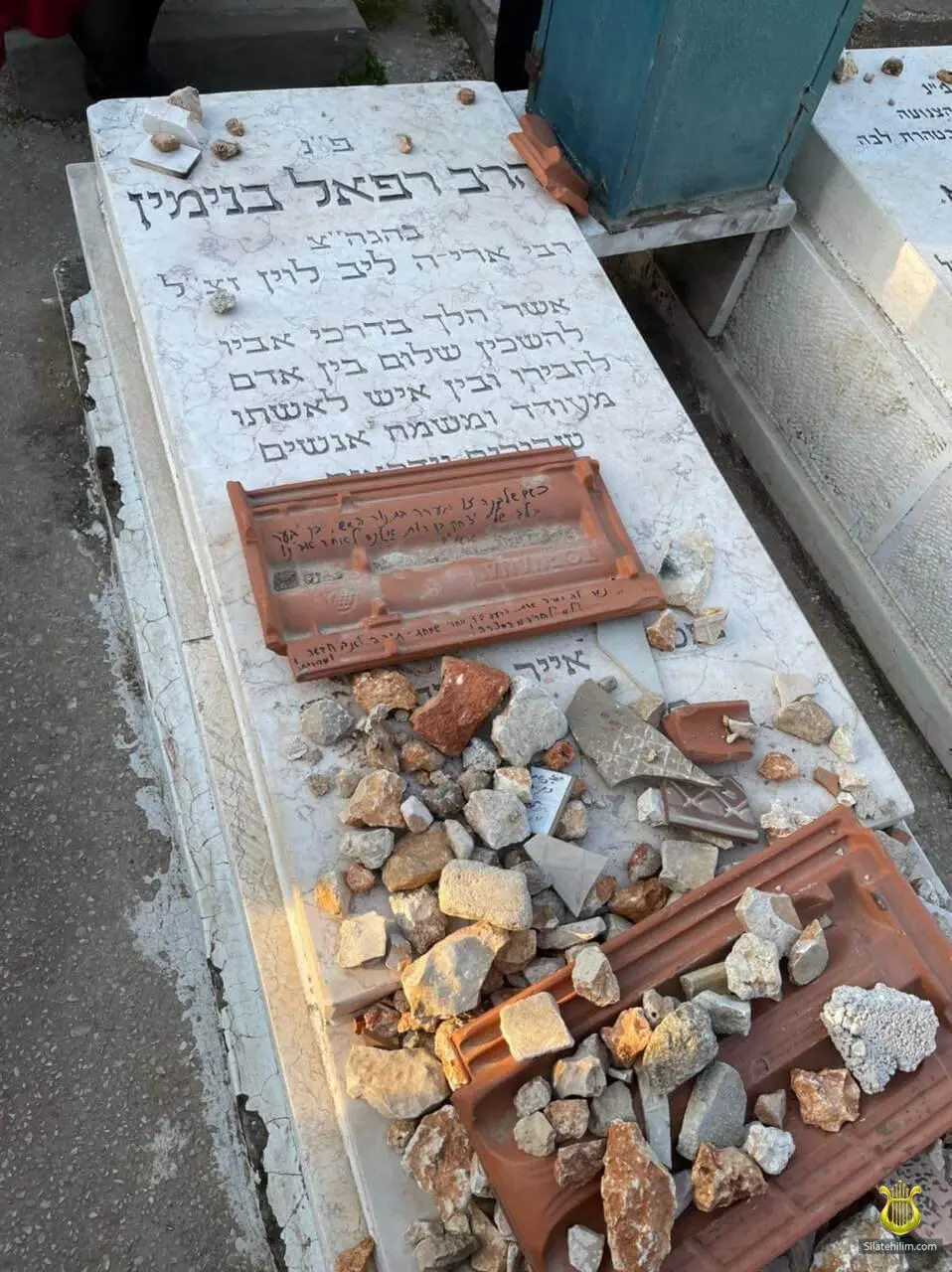
The following is inscribed on Rav Aryeh Levin's gravestone:
"I sincerely believe that, at the time appointed by the Creator, Techiyat HaMetim will take place."
Before our trip to the Kivrei Tzadikim with the “Yodei Binah” Yeshiva, we were told about a beautiful segula for children at the Kever of a tzadik.
Indeed, upon arriving in Sanhedria, we noticed a large number of red tiles mixed in with other stones at the Kever of Tzadik Aryeh Levin, with inscriptions on them. This is a segula for children connected with the mitzvah of Hafrashat Challah.
The segula consists of writing the names of the children on a clay tile or any other fireproof stone, placing it on the bottom of the oven while baking the Challah, and after the Challah has been baked, lifting the stone and reciting:
"Ribono Shel Olam, just as this stone was heated during the mitzvah of Hafrashat Challah, so may my (son/daughter—state the name) be strengthened in faith in You and grow strong in Your Torah. I ask You to watch over and protect my child, just as I strive to observe and safeguard Your mitzvot."
Then, one should bring this stone and place it at the Kever of Rav Aryeh Levin and ask Hashem, be-zchut the tzadik, for the wellbeing of the children!
Recently, however, I discovered an astonishing connection between this segula, Yosef HaTzadik, and Rav Aryeh Levin—the Rav of the Prisoners.
In A. T. Sypkov's book
A Good Dream, a Kabbalistic commentary by
Rav Moshe David Valle (Sefer
Or Zarua) is cited regarding the interpretation of the dream of the Midianite soldier in the Book of Shoftim:
“I dreamed that a roasted barley loaf
(צליל לחם) rolled through the camp of Midian, and when it reached the tent, it struck it and it fell; it overturned it, and the tent collapsed.” (Shoftim 7:13)
The rolling barley loaf represents the sefirah of Yesod, which emerged from the power of Gevurah in order to crush the klipot.
The word
“roasted”—צליל points to the sefirah of Yesod; its gematria is
160, equal to the word
“Yosef”—יוספ, whose gematria is 156 with the addition of a kolel for each letter. As is known, Yosef is associated with the sefirah of Yesod.
A Chiddush
Rav Aryeh Levin—the Rav of the Prisoners;
“Roasted” [bread]—in our segula, the Challah;
“Roasted” has the same gematria as
“Yosef”;
Yosef HaTzadik was imprisoned for 12 years;
The tent symbolizes the klipot and impurity (the barley loaf struck it and it collapsed);
Just as Rav Aryeh Levin helped prisoners, so too, at his Kever, through the merit of the mitzvah of Hafrashat Challah, during which this stone was heated, may all the klipot be shattered and the holy sparks released from captivity, so that they may help Bnei Yisrael.
Yosef is associated with the well-known segula, “Ben Porat Yosef, ben porat alei ayin”—protection from the evil eye.
Therefore, we can also add the following request to Hashem to this segula:
“Ribono Shel Olam! May this baked Challah, corresponding to the roasted barley loaf from the dream of the Midianite soldier, which overturned the tent (the klipot), crush all forms of impurity and remove them from my child, so that my child may be protected from ayin hara like Yosef HaTzadik.”
(from a trip to the Kivrei Tzadikim with the “Yodei Binah” Yeshiva)
Was this helpful?
94% of readers found this article helpful (17 votes).
Please note: some articles on our site contain the holy Names of the Almighty. If you print these articles, they may not be thrown away or destroyed. Please handle printed copies with care and respect.