Skip to content
This English version of the site was translated with AI assistance. We apologise for any errors and are working to improve it.
Tehillim 19 – David HaMelech's plea – reading Tehillim keneged Nega'im and Oholot
The Hidden Meaning of Tehillim

Tehillim 19 – David HaMelech's plea – reading Tehillim keneged Nega'im and Oholot

David HaMelech's plea – reading Tehillim keneged Nega'im and Oholot

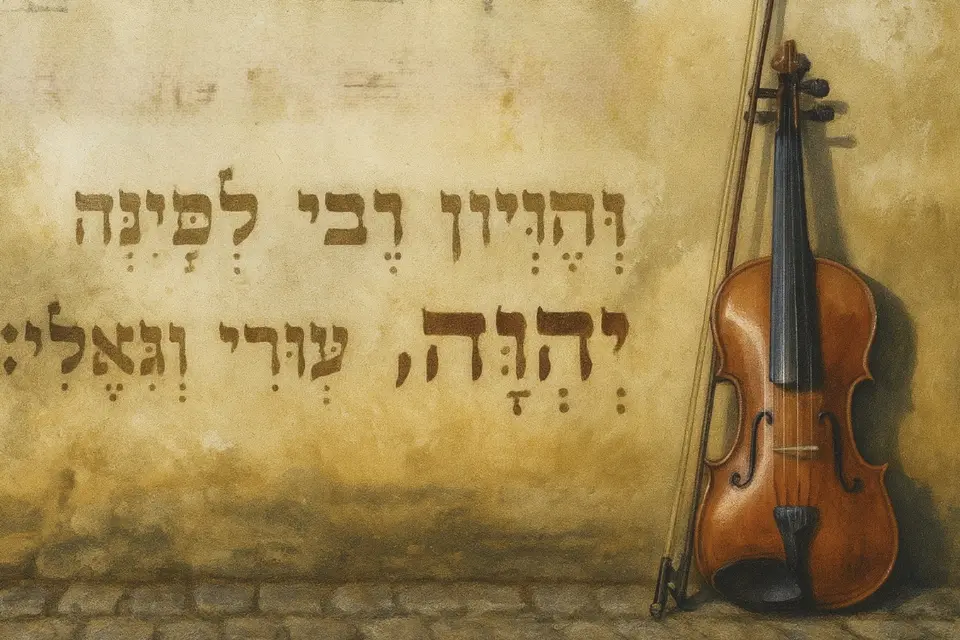
Tehillim 19:15  - “Yihyu le-ratzon imrei fi ve-hegyon libi lefanecha Ha-Shem tzuri ve-go'ali” - (May the words of my mouth and the meditation of my heart be acceptable before You, the L-rd, my Rock and my Redeemer). This is the most famous pasuk in Tehillim, concluding many Jewish prayers, including the central prayer—the Amidah. The Midrash sees in this verse a request by David HaMelech that his psalms become part of the Torah, so that they could be read and studied. Midrash Tehillim reveals the meaning of this pasuk as David's request for future generations: “Let them read Tehillim and receive a reward for it, as (for studying) Nega'im and Oholot”. (Midrash Tehillim 1:1) Nega'im (afflictions) and Oholot (tents) are the two most difficult tractates of the Talmud. One of the greatest experts in these tractates was Rabbi Akiva. Once, when Rabbi Akiva intervened in a discussion about aggadah, he was told: “Go and expound the laws of Nega'im and Oholot; in these important and stringent laws, you are a great expert, but in aggadah you are not as great”. (Sanhedrin 67b) These two tractates are especially difficult, and therefore the reward for studying them is very great. Rabbeinu Chida explains that David HaMelech asks G-d for the reward for reading his psalms to be comparable to the reward for studying the most difficult aspects of Torah law, because there are two types of Torah study: theoretical and practical. When we study a Torah law that has no connection to our own lives, we receive the reward for studying the theoretical aspect of Torah. But when we study a law that we can apply in our lives, we receive a reward both for the theoretical aspect of the law and for its practical influence on our behavior. Studying Nega'im inspires us to avoid “lashon hara” (gossip) and other negative traits that lead to afflictions, while studying the laws of purity in Oholot encourages us to be more mindful of remaining pure. David HaMelech asks Ha-Shem for the reading of Tehillim to have value from both a theoretical and a practical perspective, since the words of the Psalms bring their reader closer to G-d, His Torah, and the mitzvot, and also teach humility. (From Rabbeinu Chida's commentary on Tehillim) (From the book “Tehillim – The Book of Psalms,” edited by Rabbi Yosef B. Marcus, New York)

Was this helpful?

100% of readers found this article helpful (30 votes).

Please note: some articles on our site contain the holy Names of the Almighty. If you print these articles, they may not be thrown away or destroyed. Please handle printed copies with care and respect.

Tags: Tehillim 19, Reading Tehillim, The Reward for Reciting Tehillim—Equivalent to Studying Nega'im and Ohalot, The Request of David HaMelech, David HaMelech


31 Aug 2021
Share

Related articles