Pertesh for Shavuot — the Flavor of Jewish Holidays
Pertesh for Shavuot — the Flavor of Jewish Holidays
After reviewing lists of Shavuot dishes and finding no trace among them of what is described in the Torah (cheesecakes, ravioli, cheese platters—all are masterpieces of modern cuisine), I am proud to present the ancient cuisine of the Mountain Jews for Shavuot.
Among the Mountain Jews, Shavuot is called “Aselte”—from the word “asel”, which means “honey” in Persian.
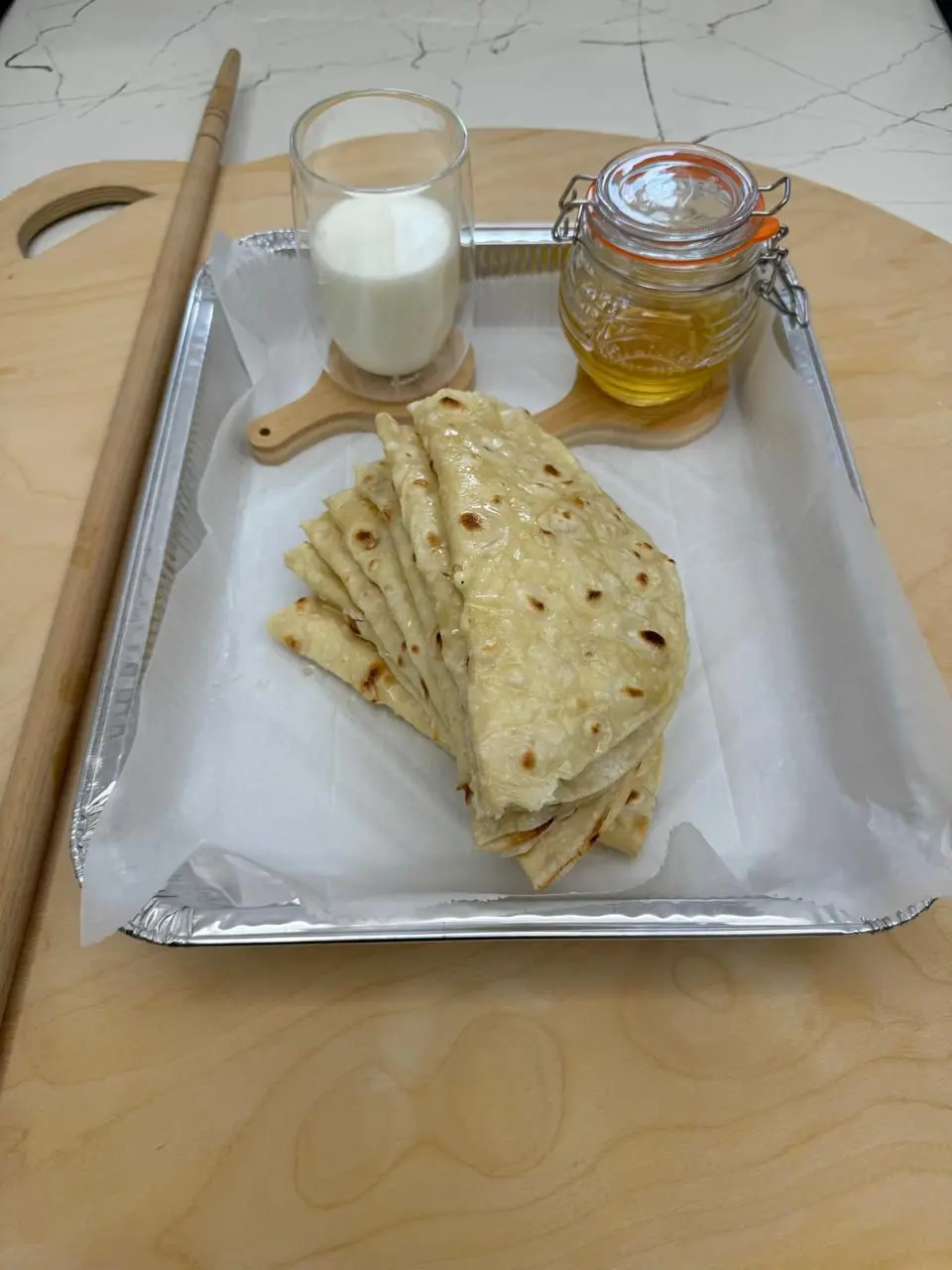
The main Shavuot dish is “Pertesh”—lavash flatbreads filled with a dairy filling and soaked in honey syrup. In preparing this dish, we follow the Torah’s words to the letter:
“And I have come down to rescue him from the hand of Egypt and to bring him up from that land to a good and spacious land, a land flowing with milk and honey.” (Exodus 3:8)
The recipe consists of three parts:
thin lavash flatbreads, thick dairy rice porridge, and honey syrup.
First, prepare the thick dairy rice porridge (it is important that it be thick, since it will be used as a filling): add a little water to 1 liter of milk, warm it, then add 1 cup of rice and cook, stirring constantly, until done. Add sugar, salt, and butter to taste at the end. Leave to cool.
Then prepare the syrup. Here is how: add approximately ½ cup of boiling water to 1 cup of honey and bring to a boil.
Lavash recipe:
Make a dough from flour, water, and salt. Let the dough rest briefly, then roll it out very thinly into a small circle. Place the circle on a hot, unoiled frying pan, fry on both sides, and immediately fold it in half (if you do not fold the lavash in half right away, it will dry out and will not fold later). This baking method is intended only for lavash prepared for Shavuot.
Place a little of the dairy porridge into each finished lavash (it may be hot—it will soften the lavash) and press it down.
Stack the lavash on top of one another, generously brushing each with butter—the warm lavash absorbs the butter and becomes soft.
You can pour the syrup over them immediately (be sure to cool it first), or dip the Pertesh in honey—it is entirely up to your taste.
Now you know what the “land flowing with milk and honey” tastes like.
Chag Sameach!
Was this helpful?
98% of readers found this article helpful (64 votes).
Please note: some articles on our site contain the holy Names of the Almighty. If you print these articles, they may not be thrown away or destroyed. Please handle printed copies with care and respect.
Material from our site may be copied for the purpose of spreading Torah, provided a link to Silatehilim.com is included. Any use of the site's material in print publications or for commercial purposes is prohibited without the rights holder's consent.