Causes of Bad Dreams
Rabbi Shimon said: “When a person lies down in bed and sleeps, his nefesh leaves him and ascends above. And if you were to say that all nefashot ascend to behold the Blessed One and visit His Palace, this is not so—for not everyone is worthy of seeing the King’s Countenance, that is, of ascending to Malchut to be renewed there. The nefashot of all people leave the body, while a certain part of the heart’s vitality remains in it to sustain its existence. The nefesh has left and wishes to ascend to Malchut to be renewed there. It must ascend through several levels, since passing from the material world into the spiritual world is possible only after passing through the three klipot of tumah: Tohu, Bohu, and Choshech. It then passes through the klipah of Nogah, and from there ascends to Kedushah (holiness). Therefore, when a person’s nefesh leaves the body, it wanders and encounters impure klipot (from tumah—impurity), hidden in the air and shining there, blocking the paths so that the nefesh cannot ascend.
If it is pure and has not been defiled during the day, it ascends above, and they (the klipot) have no power to hold it back.
But if it is impure, it remains and becomes defiled among them, clings to them, and they do not allow it to ascend any farther. There they tell it something of what has been decreed Above, and it hears and apprehends in its dream things that will happen in the near future.
Sometimes, if it has become so impure that it is not worthy of hearing news of what will happen soon, they mock it in its dream and tell it false things. Thus it wanders back and forth throughout the night, until the person awakens and the nefesh returns to its place in the body.
Fortunate are the righteous to whom Ha-Kadosh Baruch Hu reveals His secrets in their dreams, so that they may be protected from Judgment. Since they know in their dreams what has been decreed Above—even for the distant future—they fast and repent, thereby annulling the decree. Woe to the wicked of the world who defile their bodies and souls during the day through evil deeds, for by doing so they prevent their nefashot from ascending at night.” (“Matok MiDvash,” by Rabbi Daniel Frisch)
Chazal teach that nowadays it is rare for anyone to see dreams that convey information from the World of Truth. Most dreams are the result of encountering one’s own klipot and have nothing in common with prophetic dreams.
Prayer for a Bad Dream – Hatavat Chalom (recited individually)
יהי רצון מלפניך ה' אלהי ואלהי אבותי שיהו כל חלומותי שחלמתי בין בלילה הזה בין בשאר הלילות בין שחלמתי אני ובין שחלמו לי אחרים אם טובים הם יתקיימו עלי לששון ולשמחה לברכה ולחיים ואם לדבר אחר כשם שהפכת את מי המרה למתיקה ומי יריחו ע"י אלישע למתיקה ואת קללת בן בעור לברכה כן תהפוך את כל חלומות הקשין ומה שחלמו לי אחרים לטובה לברכה ולרפואה ולחיים לשמחה ולששון ולשלום הפכת מספדי למחול לי פיתחת שקי ותאזרני שמחה למען יזמרך כבוד ולא ידום ה' אלהי לעולם אודך ולא אבה ה' אלהיך לשמוע אל בלעם ויהפוך ה' אלהיך לך את הקללה לברכה כי אהבך ה' אלהיך אז תשמח בתולה במחול ובחורים וזקנים יחדיו והפכתי אבלם לששון וניחמתים ושימחתים מיגונם
Yehi ratzon milfanecha, Adonai Elohai ve-Elohei avotai, she-yihyu kol chalomotai she-chalamti, bein ba-lailah ha-zeh bein be-she'ar ha-leilot, bein she-chalamti ani ve-bein she-chalmu li acherim. Im tovim hem—yitkayemu alai le-sasson u-le-simchah, li-vrachah u-le-chaim. Ve-im le-davar acher, ke-shem she-hafachta et mei ha-Marah le-metikah, ve-mei Yericho al yedei Elisha le-metikah, ve-et kilalat ben Beor li-vrachah, ken tahafoch et kol chalomot ha-kashin u-ma she-chalmu li acherim le-tovah, li-vrachah, u-le-refuah, u-le-chaim, le-simchah u-le-sasson, u-le-shalom. Hafachta mispedi le-machol, pitashta saki, va-te'azreni simchah, lema'an yezamercha chavod ve-lo yidom; Adonai Elohai, le-olam odeka. Ve-lo avah Adonai Elohecha lishmo'a el Bilam, va-yahafoch Adonai Elohecha lecha et ha-klalah li-vrachah, ki ahevcha Adonai Elohecha. Az tismach betulah be-machol, u-vachurim u-zekenim yachdav, ve-hafachti evelam le-sasson, ve-nichamtim ve-simachti mi-yagonam.
Translation
May it be Your will, L-rd, my G-d and the G-d of my fathers, that all my dreams—those that I dreamed both on this night and on other nights, whether I dreamed them myself or others dreamed about me—if they are good, may they be fulfilled for me for joy and gladness, for blessing and life. And if they concern other matters, just as You transformed the bitter waters into sweet waters, and sweetened the waters of Jericho through Elisha, and transformed the curse of the son of Beor into a blessing, so may You transform all my difficult dreams and all that others dreamed about me into goodness and blessing, healing and life, joy and gladness, and peace.
You transformed my mourning into dancing; You loosened my sackcloth and girded me with joy,
so that my soul may sing Your praise and not be silent! L-rd, my G-d, I will thank You forever!
But the L-rd, your G-d, did not wish to listen to Balaam, and the L-rd, your G-d, transformed the curse into a blessing for you, because the L-rd, your G-d, loves you. Then shall the maiden rejoice in the dance, together with young men and old men; and I will transform their mourning into joy, comfort them, and gladden them after their sorrow.
Segulot for Bad Dreams
1. The Mekubalim teach that if a person has seen a bad dream, he should read the entire
“Shir HaShirim”, and this will be a פירוש for a good dream.
2.
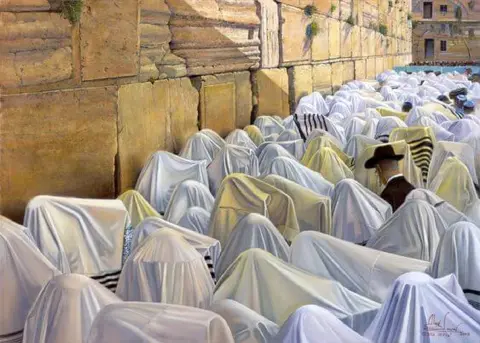
“Birkat Kohanim”—at this time, a special prayer against bad dreams is recited.
Birkat Kohanim – a segula for bad dreams
(Prayer from the tractate Berakhot of the Jerusalem Talmud; transliteration and translation by Rabbi Alexander Tzvi Sypkov)
Was this helpful?
98% of readers found this article helpful (124 votes).
Please note: some articles on our site contain the holy Names of the Almighty. If you print these articles, they may not be thrown away or destroyed. Please handle printed copies with care and respect.