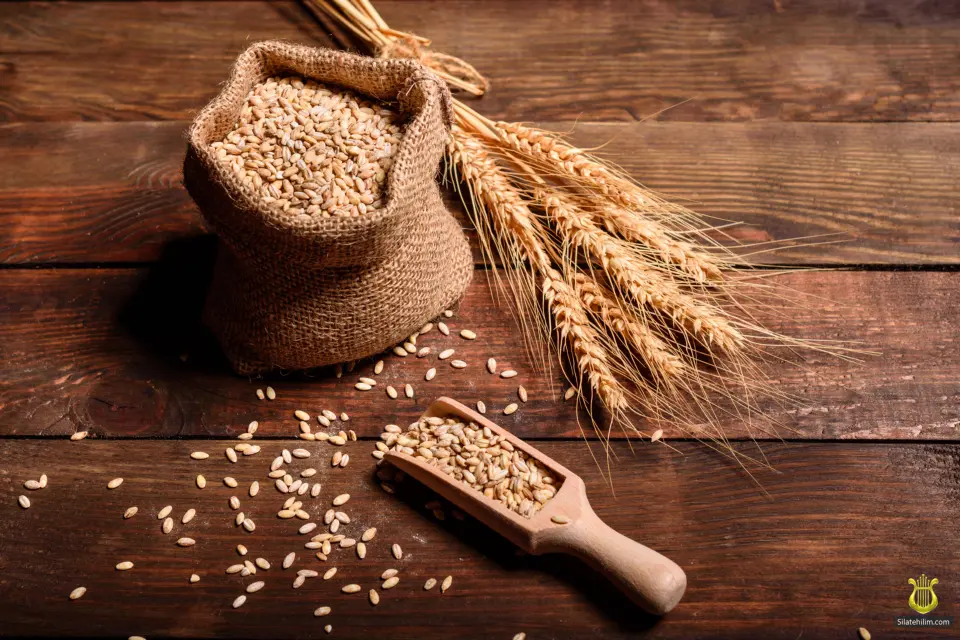
In recent years, more and more people have been suffering from allergies to wheat products and gluten intolerance. Due to mass production, modern wheat flour has undergone genetic transformation (crossbreeding varieties, stuffing it with all kinds of additives to increase yields, and refining) and is completely unlike the wheat our ancestors ate.
The Torah contains a hint regarding the difficulties that may confront a person who eats wheat.
Wheat in Hebrew is “chitah” (wheat), spelled חיתה.
However, in the Torah, the letter י (yud) is absent from the spelling of this word; instead, it has a hiriq vowel, which also represents the sound “i.” The letters ח and י together form the word “chai” (life).
But when the word חיתה “chitah” loses the letter י, wheat immediately loses its connection to the source of life—the Almighty.
Wheat is associated with the Tree of Knowledge, because of which humanity became mortal, while the word “life” is absent from the name of this grain, serving as a kind of hint at death.
This is why so many people in our time suffer from wheat intolerance.
Moreover, there is a notable similarity between the words “wheat” חיתה — (chitah) and “sin” — חטה — (chet)—when a person sins, it is as though he becomes separated from the source of life.
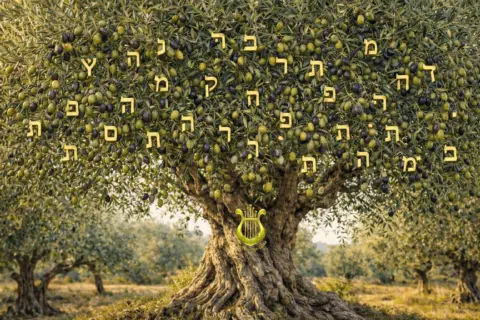
With the advent of the Final Redemption in the days of Mashiach, the letters ח and י will once again unite in the word “chitah”, restoring to the Tree of Life the branch it once lost.
As soon as the word “life” (חי) returns to the name of wheat (חיתה), all the material and spiritual potential of this grain will rise to a new level and attain perfection.
Wheat, which previously symbolized the Tree of Knowledge, will become the fruit of the Tree of Life—the material manifestation of the Torah.
The union of the Tree of Knowledge with the Tree of Life will restore the lost connection between the spiritual and the material, between the soul and the body.
The letter י (yud) hints at that part of the Jewish soul that is eternally and inseparably connected with G-d. As soon as this letter breathes “life” into the bread that sustains our physical strength, our bodies will cease resisting wheat, and together we will be able to rise to a new level of material and spiritual perfection.
Which kavanot should be used for this rectification?
One should pronounce the word חתה as חיתה, emphasizing the letter י while contemplating that the Final Redemption, which the righteous Mashiach will announce to us, will come when we have fully rectified the harm caused by Adam’s sin. It is interesting that Mashiach is a direct descendant of King David, who lived in the city of Beit Lechem(“house of bread”).
Even this detail indicates that the conflict between humanity and wheat is not eternal: “and then, in the Land of Israel, rich loaves of bread will once again grow on the trees.” (BT, Shabbat 30b)
(Based on the book “The Seven Fruits of Israel” by Rabbanit H. B. Siegelbaum)
Was this helpful?
100% of readers found this article helpful (20 votes).
Please note: some articles on our site contain the holy Names of the Almighty. If you print these articles, they may not be thrown away or destroyed. Please handle printed copies with care and respect.
Material from our site may be copied for the purpose of spreading Torah, provided a link to Silatehilim.com is included. Any use of the site's material in print publications or for commercial purposes is prohibited without the rights holder's consent.