The Hidden Meaning of Sefirat HaOmer: 7 × 7 from the Creation of the World
The Hidden Meaning of Sefirat HaOmer: 7 × 7 from the Creation of the World
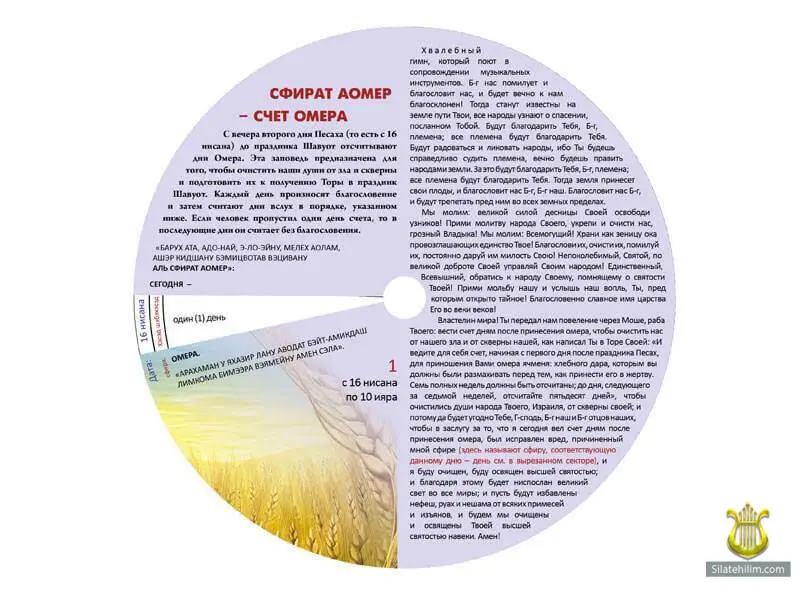
The Torah was given 49 days after the festival of Pesach. These 49 days are known as the days of the Counting of the Omer.
The Book of Vayikra (23:15) states: “And you shall count for yourselves… from the day that you brought the omer of the waving”. The omer is a measure of volume equal to 3.87 cubic centimeters. The Jews brought an omer of barley beginning at Mincha, the afternoon offering, on the second day of Pesach. After bringing the offering, they counted each day of seven weeks—49 days—after which, on the fiftieth day, Shavuot was celebrated—the day the Torah was given at Mount Sinai.
Even after the destruction of the First and Second Temples, where the omer offering was brought, the tradition of Counting the Omer was preserved. Beginning on the second night of Pesach, we count each of the 49 days in ascending order.
At the end of the evening prayer during these days, we recite a blessing and state which day of the count has just begun. The 49 days symbolize the Jews’ patient anticipation of receiving the Torah on Shavuot.
The rule of the “seven weeks,” which applies to the days of the Counting of the Omer, extends over the entire period from the Creation of the World until the giving of the Torah to Israel. As we will now see, this period is obtained by multiplying by 7 seven times.
7 × 7 from the Creation of the World
1. The first stage of multiplication is seven times one day—the first week of the world’s existence.
2. The second stage is the seven weeks of the Counting of the Omer, culminating in Shavuot—50 days in all.
3. The third stage is seven times fifty days, or 350 days—a full year (which, as we know, does not include the 15 days of the regalim: Pesach, Sukkot, and Shemini Atzeret).
4. The fourth stage is the seven-year Shemitah cycle.
5. The fifth stage is seven times seven years, plus the fiftieth year of the Yovel—50 years in all.
6. The sixth stage is seven Yovel cycles, totaling 350 years. We know nothing about the meaning of this period.
7. The seventh and final stage of multiplication is, as expected, 49 Yovel cycles, or 2,450 years.
It is easy to see that Israel received the Torah in the 2,450th year from the Creation of the World.
As is known, the Flood took place in the year 1656. To this figure we must add the 292 years that Noah lived after the Flood until the birth of Abraham, the first 100 years of Abraham’s life (until the birth of Isaac), and the 400 years of the enslavement and exile of the Jewish people, counted from Isaac’s birth—a total of 2,448 years.
The Exodus from Egypt, which took place in Nisan, required Israel to begin counting a new year from that month—the year 2449.
To this we must add the year of the Flood, which is not included in the count of years, because the constellations did not move across the heavens at that time and the natural cycles had stopped. Thus, Israel received the Torah in the year 2450 from the Creation of the World—corresponding exactly to 49 Yovel cycles.
During the days of the Counting of the Omer, we read Psalm 67 and the prayer “Ana Bekoach.”
This psalm concerns the ingathering of the exiles, which will precede the coming of Mashiach. It was recited in the Temple when a thanksgiving offering was brought, especially during the festival of Sukkot and during the period of the Counting of the Omer, from Pesach to Shavuot.
It is composed with remarkable beauty.
The middle verse (verse 5) is the longest. Moving outward from it in both directions are two short verses; before and after them are two longer verses, followed by the longest verse.
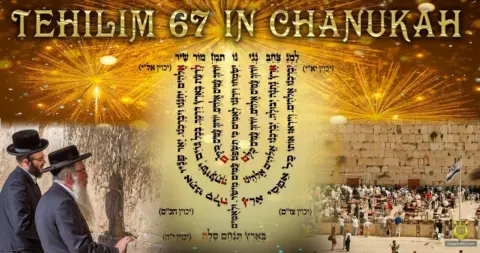
This is the very psalm that is depicted in the form of the Temple Menorah.
It has been calculated that this chapter contains 49 words in all (not counting verse 1, the heading). The middle (long) verse contains 49 letters—seven times seven. This is why this hymn is recited during the 49 days of the Counting of the Omer.
49 is the number of levels of impurity to which the Jews descended in Egypt (and one who descends to the fiftieth level has no return). Just as the Almighty has seven lower sefirot, so too the human soul has seven middot (qualities)—channels for receiving the Divine Light. Because of our sins, these channels do not allow the Light to pass through; they are clogged. Through the Counting of the Omer, we symbolically purify our seven middot.
The Menorah and the 49 Days of the Omer
All the days of the Counting of the Omer focus on one word of Psalm 67. In Sephardic siddurim, this psalm is written in the form of a Menorah, because the Temple Menorah stood in the southern part of the Temple and symbolized Chesed (kindness and mercy). By reading Psalm 67, we seek to awaken the Creator’s mercy!
In the fifteenth century, the renowned Spanish rabbi Isaac Arama (“Akedat Yitzchak”) maintained that Psalm 67 was engraved on David’s shield in the form of a Menorah. For a time, the custom of writing this psalm in precisely this form even became widespread, and the image also appeared on Jewish amulets.
The form of the Temple Menorah included 7 lamps, 22 “cups,” 11 “balls,” and 9 “flowers.”
The Menorah had 7+9+11+22=49 elements in all, corresponding to the 49 of the fifty “gates of wisdom,” while the Menorah itself corresponded to the fiftieth gate. (Rabbi David Mehilson)
One of the greatest Kabbalists, Rabbi Moshe Alshich, held that “The Menorah symbolizes a person capable of receiving the Divine Light through Torah and good deeds. For this reason, it was eighteen cubits high, corresponding to the average height of a person. Although a person is created from coarse matter, by protecting himself from the filth of base and immoral acts and guarding himself against sin, he can become completely purified and free himself of various impurities, thereby becoming like such a precious metal as gold. The only way to become like a Menorah of pure gold is to accept suffering upon oneself and undergo trials possessing a healing power that purifies the human soul of all impurity. Concerning this it is said: ‘It shall be hammered out of a single piece of pure gold’ (25:36)—through blows delivered by a hammer, symbolizing the ‘blows of fate.’”
“Torah and man together form the earthly Lamp of the L-rd. Torah is the flame that produces dazzling sparks of light from the L-rd, enthroned in heaven. The two components of man, body and soul, are a torch nourished by this light. His body is the wick, and his soul is pure olive oil. Working together, the torch and the flame fill the entire house of the L-rd with their radiance.”
Thus, we read Psalm 67, envision the Menorah, and awaken the Creator’s mercy.
The prayer “Ana Bekoach” contains exactly 42 words, whose initial letters form the 42-letter Name of the Creator. This Name consists of seven six-letter sections. Each day of the Counting of the Omer, we focus our attention on one of the words of the prayer, and on each seventh day of the count, on one of the six-letter sections.
Why women should not count the Omer.
There is a remarkable point. The Zohar HaKadosh, according to the Sephardic Mekubalim, does not describe anything three times as prohibited; however, regarding women counting the Omer, it repeats this three times. And the reason is not merely that women are exempt from time-bound mitzvot. No. This is what the Zohar HaKadosh writes.
כְּאִתְּתָא דְּנָפְקָא מִמְּסָאֲבוּ, וְכֵיוָן דְּנָפְקָא, מִתַּמָּן וּלְהָלְאָה, וְסָפְרָה לָהּ. אוּף הָכָא יִשְׂרָאֵל, כַּד נָפְקוּ מִמִּצְּרָיִם, נָפְקוּ מִמְּסָאֲבוּ, וְעָבְדוּ פֶּסַח, לְמֵיכַל בְּפָתוֹרָא דְּאָבוּהוֹן, וּמִתַּמָּן וּלְהָלְאָה יַעַבְדוּן חוּשְׁבָנָא, לְמִקְרַב אִתְּתָא לְבַעְלָהּ, לְאִתְחַבְּרָא בַּהֲדֵיהּ, וְאִינּוּן חַמְשִׁין יוֹמִין דְּדַכְיוּ, לְאַעֲלָא לְרָזָא דְּעָלְמָא דְּאָתֵי, וּלְקַבְּלָא אוֹרַיְיתָא, וּלְמִקְרַב אִתְּתָא לְבַעְלָהּ. וּבְגִין דְּאִלֵּין יוֹמִין, יוֹמִין דְּעָלְמָא דִּדְכוּרָא, לָא אִתְמְסַר חוּשְׁבָּנָא דָּא אֶלָּא לְגַבְרֵי בִּלְחוֹדַיְיהוּ.
“Like a woman emerging from her impurity—when she emerges from impurity, from that moment onward she counts. So too here: when Israel went out of Egypt, they emerged from impurity and observed Pesach in order to eat at their Father’s table. From that moment onward, they began counting, in order to bring the wife closer to her husband, so that she might unite with him. These fifty days are days of purification, to enter into the secret of the World to Come, receive the Torah, and bring the wife closer to her husband. Since these days belong to the masculine world (יוֹמִין דְּעָלְמָא דִּדְכוּרָא), this counting was entrusted to no one except men alone (לְגַבְרֵי בִּלְחוֹדַיְיהוּ).” (Zohar, Parashat Emor, Raya Mehemna, folio 98b—translated by Alexander Tzvi Sypkov for “Sila Tehilim”)
Therefore, according to the Sephardic minhag, women do not count the Omer.
(Translated from an article by Rabbi Yedaya ben Avraham Ha-Penini Bedersi, “Behinat Olam” (chapter 17)
Was this helpful?
100% of readers found this article helpful (38 votes).
Please note: some articles on our site contain the holy Names of the Almighty. If you print these articles, they may not be thrown away or destroyed. Please handle printed copies with care and respect.
Material from our site may be copied for the purpose of spreading Torah, provided a link to Silatehilim.com is included. Any use of the site's material in print publications or for commercial purposes is prohibited without the rights holder's consent.