Baal Shem Tov — Which Nusach Do They Use to Recite Selichot in Heaven?
Rabbi Yosef Ashkenazi (the Baal Shem Tov’s cantor) related that one night he dreamed of a righteous man who had died, leaving behind a young, exceptionally wise son who was in danger of being offered an unsuitable match.
In the dream, this man came to Rabbi Yosef and asked him to go to his wife and tell her in his name not to allow this match to proceed, but to discuss a match only with the first person who came to her home that day.
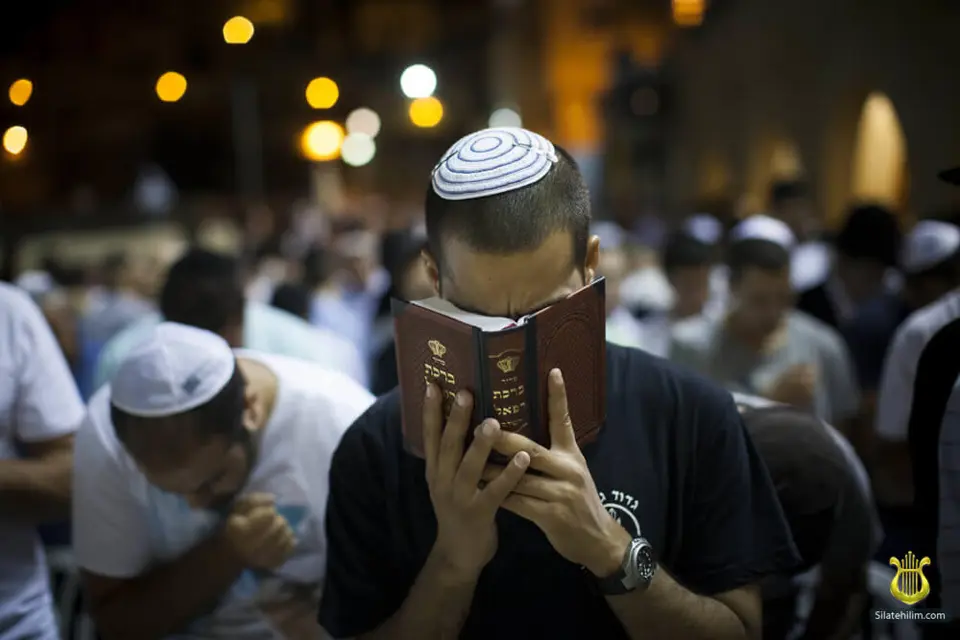
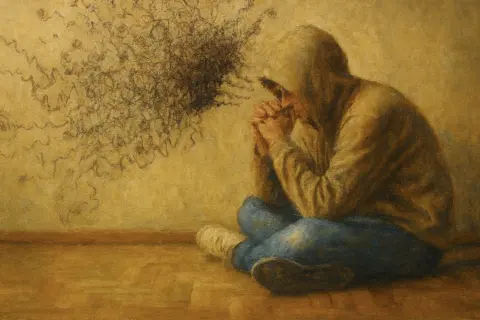
After that, he saw in his dream something resembling an altar. The deceased man placed himself upon the altar, laid his head between his knees, and cried out a prayer of repentance:
“Anenu, Avinu, Anenu! Anenu, Borenu, Anenu!” -
(Answer us, our Father, answer us! Answer us, our Creator, answer us) -
and continued this way until the end of the prayer. At the end, he said:
- Anenu, Elohei Avraham, Anenu!
- Anenu, Ufachad Yitzchak, Anenu!
- Anenu, Abir Yaakov, Anenu!
and then said:
- (Answer us, One who knows the value of a tear, answer us) — (this line was added to the prayer by the Besht);
- Anenu, Elohei ha-Merkavah, Anenu!
(Answer us, G-d of the angelic Chariot, answer us) -
and after these words he flew up to Heaven.
The next morning, he came to the Besht and told him about the dream.
The Besht said to him:
“You probably think that you merely dreamed this dream? No—what you experienced was a prophetic vision.
I, too, saw it, awake and with my own eyes. And the altar was that very altar upon which the Archangel Michael offers souls as a sacrifice to the benevolent G-d.”
The cantor asked him:
- “Why did he say those ‘Anenu’ passages?”
The Besht explained to him that angels and souls ascend from one world to another only through the prayer “Anenu”.
He then asked him:
- “Why did he pray in that manner, with additions that are not found in Ashkenazi siddurim?”
He replied:
- “This is how this prayer is recited in Heaven.”
The line “Anenu, Elohei ha-Merkavah, Anenu” — (Answer us, G-d of the angelic Chariot, answer us) — referring to the mystical Chariot and the Throne of G-d from Ezekiel’s vision, appears only in Sephardi siddurim. Hasidim preferred this rite to the Ashkenazi rite, which was widespread in Eastern Europe; this was one of the reasons for the disagreements between the Mitnagdim and the Hasidim.
(From the book “Shivchei Besht”)
Was this helpful?
100% of readers found this article helpful (34 votes).
Please note: some articles on our site contain the holy Names of the Almighty. If you print these articles, they may not be thrown away or destroyed. Please handle printed copies with care and respect.