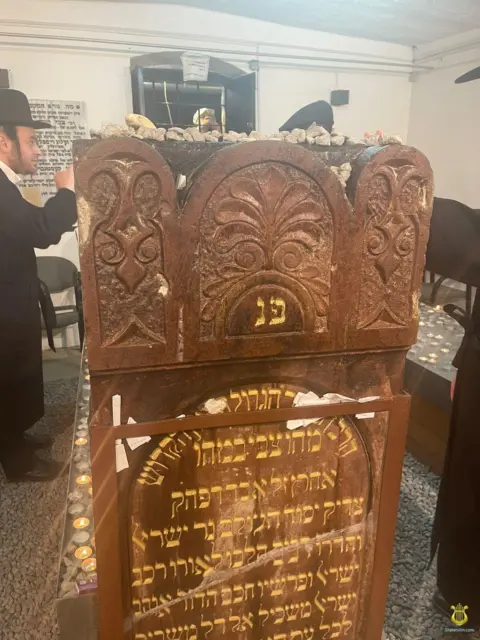
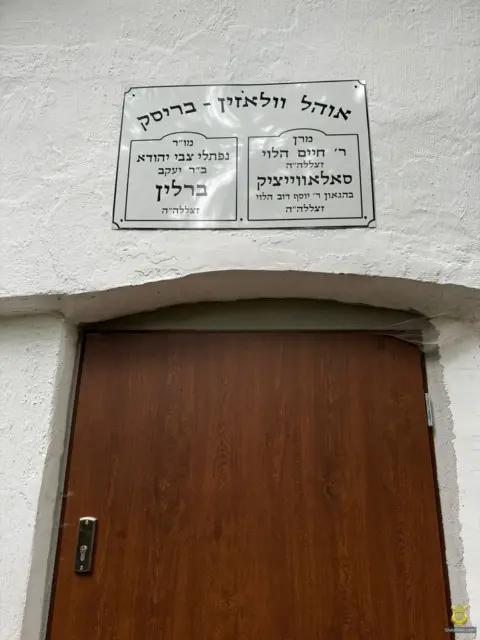
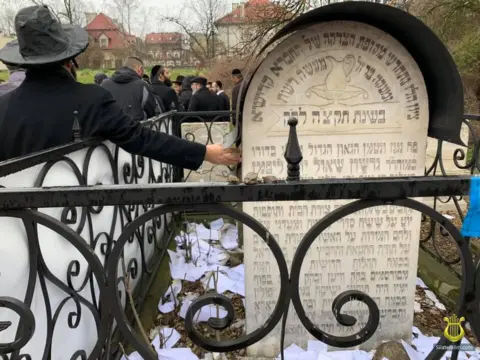
Grave
Radbaz
teacher of the Arizal
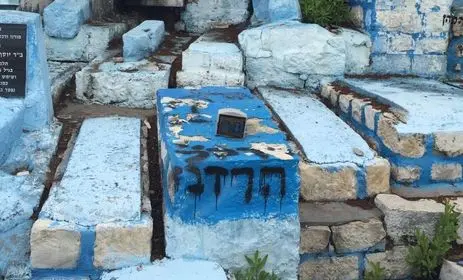
Yahrzeit (Hillula)
- 21 Cheshvan — Rabbi David ben Zimra - Radbaz (teacher of the Arizal)
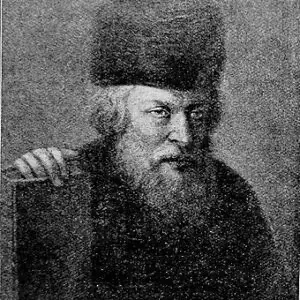
Radbaz - Rabbi David ben Shlomo ibn Zimra (1479-1573) - teacher of the Arizal
Yahrzeit - 21 Cheshvan;
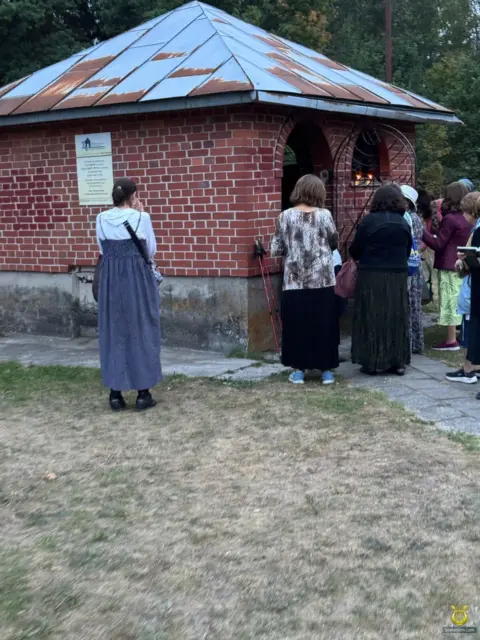
Resting place - Tzfat;
The Radbaz was head of the rabbinical court and leader of the Jewish community of Egypt, author of the responsa "Radbaz" and "Divrei David." He was 13 years old when his parents, exiled from Spain, settled in Tzfat, where he studied under Rabbi Yosef Saragossi.
Among the Radbaz's students was Rabbi Betzalel Ashkenazi, author of "Shita Mekubetzet" – commentaries on the Talmud – and the Arizal, who studied in his yeshiva in Cairo.
At the age of 32, for an unknown reason, he left Jerusalem and came to Fez, Morocco. He became a member of the rabbinical court under the Nagid Yitzchak HaCohen Sholal. Later he went to Egypt, where after a brief stay in Alexandria, he finally settled in Cairo, becoming the Chief Rabbi of Egypt and holding this position for 40 years.
The Radbaz was an independent man. He was a successful merchant with business connections in other countries, like some of the Venetian merchants of his time. He amassed a considerable fortune, which he generously gave away to the poor. His holy qualities and extraordinary erudition pleased everyone. He had enormous influence not only among his own people, but also in the highest circles of the Egyptian government.
The Radbaz introduced several changes.
He restored the ancient custom - during prayer in the synagogue - that the Chazan should repeat the Amidah aloud after the congregation has prayed it silently.
He replaced the civil calendar that had been used among Egyptian and Babylonian Jews since the time of the Second Temple.
The Radbaz reintroduced the custom of counting years from the creation of the world, which was already widely used by Jews in most other countries and is used by everyone today.
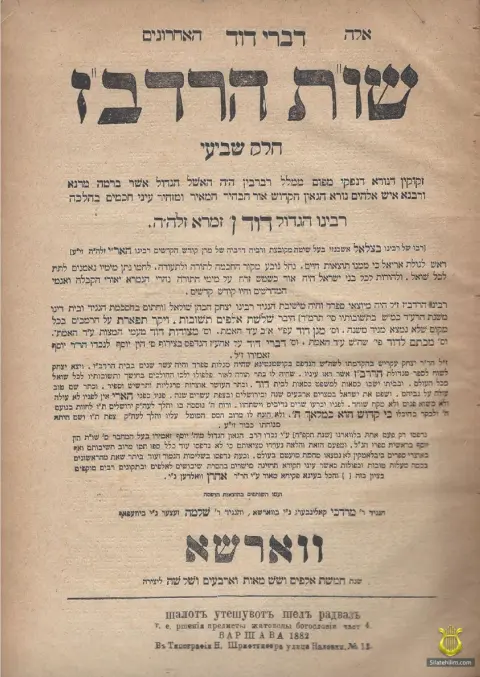
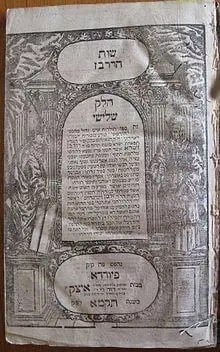
The Radbaz held a prominent place among the great Poskim of all time. Being a recognized leading authority in halacha, rabbis and communities from afar turned to him with questions and problems. Thus, he wrote more than 3,000 responsa (halachic rulings), most of which were eventually collected and published as "Sheelot U'Teshuvot" (Questions and Answers).
He is also the author of many other works, such as "Klalei HaGemara" ("Principles of the Gemara"), "Divrei David" ("Words of David"), "Yekar Tiferet" ("Honor of Glory"), "Or Kadmon" ("Primordial Light"), "Metzudat David" ("Fortress of David") - in which he reveals the kabbalistic meaning of the 613 commandments, "Magen David" ("Shield of David") - revealing the secrets associated with the letters of the Hebrew alphabet, "Migdal David" ("Tower of David") - a kabbalistic commentary on Shir HaShirim, and others.
At the age of 90, the Radbaz left his post in Cairo and moved to Jerusalem.
At that time, the Jewish community in Jerusalem lived under difficult economic conditions, compounded by heavy taxes. The Arab ruler of the city imposed high taxes on the Radbaz, wishing to obtain the considerable wealth he had brought with him from Egypt. The honorable sage could not remain in Jerusalem, and moved to Tzfat, which at that time was a center of great Talmudists and Kabbalists, including Rabbi Yosef Karo.
Here, in the Holy Land, the Radbaz spent the last 20 years of his life.
He ascended to the Heavenly Yeshiva in 1589 at the extraordinary age of 110 and was buried in Tzfat.
May the merit of this tzadik protect our people!
Gallery