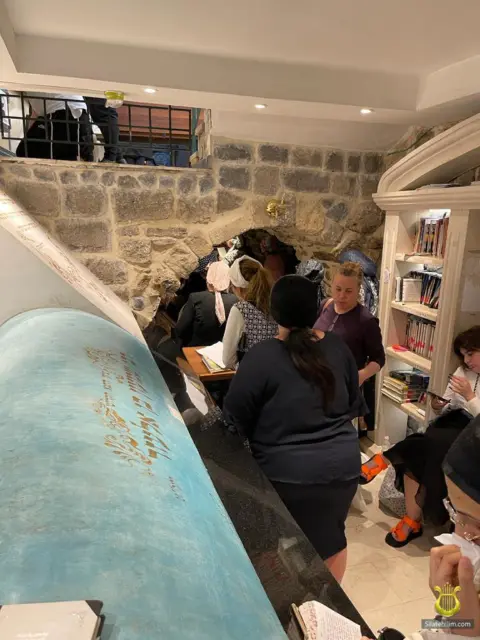
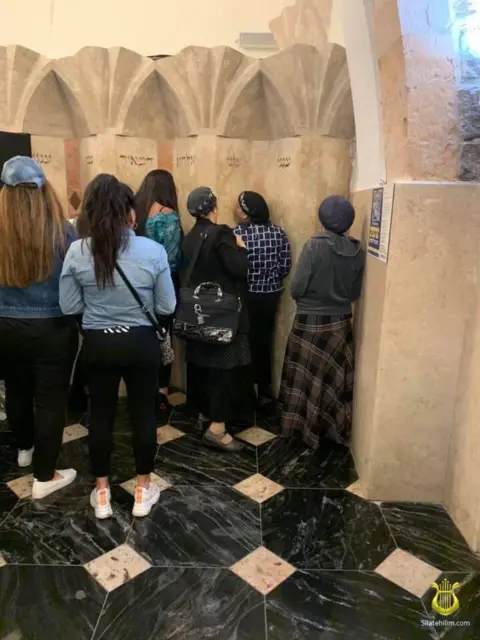
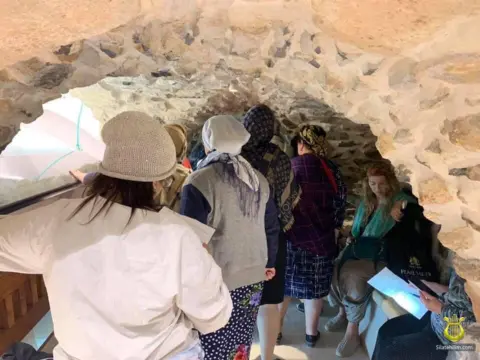
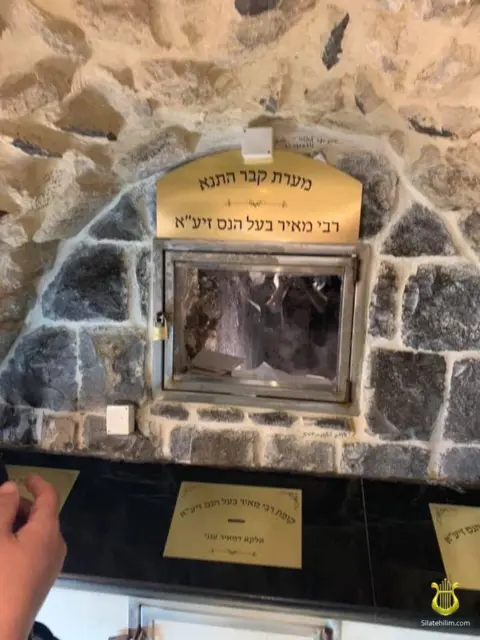
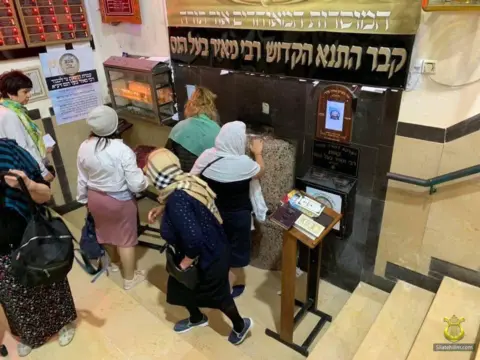
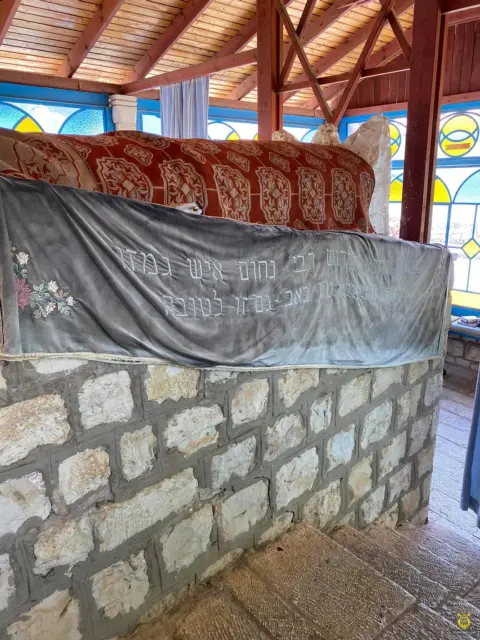
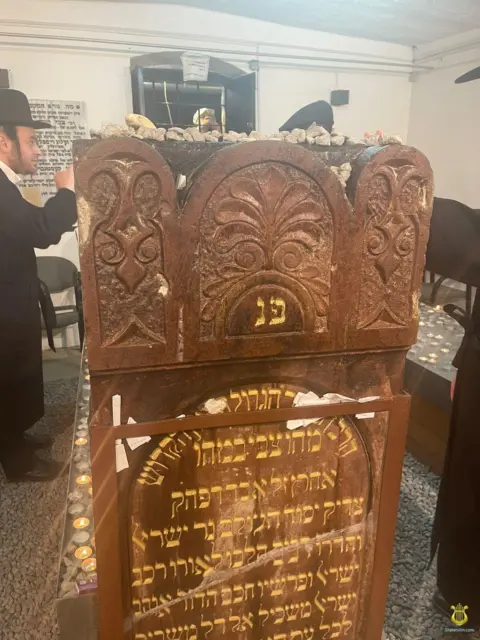
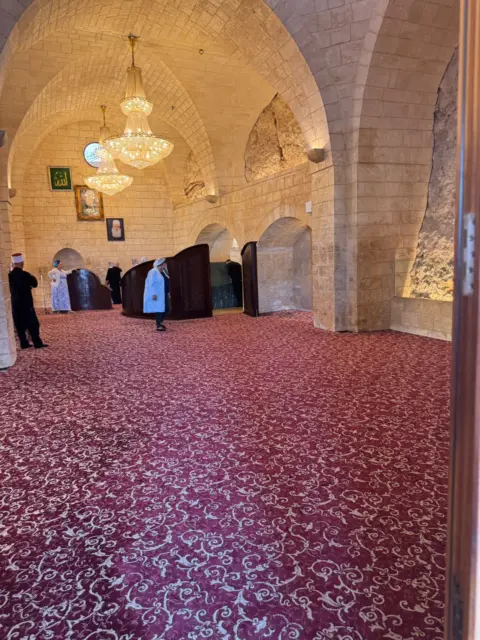
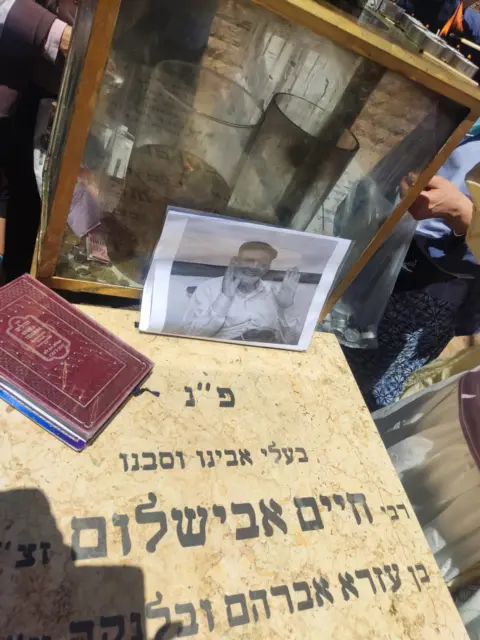
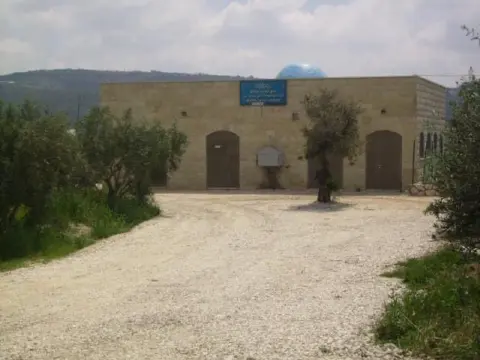
Grave
Meir Baal HaNes
Tanna
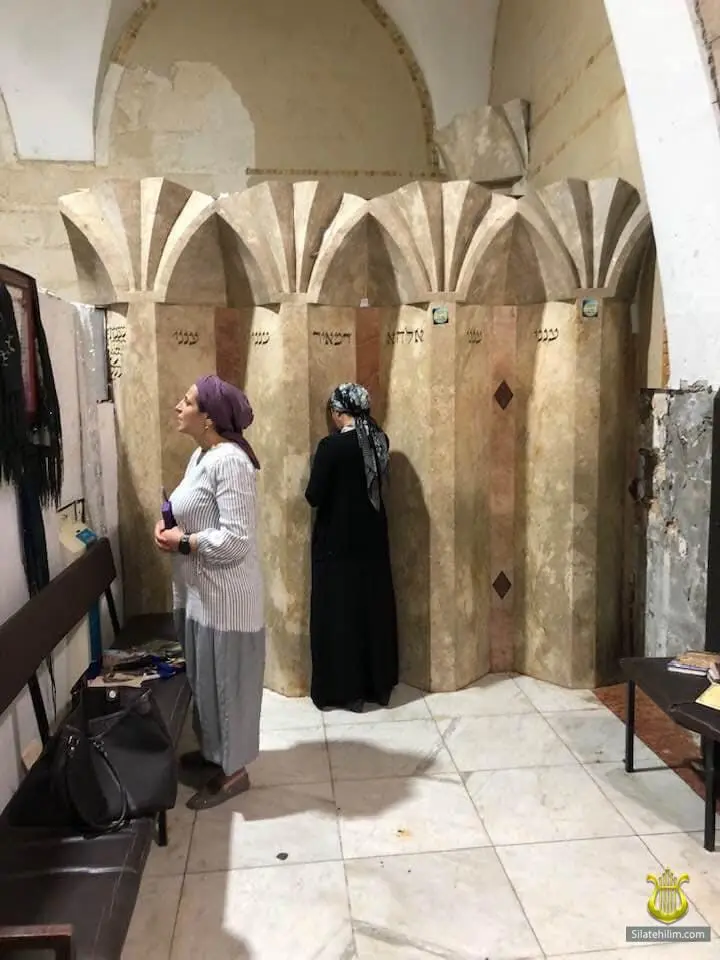
Rabbi Meir Baal HaNes
Yahrzeit - 14 Iyar
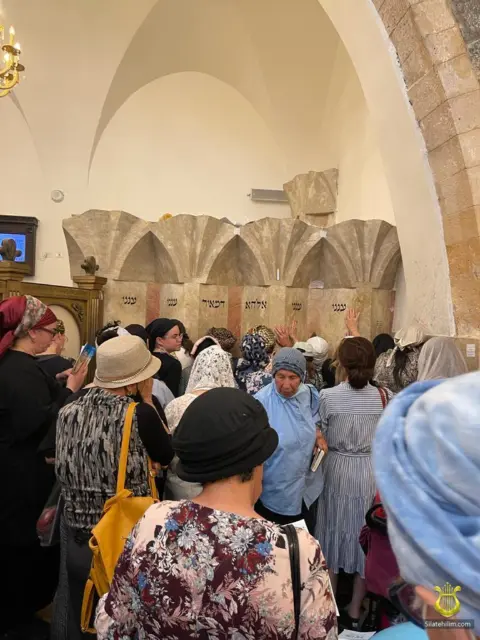
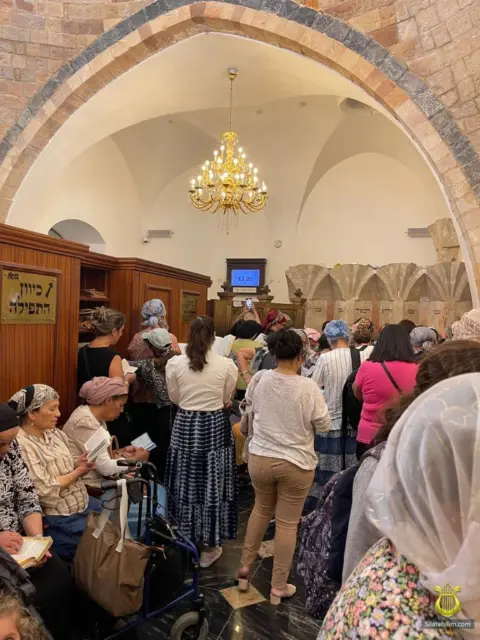
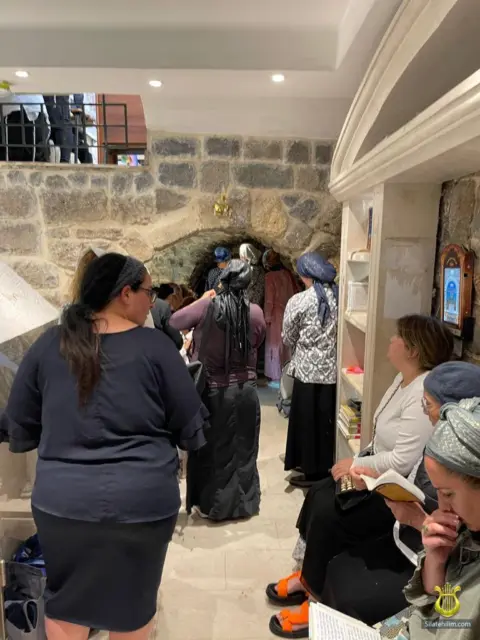
Burial place - Tiberias
In the book "Tabur HaAretz" (Navel of the Earth) it is written:
"Rabbi Meir Baal HaNes was called Rabbi Meir the Tanna. And he was called 'Baal HaNes' (Master of the Miracle), because through his merit one can ask for great miracles."
Descendant of Nero
The Aggadah attributes to Rabbi Meir descent from Emperor Nero.
"When Emperor Nero was advancing on Jerusalem, he shot an arrow to the east, and it fell in Jerusalem; he shot to the west - and it fell in Jerusalem. He shot arrows to all four directions, and they all flew toward Jerusalem. Then Nero turned to a child and said: 'Recite to me a verse from the Torah.' The child gave him a verse from the prophet Yechezkel (25:14): 'And I will lay My vengeance upon Edom by the hand of My people Israel, and they shall deal with Edom according to My anger and My fury, and they shall know My vengeance, says the L-rd G-d.'
And Nero said: 'Now You send me to destroy Your House, and afterward I will have to atone for what I have done!' And he fled, and converted, and from him descended Rabbi Meir.
His primary teacher was Rabbi Akiva. He also studied under Rabbi Yishmael (Jerusalem Talmud, Sotah 2:4), Rabbi Shimon ben Elazar (Menachot 32; Jerusalem Talmud, Moed Katan 3:1) and others. Rabbi Meir also studied under Elisha ben Avuyah, and the Sages later acknowledged that he was right when they said, "Rabbi Meir ate the fruit and threw away the peel."
It was taught: "His name was not Rabbi Meir, but Rabbi Nehorai, and why was he called Rabbi Meir? Because he illuminated ("meir") the eyes of the Sages in halacha. And his name was not Nehorai, but Rabbi Nechemia." (Eruvin 13b)
Almost all of his numerous statements are recorded anonymously, as "acherim omrim" (others say).
He divided his lectures into three parts: a third halacha, a third aggadah, and a third parable.
He had 300 fox fables which he could apply to any topic. (Sanhedrin 38b)
355 halachot with Rabbi Meir's explanations are mentioned in the Mishnah.
He disputes with Rabbi Yehuda 72 times in the Mishnah, 32 times he disputes with Rabbi Yose, 10 times with Rabbi Shimon Bar Yochai, and once with Rabbi Yochanan HaSandlar.
Rabbi Meir's wife was Bruriah, daughter of Rabbi Chanina ben Teradyon, who was executed by the Romans - one of the few women about whom the Talmud says she was learned and often resolved the Sages' doubts on difficult questions. Wicked men lived near Rabbi Meir who caused him much trouble. Rabbi Meir asked the Creator for their deaths. Hearing his prayers, his wife Bruriah said: "What do you make of the words of Scripture, 'and sins shall cease' (Tehillim 104:35)? For it does not say there 'and sinners shall be destroyed'! And after that, Scripture says, 'and the wicked shall be no more.' That is, since the sins have ceased, there will no longer be sinners. Therefore, rather ask the Creator not for these people's death, but that they repent and abandon their sins." And Rabbi Meir did so, and indeed, these wicked men repented and mended their ways.
The Death of His Sons
Once, at the conclusion of Shabbat, while Rabbi Meir was delivering a lecture in the Beit Midrash, both of his sons suddenly died. Bruriah, Rabbi Meir's wife, laid them on the bed and covered them with a sheet.
When he returned home, Rabbi Meir asked:
— Where are the children?
— In the Beit Midrash, — Bruriah answered.
— Strange, — said Rabbi Meir, — I looked, but did not see them there. His wife handed him the cup for Havdalah. After Havdalah, Rabbi Meir asked again:
— Where are the children?
— They must have gone out for a walk and will return soon. After giving her husband his supper, Bruriah said:
— Rabbi, allow me to ask you a question.
— Ask.
— The other day someone gave me an item to keep for him, and today he came to take it back. Should I return it, or not?
— My daughter! — said Rabbi Meir. — Should another's property not be returned? How can you even ask such a thing?
— Without your knowledge I did not want to do this, — said Bruriah, — and with these words she took her husband by the hand, led him to the bed, and pulled back the sheet.
Rabbi Meir wept bitterly, mourning the death of his children:
— O my children! My children and my teachers! Children dear to me for their good character, whose Torah light shining in your eyes illuminated me!
— Rabbi, — his wife said to him, — did you not yourself tell me that what was given for safekeeping must be returned to its owner? "The L-rd gave and the L-rd has taken away; blessed be the Name of the L-rd!"
Shalom Bayit
The Midrash tells of a woman who once came to Rabbi Meir's evening lecture. She returned very late, and the Shabbat candles had already burned out. Her upset husband demanded to know where she had been, and she explained that she had gone to Rabbi Meir's lecture. In his anger, the husband declared that he would not let her into the house until she spit in that Rabbi Meir's face. When she left, Eliyahu HaNavi (the Prophet Elijah) appeared before Rabbi Meir and told him that because of him a woman had been driven from her home. When the Rabbi heard this story, he pretended to have a serious problem with his eyes. "Do you know how to treat eyes?" - he asked the bewildered woman. "No, I don't know how" - she stammered. "Very well, then quickly, right now, spit in my face seven times, and the problem will be solved." The astonished woman did as he asked and spat seven times. Rabbi Meir then said to her: "Go and tell your husband that he asked you to spit once, and you spat seven times!" The astounded students asked Rabbi Meir whether a dispute between husband and wife should end with such disregard for the honor of the Torah. "We would have brought him here, flogged him, and forced him to take his wife back!" - they exclaimed. "Should Meir's honor be greater than the honor of the Creator?" - the Rabbi retorted. "The L-rd commanded us to wash away His Holy Name in the water given to drink to a woman suspected of unfaithfulness - a sotah - in order to prove her innocence and restore peace between husband and wife."
How Important a Person's Name Is
The tzadik placed great importance on people's names.
Once, Rabbi Meir, Rabbi Yehuda, and Rabbi Yose arrived at an inn belonging to a man named Kidor. Hearing this name, Rabbi Meir noted: "Then he must be wicked, for it is said in the Torah: 'Ki dor tahapuchot heimah' (they are a perverse generation)." It was before Shabbat; Rabbi Yehuda and Rabbi Yose left their money with the innkeeper, but Rabbi Meir did not entrust his to him. The next day, when the rabbis asked for their money back, the innkeeper replied: "You never gave me any money, and I know nothing about it."
How Rabbi Meir Became "Baal HaNes" (Master of the Miracle)
The Talmud, in tractate Avodah Zarah (idolatry), describes the following incident:
The Roman authorities sentenced the sister of Bruriah, Rabbi Meir's wife, to be sold to a brothel. Rabbi Meir took money and went to the place where she was being held, to try to ransom her. And he said: "If she has not sinned, a miracle will happen to her; but if she has sinned, it will not." He disguised himself as a horseman and called to her. She refused him, saying, "I have my usual womanly issue." He answered her: "I will wait." She continued to refuse, saying, "Why would you want me? There are far more beautiful women." Rabbi Meir understood that she was without sin, and went to the guard. He offered him 1,000 dinars, but the guard refused, saying he feared punishment if he let the prisoner escape. Rabbi Meir said to him: "Give half as a bribe to whoever is guarding her, and keep half for yourself." - "And when the money runs out, what shall I do?" - "Say, 'G-d of Rabbi Meir, answer me' - and you will be saved." - "And who will prove to me that this is true?" - "Watch," said Rabbi Meir. Nearby was a pack of enormous wolfhounds. Rabbi Meir threw a handful of sand at them, and the dogs rushed at him. Rabbi Meir said, "G-d of Rabbi Meir, answer me," and the dogs left him in peace. Seeing this, the guard freed Bruriah's sister and handed her over to Rabbi Meir.
Since then, many have merited miracles through the faith and merit of Rabbi Meir. And now we have a tradition that when a Jew finds himself, G-d forbid, in some kind of trouble, he should donate something for the benefit of those who study Torah in Israel, to any yeshiva, and should dedicate the donation in memory of Rabbi Meir Baal HaNes. He should say: "Elokah D'Meir Aneni" - and he will be granted deliverance from his troubles.
The Mekubalim teach that in the prayer "Rabbi Meir Baal HaNes," Rabbi Meir did not mean himself, but the Holy One, Blessed Be He: "E-lokim she-Meir la-Aretz u-le-Darim Aleha be-Rachamim" - meaning - "G-d, who illuminates (meir) the earth and all who dwell upon it with His mercy."
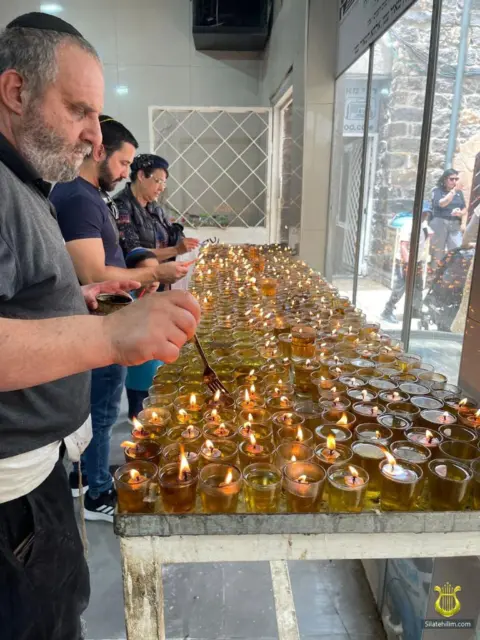
The Ben Ish Chai wrote: "One should light a candle in memory of Rabbi Meir on the first day of the month of Tevet."
Rabbeinu Chida (Rabbi Chaim Yosef David Azulai) wrote in his book "Petach Einayim" (Open Your Eyes):
"For the holy people of Israel, in all communities throughout the world, in the event of any trouble or illness, it is worthwhile to vow to leave coins at the tomb of Rabbi Meir Baal HaNes and to recite the prayer 'Elokah D'Meir Aneni,' and their prayers will be answered."
At the end of his life, Rabbi Meir went to Africa, where he passed away (Jerusalem Talmud, Kilayim 9:4). He asked to be buried in Eretz Yisrael by the sea, so that the water washing the shores of Eretz Yisrael would lap against his grave. (Jerusalem Talmud, Kilayim 9:4).
The Arizal says that Rabbi Meir is buried in Tiberias standing up. ("Shaar HaGilgulim")
May the merit of the tzadik Rabbi Meir Baal HaNes protect us all, Amen.
(from the website dailyZoar-Tzadikim)
Gallery