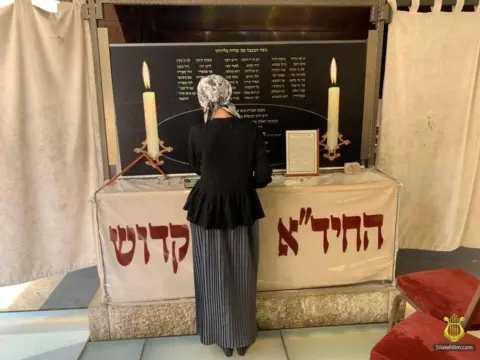
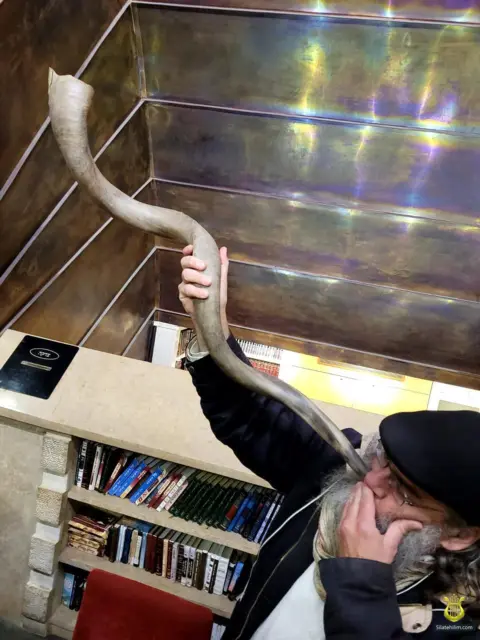
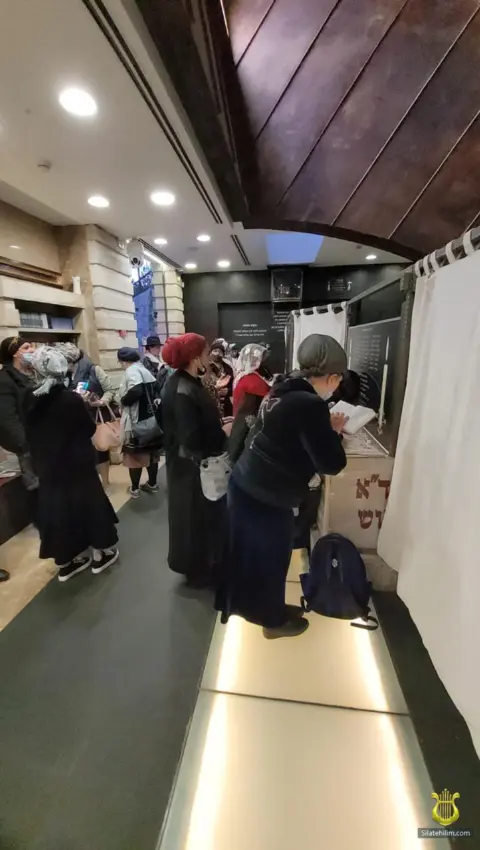
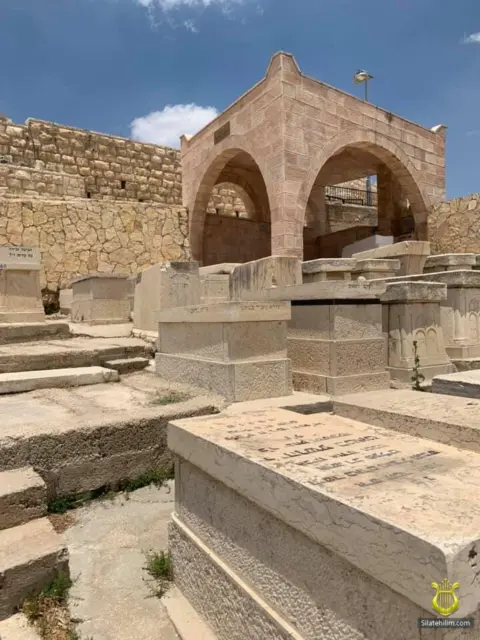
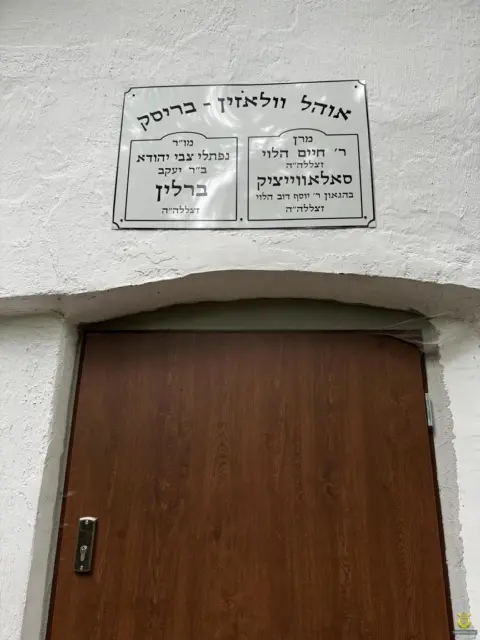
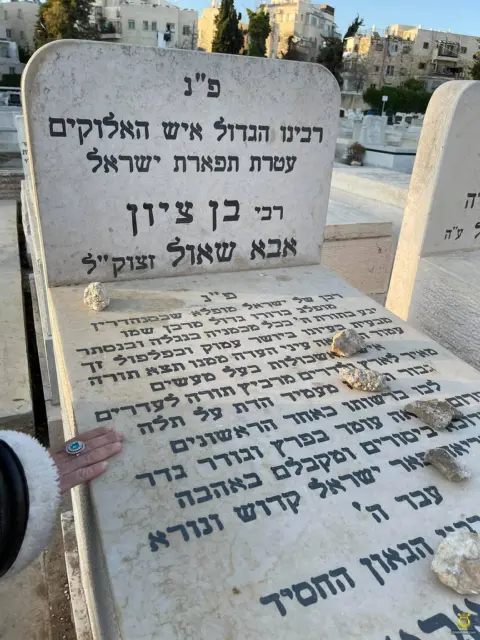
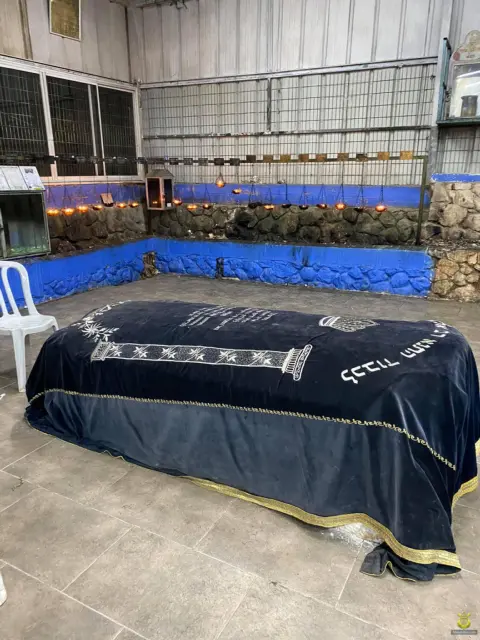
Grave
Chida
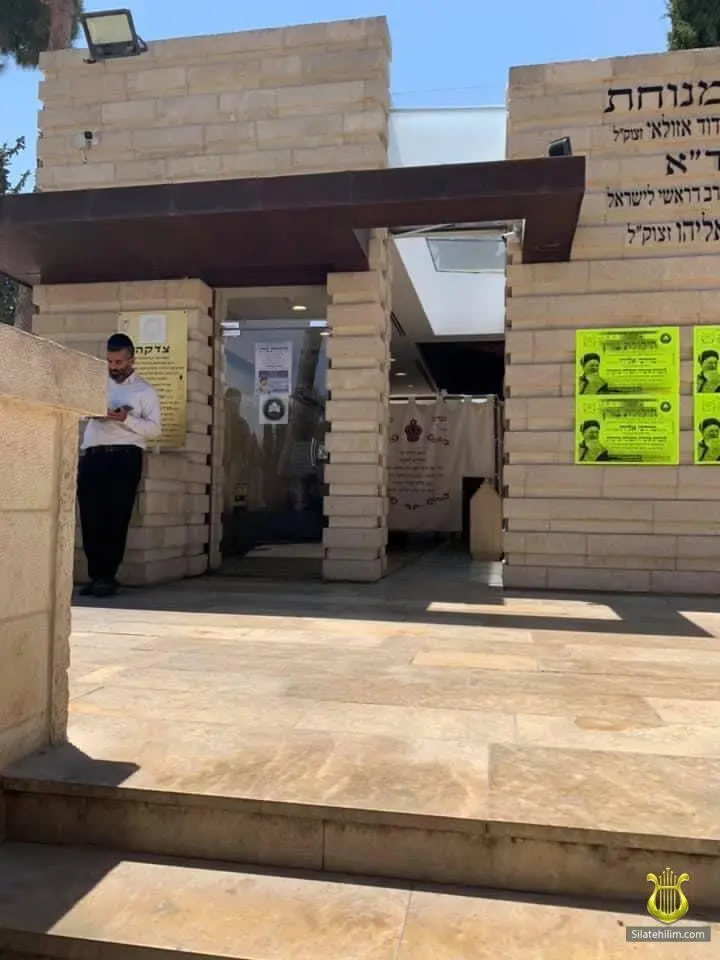
Yahrzeit (Hillula)
- 11 Adar — Rabbeinu Chida
Rabbeinu Chida (Chaim Yosef David Azulai) – the greatest kabbalist, author of "Shaar Yosef," "Birkei Yosef," "Machzik Bracha," "Torah Ohr," "Nachal Kedumim" (Ancient Stream), "Rosh David," and other works.
He was the beloved student of Rabbi Chaim ben Attar (Ohr HaChaim), becoming his closest and most devoted follower.
On the last day of the Sukkot festival in the year 5503 (1743), the young Chida witnessed how the Ohr HaChaim prayed continuously for a full day and night, sitting on the floor of his room. Chida noted that in the evening, at the start of the prayer, his teacher's face "shone like the sun," then he "wept bitterly… all night," and the next evening, at the onset of Simchat Torah, his face once again radiated light. Rabbi Chaim Ibn Attar explained to his students that he had been praying for the coming of Mashiach — and from his words Chida understood that his teacher himself "was capable and called to become Mashiach," to bring the Jewish people the final redemption, but because of the sins of the generation he was not permitted "to be revealed" and fulfill his purpose. And so, in his nighttime prayer, sitting on the floor of his room, Rabbi Chaim Ibn Attar reached an agreement with the Heavenly Court: that year, at the age of forty-seven, he would depart from this world, atoning through his death for the sins of the entire generation. (Toldot Ohr HaChaim HaKadosh, p. 50).
After the passing of Ohr HaChaim (may his merit protect us), Chida turned to studying the secrets of the Torah with Rabbi Shalom Sharabi (Rashash) at the kabbalists' yeshiva "Beit El."
Soon afterward, Chida traveled to Europe. The head of the yeshiva, Rabbi Sar-Shalom Sharabi, believed that the time of the geulah (the final redemption of the Jewish people) was drawing near. He chose two of his closest students, Rabbi Azulai and Rabbi Chaim De-Larosa, to join together in prayer to tip the decision of the Heavenly Court toward geulah. They fasted for three days in a row, and then, ascending to the roof of the yeshiva, immersed themselves in prayerful meditation. Through the hidden kabbalistic kavanot, they succeeded in making contact with the Heavenly Court. It was revealed to them that although the time of geulah had not yet come and the people of Israel were not ready for it, their combined prayer was nonetheless capable of provoking a premature revelation of Mashiach, which would bring catastrophic consequences upon the entire universe. To prevent this, the three tzadikim needed to separate immediately — by decree of the Heavenly Court — and one of them had to leave the Holy Land, where prayers hold special power. The lot fell upon Rabbi Chaim Yosef David Azulai. (Veze Shaar HaShamayim, p. 163)
He served as rabbi in Cairo for five years. He completed his second journey in Livorno (Italy), where he remained until the end of his days. On every journey, Chida visited every library he could, striving to study thousands of manuscripts, and from them he compiled the sefer "Shem HaGedolim," containing the biographies of 1,300 sages.
Rabbi Elimelech of Lizhensk said that Ha-Shem always maintains balance. At the time when Mendelssohn came with his heretical commentary on the Chumash, Ha-Shem sent Rabbeinu Chida in response, with his holy books that strengthen the foundations of our faith in G-d.
Sotah
One of the respected citizens of Livorno, descended from the line of kohanim, came to Rabbi Chida with a complaint about his wife, who, despite his warning, had secluded herself in a room with an unrelated man. Rabbeinu Chida ruled that, according to Torah law, the husband was obligated to divorce his unfaithful wife. However, some of the dayanim of Livorno, who were related by family ties to the suspected woman's family, declared that "in such a serious matter, one cannot rely solely on the clairvoyance" of Rabbi Azulai — since there were no witnesses in the room where the kohen's wife secluded herself with the man who could confirm that infidelity had actually occurred.
And so Rabbi Chida invited the suspected woman to his house of study. He took out a Torah scroll and read before her the entire portion of Sotah, dealing with the trial of a wife suspected of being unfaithful to her husband. "If no man has lain with you," he read, "and if you have not gone astray to defilement while under your husband's authority, be immune... But if you have gone astray while under your husband's authority, and if you have been defiled, and some man other than your husband has lain with you... then Ha-Shem will cause your thigh to sag and your belly to distend..." (Bamidbar 5:19–21). No sooner had the woman started to leave the room than her face turned yellow, her eyes bulged from their sockets — and within moments, everything written in that portion of the Torah occurred with her body. In memory of this event, the leaders of the Livorno community ordered that the spot where the adulteress was exposed by Heaven in her crime be covered with a sheet of gold. (Gedolei HaDorot)
The Empty Vessel
Once a coarse and uneducated Jew came to Rabbi Chida and demanded that Chida recommend him to the rabbi of another city as a decent man of outstanding virtues. The sage tried to avoid it, but the boor was insistent and eventually resorted to threats. It happened late at night, in an empty house of study, with no one to call for help — so Chida decided to write the letter, hiding the true recommendation between the lines.
In the letter, the petitioner's imaginary virtues were given very high praise. The message began: "This man is so great that, had he lived in the days of the prophet Elisha, the stream of olive oil would never have run dry." (The fourth chapter of the Book of Melachim tells of a poor widow with many children. Elisha, the disciple of the prophet Eliyahu, told her to gather all the empty vessels in her house and fill them from a bottle of precious olive oil. A miracle occurred: the oil did not run out until all the vessels were filled.)
The boor was triumphant. However, the rabbi to whom he brought the lengthy letter of recommendation sensed that something was wrong. Looking once more at the bearer of the recommendation, he read the letter carefully again and understood: Chida was telling him that this man is an empty vessel, devoid of any inner substance, and that the letter itself had evidently been written under duress. The boor immediately got what he deserved: he was driven out of the city in disgrace. (Yaakov Shechter)
Rabbi Chaim Yosef David Azulai (Chida) once set out as an emissary of his community, traveling abroad. On the ship he encountered a merchant carrying a cargo of non-kosher cheese to Italy. The merchant knew that Rabbi Chaim was renowned in every community of Israel, and that a document certifying the cheese as kosher, signed by Rabbi Chaim, would help him sell his goods at a great profit. The merchant tried to persuade the Rav and even offered him large sums of money, but the Rav remained firm. So the merchant hired sailors, who attacked the Rav, threatening to throw him into the sea if he did not sign the required document.
Rabbeinu Chida, seeing that his life was in danger, agreed to sign the document, and wrote in it as follows:
"The cheese being sold is entirely kosher. Let the poor eat it and be satisfied" — and he concluded: "Written and signed on the Tuesday of the weekly Torah portion: 'Thus shall you eat it: your loins girded, your shoes on your feet, and your staff in your hand; and you shall eat it in haste — it is a Pesach offering to Ha-Shem' (Shemot 12:11), year 5508."
Upon arriving in Italy, the merchant began advertising his cheese as perfectly kosher and permitted by Rabbeinu Chida. However, by law, the merchant was required to come before the Rav of the city and present Rabbi Chaim's permit. The city's Rav read the document and was puzzled: why had Chida noted that the Torah passage was found in the Book of Shemot?
Even a child knows that!
Moreover, the Rav noticed that the word שמות was written as an abbreviation for the words שניים מקרא ואחד תרגום ("twice Scripture and once Targum" — in many communities it is customary to read the Torah portion twice and the Targum, its Aramaic translation, once, before Shabbat).
The Rav looked at the translation of the verse cited by Chida and saw: הריציכון יהון אסירין, and immediately understood that חריצי (wheels of cheese) אסורים (are forbidden).
He ordered the merchant arrested.
An investigation was carried out, and the merchant confessed how he had obtained the "permit" from Rabbeinu Chida. The Rav of the city then rose and proclaimed: "Blessed is the Creator, who has given a portion of His wisdom to those who fear Him."
May the merit of the tzadik protect our people!
(Rav Yisrael Spector, "Gates of the East," Tzadikim website)
Gallery