7 Seudot Before Yom Kippur Corresponding to the Sheva Brachot – A Segula for Finding One’s Match
Sheva Brachot
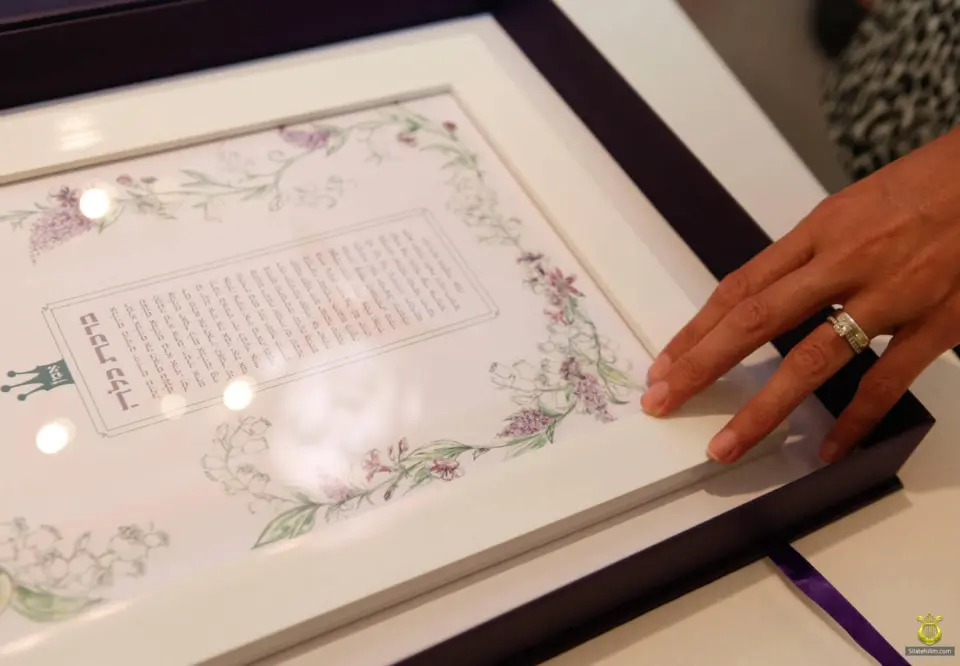
Our Sages instituted seven blessings for newlyweds: among Ashkenazim, they are recited beneath the chuppah; among Sephardim, they are recited during the seven days following the chuppah, at meals held in honor of the newlyweds.
The seven-day count begins on the day of the wedding itself. These blessings are recited after Birkat HaMazon.
The Zohar HaKadosh says: “The Virgin of Israel (Malchut) inherits seven blessings, because she receives blessings from the seven Sefirot, and is therefore called
“Bat Sheva”—the daughter of seven.”
It asks: From where do other women (widows and divorcees) receive blessings?
They receive blessings through Boaz and Ruth, as it is written: “And all the people who were in the gate and the elders said: May the Almighty bear witness.” (The Book of Ruth 4:11)
The Zohar HaKadosh (Ekev) also reveals that every Jewish girl who marries and stands beneath the chuppah corresponds to the Jewish people, who stood at Sinai beneath the chuppah with the Almighty. It is no coincidence that
“kallah” (bride) comes from the word
“kol” (all). She receives all the blessings.
She is blessed with seven blessings, corresponding to the seven Sefirot through which Hashem governs this world.
The Zohar HaKadosh (Terumah, p. 169) explains how the Sheva Brachot correspond to the seven Sefirot:
- Gevurah – “Who creates the fruit of the vine”;
- Chesed – “Who created everything for His glory”;
- Tiferet – “Who created man”;
- Netzach – “Who created man and woman”;
- Hod – “Who gladdens Zion through her children”;
- Yesod – “Who gladdens the groom and the bride”;
- Malchut – “Who gladdens the groom with the bride”.
Erev Yom Kippur
On the 9th of Tishrei—the day before Yom Kippur—it is a mitzvah to eat twice as much food, as though eating for two days.
The Gemara derives this mitzvah from the verse in Vayikra (Emor 23:32), which tells us to begin our “inui” (affliction—fast) already on the 9th of Tishrei:
“And you shall afflict your souls on the ninth day of the month in the evening.”
Since the Yom Kippur fast begins only on the 10th of Tishrei, our Sages saw this as a hint that one who eats on the ninth is considered to have fasted both on the ninth and on the tenth.
Kabbalah teaches that by eating on Erev Yom Kippur, a person performs various tikkunim.
Every morsel of food eaten on Erev Yom Kippur was considered a mitzvah.
For this reason, the Gedolei Yisrael would snack throughout the entire day.
It is a good custom to eat fish at one of the meals on this day, based on a story from Bereshit Rabbah.
Rabbi Tanchuma said:
- An incident occurred in Rome on the eve of the great fast—Yom Kippur. There was a tailor there who went to buy a fish for himself. He and the governor’s servant bid against each other—one raising the price, and the other raising the price—until it reached twelve dinars, and the tailor bought it. During the meal, the governor said to his servant:
- Why did you not bring me a fish?
He replied:
- Master, why should I lie to you? This is what happened: a certain Jew outbid me. Did you really expect me to bring you a fish that cost twelve dinars?
The governor said to him: Who was he? The servant replied: A certain Jew.
The governor sent for him, and the servant brought him. The governor said to the Jew: A Jewish tailor is going to eat a fish worth twelve dinars?
The Jew replied:
- We have one day that atones for all our sins of the year. How could we not honor it—is that not so? He substantiated his words, and the governor released him.
The governor said:
- Since you have provided an explanation for your actions, you are free.
How did the Holy One, blessed be He, reward him? He went and cut open the fish, and found a precious stone inside, from which the tailor supported himself for the rest of his life. (Bereshit Rabbah 11:4)
A Segula for Finding One’s Match from Rabbi Yonatan Eibeschutz on the 9th of Tishrei
For those who find it difficult to find their zivug, there is a beautiful segula before Yom Kippur—on the 9th of Tishrei.
Rabbi Yonatan Eibeschutz advises making seven seudot with bread on the 9th of Tishrei (at least a kezayit), and then reciting Birkat HaMazon.
Rabbi Yonatan teaches that
seven seudot, with
seven ritual hand washings and
seven recitations of Birkat HaMazon—corresponding to the Sheva Brachot of the newlyweds—are a guarantee of receiving a blessing for finding one’s zivug.
In our times, many who have used this segula have received an answer from Heaven.
Since the Jewish day begins in the evening, one may have three meals on the evening of the 9th of Tishrei, and four more seudot the following day.
(Based on a lesson by Rabbi Yisrael Yakobov, “The Power of Tzadikim,” Bereshit Rabbah 11:4)
Was this helpful?
100% of readers found this article helpful (83 votes).
Please note: some articles on our site contain the holy Names of the Almighty. If you print these articles, they may not be thrown away or destroyed. Please handle printed copies with care and respect.