The Ben Ish Hai’s Kavanah Prayer Before Netilat Yadayim—or How to Draw Down Ten Blessings
“L’shem yichud Kudsha Brich Hu u-Shechintei
B’dichilu u-rchimu, u-rchimu b’dichilu,
For the unification of the Name ‘Yud,’ ‘Hei,’ ‘Vav,’ ‘Hei’
In perfect unity, in the name of all Israel.”
(With awe and love, with love and awe, for the sake of the unification of the Holy One, blessed is He, and His Shechinah, in the name of all Israel.)
“Hareini ba l’kayem mitzvat aseh de-rabbanan litol yaday u-leshafshefem heitev kodem seudah, k’dei la’asot nachat ruach le-yotzri ve-la’asot ratzon bor’i, letaken shoresh mitzvah zo ba-makom Elyon.
Vihi ratzon milfanecha Ad-nai El-hai ve-El-hei avotai she-tihye chashuvah u-mekubelet u-retzuyah lefanecha mitzvah zo shel netilat yadayim ve-ha-shifsuf kodem seudah, ke’ilu kivanti be-chol ha-kavanot ha-re’uyot lechaven. U-vi-zchut mitzvat ha-berachah asher nevarech al netilat yadayim kodem seudah, yihye atah et ratzon lefanecha, ve-yimashich min Or Ein Sof shefa mochin ve-orot gedolim li-shneim-asar partzufim ha-remuzim be-esser sefirot ha-kolelim, ha-remuzim be-esser etzbe’ot ha-yadayim, u-misham nekabel shefa eser berachot, ka-katuv: ‘Ve-yiten lecha ha-Elokim (lehamshich me-Ein Sof mochin va-shefa) mi-tal ha-shamayim (Chochmah) u-mi-shmanei ha-aretz (Binah), ve-rov dagan (Da’at) ve-tirosh (Chesed). Ya’avducha amim (Gevurah) ve-yishtachavu lecha le’umim (Tiferet), hevei gvir (Netzach) le-achecha (Hod) ve-yishtachavu lecha b’nei imecha (Yesod). Orercha arur u-mevarechecha baruch (Malchut).’”
Translation
Behold, I am about to fulfill the mitzvah—the rabbinic commandment—to wash my hands and dry them properly before the meal, in order to bring delight to my Creator, fulfill the will of my Maker, and repair the root of this mitzvah in its supernal source. May it be Your will, O L-rd, my G-d and the G-d of my fathers, that this mitzvah of washing and drying the hands before eating be considered important, accepted, and desirable before You, as though I had concentrated on all the appropriate intentions.
And in the merit of the mitzvah of the blessing recited over washing the hands before the meal, may this moment be favorable and desirable before You, and may an abundance of intellect and great illumination flow from the Light of the Ein Sof to the twelve Partzufim contained within the Ten Sefirot, which are alluded to by the ten fingers of the hands. From there, may we receive an abundance of ten blessings, as it is written (Genesis 27:28–29):
And may G-d grant you (the drawing down of intellect and abundance from the Ein Sof)
1. the dew of the heavens (Chochmah)
2. and the fat of the earth (Binah),
3. and abundant grain (Da’at),
4. and wine (Chesed),
5. Nations will serve you (Gevurah),
6. and peoples will bow down to you (Tiferet).
7. You shall be a lord (Netzach),
8. over your brothers (Hod),
9. and your mother’s sons will bow down to you (Yesod),
10. Those who curse you shall be cursed, and those who bless you shall be blessed (Malchut).”
Explanation
After washing and rubbing the hands, one should raise them to head level—with the intention of elevating the aspect of ו׳׳ה (the mystery of the Lower Waters), clothing it in the aspect of י׳׳ה (the mystery of the Upper Waters), and then further elevating the aspect of the four-letter Name הוי׳׳ה, clothing it in the aspect of the upper tip of the letter “yud” of that Name, and uniting all these aspects in absolute Unity. Through this, a person draws abundance to his body and soul, binding them together.
After raising the hands to head level, one should immediately recite the blessing “al netilat yadayim,” so that raising the hands will not be in vain. The Zohar HaKadosh (“Balak,” folio 198) states that raising the hands in vain is forbidden.
Afterward, while the hands are still raised, one should open the palms as if receiving blessing from ten kinds of abundance flowing from twelve aspects of holiness. These aspects are contained within the ten holy Sefirot, symbolized by the ten fingers of the hands. One should intend to draw intellect and abundance from the light of the Ein Sof (the Infinite) to the twelve aspects of holiness alluded to by the ten Sefirot, which are also the ten blessings mentioned in the passage: “And may G-d grant you the dew of the heavens and the fat of the earth, abundant grain and wine. Nations will serve you and peoples will bow down to you. You shall be a lord over your brothers, and your mother’s sons will bow down to you. Those who curse you shall be cursed, and those who bless you shall be blessed.” (Genesis 27:28–29)
The complete prayer of “Vayiten Lecha” (And may G-d grant you the dew of the heavens) is available here:
/вайитен-леха-а-элоhим-и-даст-тебе-б-г-о/
How Does Netilat Yadayim Affect Livelihood?
Chazal teach that the first letters of the last three words of the blessing “al netilat yadayim form the word “ani —“poor” in Hebrew. Whoever treats this mitzvah with awe, neither he nor his descendants will be “ani”, and he will not have to worry about his livelihood.
The Laws of Netilat Yadayim
“Know that on these Shabbatot between Pesach and Atzeret (Shavuot), I customarily begin, with G-d’s help, by studying the weekly Torah portion. I then connect a passage from the weekly portion with a chapter of “Pirkei Avot”, and study a chapter of “Pirkei Avot”. I then connect the halachot with the chapter of “Pirkei Avot” corresponding to that Shabbat and recite the halachot, because on these Shabbatot all the halachot are connected with the Mishnah: “He would say: The world stands on three things: on truth, on justice, and on peace.” It was mentioned above that truth is one of the positive commandments, justice is one of the negative commandments, and peace is one of the mitzvot established by the Sages. Through them, G-d will turn His face toward Israel and grant them peace, as our Sages of blessed memory said: “How could I not show favor to Israel, when I said to them, ‘You shall eat, be satisfied, and bless’...” The Sages established precise measures, up to a kezayit and a kebeitza. Since the Sages allow leniency in this area, Israel is granted deliverance from the accusers, who cannot accuse them by saying: “Why do You show them favor, accept their repentance, and patiently wait for them to repent?” As it is stated in the tractate Avot: “Of all the mitzvot established by the Sages, one who treats the mitzvah of washing the hands contemptuously is sentenced to death by Heavenly decree. We learn this from Rabbi Akiva (Eruvin 25), who, while imprisoned, would not touch food until water was brought to him so that he could wash his hands. When the Sages heard this, they said: ‘If he behaves this way in his old age, how much more so must he have behaved this way in his youth; and if he behaves this way in prison, how much more so must he have behaved this way when free.’ Everyone should conduct himself in this manner, guard his soul carefully, and strive to know the laws of washing the hands, since there are details that can invalidate it, making it as though he had not washed at all.” “An unlearned person cannot be scrupulous regarding sin, and an ignoramus cannot be pious,” but one who is careful will be rewarded.
Although the minimum amount of water required for washing the hands is approximately 150 ml, one should not begrudge the water. Those ignorant people who “wash without washing properly” will receive a harsher punishment than those who do not wash at all. On the one hand, they eat without properly washing their hands, since their washing does not comply with halachah; on the other hand, they recite a blessing in vain and incur G-d’s anger by washing improperly. Since proper washing would entail no hardship, their conduct stems only from a wicked heart. Therefore, a G-d-fearing person should be careful himself and caution others to fulfill this mitzvah in accordance with all its requirements.
As Rabbi Avraham Azulai wrote in the book “Chesed Le-Avraham” (148):
Part 1:
1. One who eats a kezayit of bread (49.77 cubic centimeters) is obligated to wash his hands, but does not recite the blessing over washing the hands unless he eats a kebeitza (99.53 cubic centimeters).
- If he intended to eat a kebeitza and recited the blessing over washing the hands, but after beginning to eat realized that he could eat only a kezayit, the blessing was not in vain. Nevertheless, he should try to eat the amount required for the blessing.
- The obligation to wash the hands applies equally to men and women, although some women eat without washing their hands and do not sense that this is sinful.
Part 2:
Some people eat a kebeitza in order to recite the blessing. Others believe that since they do not know how to recite Birkat HaMazon, they should not recite the blessing over washing the hands either. They should be taught that the two matters are unrelated. A person should supervise the members of his household and explain the importance of the mitzvah to them, continually caution them, and educate his children—even though they are not yet obligated to observe the mitzvot—so that they become accustomed to doing so from childhood.
He also wrote in several places that when washing each hand for the final time, one should fill the palms with water, intending: “Fill our hands with Your blessings,” since the word “mayim” (water—מים) can be read as “enriched by the gifts of Your hands” מעושר מתנות ידיך
One who does not turn the hands while washing them most likely does not fulfill the mitzvah properly.
Part 3:
Therefore—and this is a good custom—the water should reach the entire surface of the palms during washing. It apparently reaches the lungs through them, so the hands should be turned with the palms facing upward and then downward during the washing. It is also desirable for the person washing to take the cup first in his right hand and then in his left, in order to subject the left side (of the heart) to the right.
Part 4:
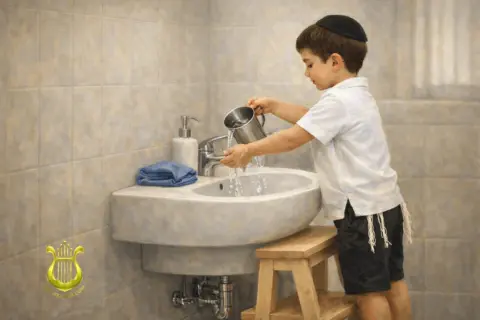
The water should cover the entire palm. Like a servant entering to serve his master, he should pour three consecutive times from the left hand over the right, place the cup on the ground, take it with the right hand, and pour from it three consecutive times over the left hand. He should then rub the right hand three times, followed by the left hand three times.
This is the order described in the prayer book of Rashash—Rabbi Shalom Sharabi, may the memory of the righteous be a blessing: pour three consecutive times and rub three consecutive times. The Arizal, in “Sha’ar HaMitzvot,” explains that one should pour twice and rub once. Rashash certainly found this teaching elsewhere in the writings of the Ari HaKadosh, because he would not have written it without a source from the Arizal. Therefore, one should not deviate from his instructions, especially since there is no harm in this stringency. I have heard that this is the accepted custom of the pious community in Beit El. He should then raise his hands to head level.
Part 5:
It is the custom of the pious to wash three times, dry three times, and immediately recite the blessing, so that raising the hands will not be in vain, since the holy book “Zohar” states that one may not raise the hands uselessly. After the blessing over washing the hands, he should open his hands with the palms facing upward to receive blessing and abundance of ten kinds, emanating from twelve qualities contained within the Ten Sefirot mentioned in the holy books and symbolized by the ten fingers. He should intend to draw wisdom and abundance from Or Ein Sof (the Infinite Divine Light) in accordance with the twelve qualities of holiness contained within the Ten Sefirot. This is what the Arizal wrote in “Sha’ar HaMitzvot” regarding washing the hands.
Part 6:
Several blessings are mentioned in the passage “And may He grant you... blessed are those who bless you” — /вайитен-леха-а-элоhим-и-даст-тебе-б-г-о/
The hand refers to the five fingers and the palm up to the wrist. From this we can understand that washing the hands means raising them, as it is written, “...and he took them and raised them.” This means that during the washing one should raise the hands upward to head level, or at least to eye level. When raising the hands, one should ensure that the joints face inward rather than outward, as is customary.
Part 7:
The blessing over washing the hands should be recited before drying them. If one did not recite it before beginning to eat, he should not recite it again. Some say that even if he did not recite it until after drying his hands, he should not recite it. Therefore, one should be careful to recite the blessing before drying, and certainly should not recite it while drying the hands, as many people commonly do. One may not perform any action while reciting a blessing, according to most opinions. If he forgot and did not recite the blessing before drying his hands, he should not recite it afterward because of the doubt that it might be a blessing in vain. If he forgot to recite it before drying, he should wash his hands again so that he can recite the blessing before drying them. This is not considered an unnecessary blessing: before washing again, he should touch part of his body with his hands to render them impure, then wash them and recite the blessing before drying.
Part 8:
The hands must be dried thoroughly, because one who eats without drying his hands is considered to be eating impure bread. Some are stringent even when the hands were washed properly with a revi’it poured over them all at once: the hands must still be dried before eating.
Part 9:
If one wishes to eat immediately after using the bathroom, he should first wash his hands as required after using the bathroom and recite the blessing “Asher Yatzar.” He should then touch normally covered parts of his body, wash his hands again, and recite the blessing “Who has commanded us concerning the washing of the hands.” One cannot perform a single washing for both purposes, because these are two different mitzvot: after using the bathroom, one washes three times alternately, while washing before a meal requires three consecutive pourings over each hand. If he does not have enough water or is in a hurry, he may wash his hands alternately, intend that he is washing in order to eat, and then recite the blessings “Who has commanded us concerning the washing of the hands” and “Who brings forth bread from the earth.” After eating a kezayit of bread, he should recite “Who has created...” This may be done only in special circumstances; ideally, two separate washings should be performed as described above.
Part 10:
One who eats must wash his hands even if he does not touch the food himself and another person feeds him. One may not feed someone known not to wash his hands, nor someone who does not recite blessings. Therefore, the head of a household who gives food to his family members while knowing that they do not recite blessings or wash their hands bears the full burden of the sin. If a poor person comes to his home asking for bread, and he knows that the person neither washes his hands nor recites blessings, then by giving him bread he transgresses two prohibitions instead of fulfilling a mitzvah, thereby bringing troubles upon himself.
Part 11:
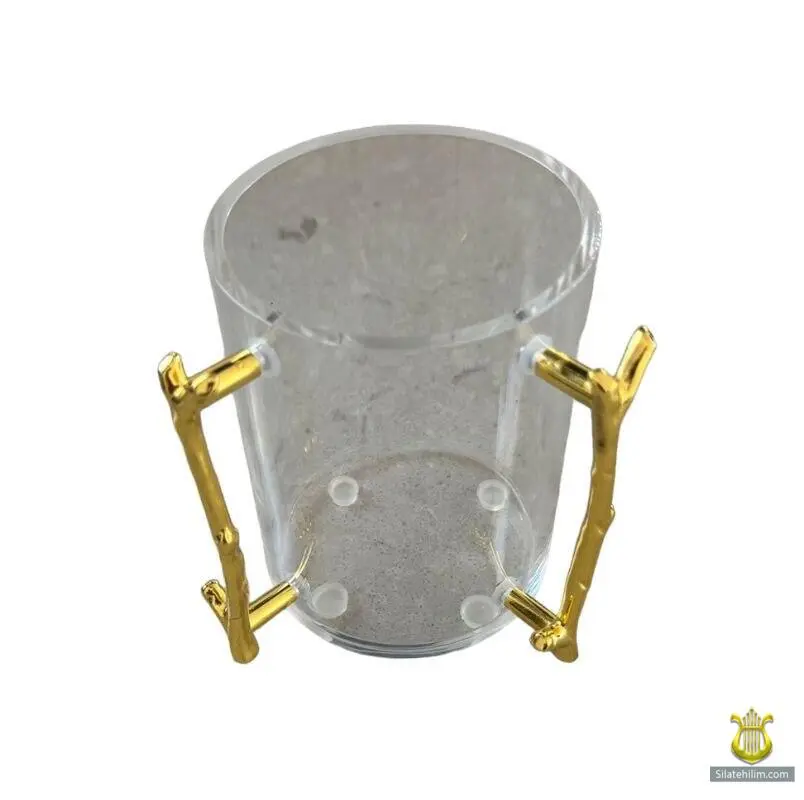
There must be at least a revi’it (150 cubic centimeters—the volume of one and a half eggs) of water in a single vessel. If there was not a revi’it in the vessel and he poured what there was over his hand, then added more water, his hands remain impure. This can be remedied only by drying his hands and washing them again with at least a revi’it of water. Everyone should be careful about this, because it is a common mistake: a person unknowingly washes his hands with too little water and discovers the error afterward. In that case, he must dry his hands and repeat the washing with the required amount of water.
Part 12:
One washing his hands must pour until the entire surface of the hand is wet, because it often happens that a large amount of water is poured over the hand, yet a small area remains completely dry.
Part 13:
If he washed and dried part of his hand, then washed and dried the remainder, his hand remains impure as it was before the washing, because partial washing is not valid.
Part 14:
One who has a wound on his hand covered by a bandage need not remove the bandage before washing. He must, however, ensure that he washes with the required amount of water; otherwise, water that lands on the bandage may flow back and render the hand impure. Therefore, even after washing, it is desirable to wrap the bandage with a soft cloth to prevent renewed contamination. If he removes the bandage during the meal, or if it falls off, he must repeat the washing.
Part 15:
If, after washing his hands and preparing to dry them, he sees that part of the hand remains unwet, there is no more water in the cup, and he cannot obtain water elsewhere for a second washing, he may not dry them, because doing so would render them impure again due to the unwet area. He should wait until his hands dry on their own, without drying them with a towel, and the mitzvah of washing will thereby be considered fulfilled. He may then eat bread. This may be done only as a last resort, when the situation cannot otherwise be corrected. He should recite an abbreviated blessing without mentioning G-d’s Name or the Divine sovereignty (“Chesed Le-Avraham” 162:3).
Part 16:
If he washed one hand and touched it to the other hand, which had not yet been washed, or if someone else touched it—even an infant—the hand again becomes impure. He must dry it thoroughly and wash it again, but without reciting a blessing. If he washed both hands with an insufficient amount of water, and rubbed them against each other, they become impure; he must dry them and wash them again without a blessing.
Part 17:
Some pious and righteous people are stringent and do not wash their own hands, but have another person pour the water over them. Sometimes, if a revi’it was not poured over the first hand, then when he pours over the second hand he must lower the first, causing water above the wrist to flow back and render the hand impure. There is also concern that when the cup is passed from one hand to the other, the washed hand may touch the unwashed hand and become impure again. In addition, because of moisture, the washed hand may become impure by touching the handle of the washing cup. Therefore, one who must wash his own hands should take care not to make any of these mistakes. Because of the final concern, involving moisture on the cup, he should hold the cup in a different place the second time. If this is impossible, he may rely on those who rule that water on the handle and sides of the cup does not become impure through contact with an unwashed hand.
Part 18:
One who is in a dangerous place or in the desert and has no water should wrap his hands in a cloth in order to eat bread. If he knows that he can obtain water within a journey of an hour and a quarter, he should wait and not eat. Thus, if he is traveling and becomes hungry without water, but knows that water is available within an hour and a quarter ahead, he should wait until he reaches it and washes his hands. If there is no water ahead but there is water behind him within an hour and a quarter’s walk, he should make the effort to turn back, wash his hands, and eat. If the water is farther than an hour and a quarter behind him, he is not obligated to return. Nor must he return if the water is within that distance but returning entails danger, or if he is traveling with a group that will not wait for him. In all such cases, he should wrap his hands in a cloth and may eat bread.
Part 19:
Before washing the hands and eating, one should say: “Behold, I am about to fulfill the mitzvah given to us by the Sages—to wash my hands and dry them thoroughly before the meal, in order to bring delight to my Creator and fulfill the will of my Maker. May it be the will of the Almighty that this mitzvah of washing and drying the hands before the meal be important, accepted, and desirable before You, as though I had fulfilled it with all the necessary intentions. In the merit of this mitzvah of washing and drying the hands before the meal, over which we will recite a blessing, may this moment be favorable before You, and may Divine Light flow upon the Twelve Partzufim contained within the Ten Sefirot, symbolized by the ten fingers of the hands. May we merit to receive abundance through the ten blessings, as it is written: ‘And may the L-rd grant you (to draw wisdom and abundance from the Ein Sof) from the dew of the heavens (Chochmah) and from the richness of the earth (Binah), abundant grain (Da’at) and wine (Chesed). Nations will serve you (Gevurah), and peoples will bow down to you (Tiferet). You shall be a lord (Netzach) over your brothers (Hod), and your mother’s sons will bow down to you (Yesod). Those who curse you shall be cursed, and those who bless you shall be blessed (Malchut).’
פתיחה
דע כי בשבתות אלו אשר בין פסח לעצרת, דרכי לדרוש בע"ה תחלה בפרשת השבוע ואח"כ אקשר התחלת פרק מפרקי אבות עם פסוק מן הפרשה, ואדרוש בפרקי אבות ואח"כ אתקשר ההלכות עם המשנה מפרקי אבות של אותה שבת, ואגיד ההלכות לכן בשבתות אלו כל קשור ההלכות יהיה עם המשנה דאבות מידי שבת בשבתו בעה"י:
הוא היה אומר על שלשה דברים העולם עומד על האמת ועל הדין ועל השלום, נ"ל בס"ד אמת הוא חלק מצות עשה, ודין הוא חלק מצות ל"ת, ושלום הוא חלק מצות דרבנן, שעל ידם ישא ה' פניו לישראל וישם לם שלום, כמ"ש רז"ל איך לא אשא פנים לישראל שאני אמרתי ואכלת ושבעת וברכת, והם דקדקו עד כזית ועד כביצה, כי מאחר דחכמים התירו בגדרים וסייגים בזה נעשה שלום לישראל מן המקטרגים, שיאן יכולים לקטרג ולומר מדוע תשא פנים להם לקבלם בתשובה ולהאריך להם עד שישובו בתשובה וכמש"א במ"א בזה:
והנה מכלל מצות חז"ל היא מצות נטילת ידים, ומשום דהיא מדרבנן נעשה לה חיזוק יותר דהמזלזל בנט"י חייב מיתה בידי שמים, צא ולמד מעובדא דרבי עקיבא בעירובין דף כ"ה כשהיה חבוש בבית האסורין ולא טעם כלום עד שהביאו לו מים ונטל ידיו, וכששמעו חכמים בדבר אמרו מה בזקנותו כך בילדותו עאכו"כ, ומה בבית האסורין כך שלא בבית האסורין עאכו"כ ע"ש, וכל אדם ראוי שיתפעל בזה, ושומר נפשו יזהר בה, וישתדל לדעת הלכות נט"י שיש כמה דברים שמעכבין בה וכאלו לא נטל דמי, ואין בור ירא חטא והנזהר ינחל טוב:
אות א
אע"פ ששיעור נט"י ברביעית יזהר ליטול בשופע, ואותם אנשים בורים שנוטלין ואין נוטלין כראוי עונשם יותר מרובהה מאותם שאינם נוטלין כלל, חדא הנה הם אוכלים בלא נט"י כיון דאין נוטלים נטילה ראויה כפי הדין והב' שמברכים ברכה לבטלה, והג' ריב לה' עמהם מאחר דנוטלין למה אין נוטלין כראוי, מה הפסד יש בזה ומה עול כבד יש להם, בזה אין זה אלא רוע לב, על כן איש הירא יזהר ויזהיר אחרים בזה לעשות המצוה כתיקונה וכמ"ש בחס"ל סי' קנ"ח יע"ש אך אע"פ דאוכל כזית חייב בנט"י, עכ"ז ברכת ענט"י לא יברך אא"כ אוכל כביצה שהוא י"ח דרה"ם, ואם דעתו לאכול כביצה ובריך ענט"י ובעת שבא לאכול לא הי' לאכול כביצה אלא רק אכל כזית, אין כאן חשש ברכה לבטלה על אשר בירך ענט"י, ועכ"ז ידחוק עצמו היכא דאפשר לו לאכול כביצה בשביל הברכה:
אות ב
חיוב נט"י הוא בין על האנשים בין על הנשים, ובעוה"ר יש כמה נשים שאוכלים בלא נט"י ואין מרגישים בחטא דנעשה להם כהיתר, ויש חושבין כיון דאין יודעים לברך בהמ"ז לכך גם נט"י לא יברכו, וצריך להודיעם דלא תליא הא בהא, וצריך כל אדם להשגיח על בני ביתו בדבר זה ולהודיעם חומר הדבר ויזהירם תמידוגם יחנך ילדיו הקטנים אע"פ שלא באו לכלל חיוב כדי שירגילו בכך מקטנותם, וכתב בספר כ"מ כ"י בפעם האחרונה של נט"י בכל יד ויד ימלא חפניו מים וכמ"ש ר"ח אנא מלאי חפנא מיא וכו', ויכוין אותה שעה מי ר"ת מלא ידנו מברכותיך, וגם יכוין מים ר"ת מעושר מתנות ידיך ע"כ ומנהג יפה הוא:
אות ג
כל הנוטל ואינו מהפך ידיו אנה ואנה בשעת נטילה, ה"ז קרוב לודאי שאין המים באים על כל היד וכנראה בחוש הריאות, לכן יזהר להפך ידיו בשעת נטילה אנה ואנה כדי שיבואו המים על כל היד:
אות ד
כשנוטל יקח הכלי ביד ימין וימסרנו ליד שמאל, כדי להכניע השמאל כעבד הנכנס לשרת את אדונו, ואז תשפוך יד השמאל על הימין ג"פ בזא"ז, ותניח הכלי בארץ והימין תקחנו מאליה מעל הארץ ותשפוך ממנו ע"י זמאל ג"פ בזא"ז, ואח"כ ישפשף הימין ג"פ בזא"ז, ויחזור וישפשף השמאל ג"כ ג"פ בזא"ז, כן הוא הסדר המפורש בסידור רבינו הרש"ש ז"ל דבעי לשפוך ג"פ בזא"ז וגם לשפשף ג"פ, ואע"ג דמדברי רבינו האר"י ז"ל בשער המצות משמע לשפוך ב"פ ולשפשף פעם אחת, ודאי דבר זה נתברר לרבינו הרש"ש ז"ל מדברי רבינו האר"י ז"ל במקום אחר, כי נאמן רבינו הרש"ש ז"ל שלא יחדש דבר מדעתו אם לא מצא ו גילוי והכריח בדברי רבינו האר"י ז"ל, לכן אין לזוז מדבריו, ובפרט כי בדבר זה אין נזק יוצא מן התוספת, ושמעתי שכך הוא מנהג קהל חסידים בבית אל לשפוך ג"פ בזא"ז, ולשפשף ג"פ בזא"ז:
אות ה
וכאשר יגביה ידיו עד כנגד ראשו אז תכף ומיד יברך על נט"י, כדי שלא תהיה הגבהת ידיו לבטלה, כנז' בזוה"ק שאסור להגביה ידיו בריקנייא, ואחר ברכת ענט"י בעוד ידיו זקופים יפשוט ידיו לקבל שפע וברכה מעשר מיני שפע הנמשך לי"ב בחינות קדושה הכלולים בעשר ספירות קדושה, הרמוזם בעשר אצבעות ידיו, ויכוין להמשיך מן אור אין סוף מוחין ושפע לי"ב בחינות קדושה הרמוזים בעשר ספירות הכוללים, והם עשר מיני ברכות הנזכרים בפסוק ויתן לך וכו' עד ומברכיך ברוך:
אות ו
כתב רבינו ז"ל בשער המצות נט"י שיעורה כל היד שהוא חמש אצבעות והכף עצמה עד פרק הזרוע וכו', ובזה יובן ענין נטילת ידים שהוא לשון נשיאות כמו וינטלם וינשאם, אשר ביאורו הוא שבעת רחיצתם יגביהם למעלה עד כנגד ראש, ולפחות עד כנגד שתי הפנים שבו כי גם הפנים מכלל רישא אינון, וכאשר תגביה ידיך תכוין להכניס קשר הזרועות לפנים, ולא יהו יוצאין ובולטין כמנהגם לאחורי הגוף והם הנקראים קובד"ו בלשון לעז בסוד וכל אחוריהם ביתה עכ"ל:
אות ז
יברך ענט"י אחר הנטילה קודם הניגוב, ואם לא בירך עד שההתחיל לאכול שוב לא יברך, ויש מי שאומר שאפילו אם לא בירך עד לאחר הניגוב שוב לא יברך, לכן צריך ליזהר לברך קודם הניגוב, וכ"ש שאסור לו לברך בהיותו מנגב ידיו כמנהג המון העם, שהרי אסור לעשות עסק אפילו כל דההוא בשעה שמברך, וכנז' בחס"ל סי' קנ"ח אות ג' ועיין מטה יוסף ח"ב ושאר אחרונים, ולפ"ז אם שכח ולא בירך קודם ניגוב לא יברך אחר ניגוב משום ספק ברכות, מיהו הרב מגיה בחס"ל שם כתב דאם נגב ידיו קודם ברכה יחזור ויטול ידיו כדי לברך קודם ניגוב ע"ש, ויפה כתב וכן רואים לעשות כדי שלא יפסיד הברכה, ואין בזה משום גורם ברכה שאינה צריכה וכמ"ש בס"ד בזה במ"א, אך קודם שיטול יגע בבשרו בידיו ויטמאם, ויטול ויברך קודם ניגוב:
אות ח
ינגב ידיו היטב קודם שיבצע שהאוכל בלא ניגוב ידים כאלו אוכל לחם טמא, ויש מחמירין אפילו בנוטל ידיו בבת אחת ושופך עליהם רביעית בבת אחת עכ"ז צריך נגוב קודם אכילה, ולא ינגב ידיו בחלוקו דקשה לשכחה:
אות ט
אם עשה צרכיו ורוצה מיד לאכול, יטול ידיו תחלה בשביל עשיית צרכיו ויברך אשר יצר, ואח"כ יגע בידיו במקומות המכוסים בגופו, ואז יטול ידיו ויברך ענט"י, אבל א"א לעשות נטילה אח לשתיהם דאין הנטילות שוות, מפני כי נטילת בית הכסא צריכה ג"פ בסירוגין, ונט"י לאכילה צריכה ג"פ רצופין בזא"ז, לכך יעשה כאשר כתבנו, מיהו אם אין לו מים הרבה או שהוא צריך למהר יעשהה כך, שיטול ידיו בסירוגין ג"פ ויכוין בנטילה זו אדעתא דהכי שרוצה לאכול ויבר ענט"י והמוציא, ואחר שיאכל כזית של המוציא יברך אשר יצר, אך לא יעשה כ אלא מדוחק, דלכתחילה טוב לעשות שתי נטילות כל אחת כדינה כאשר כתבנו:
אות י
האוכל צריך נט"י אפילו אם אדם אחר נותן לתוך פיו והוא אינו נוגע במאכל, ואסור להאכיל למישאינו נוטל ידיו, וכן אסור ליתן לאכול למי שיודע בו שאינו מברך, על כן בעה"ב שמביא פת לבני ביתו ויודע שאין מברכין ואין עושין נט"י הרי קולר העון תלוי בצוארו, וכן אם יבא עני לביתו לבקש לחם ויודע בו שיאנו מברך ואינו נוטל ידיו, הרי זה עושה איסור במקו מצוה ועל זה ידוו הדווים:
אות יא
צריך שיהיה במים רביעית מכונס במקום אחד, דהיינו שבעה ועשרים דרה"ם מים שהוא שיעור ביצה וחצי, ואם לא ההיה בכלי רביעית ושפכם על ידו וחזר והביא מים והשלים, ידיו טמאות ואין לו תקנה אלא עעד שינגבם ואז יחזור ויטיל עליהם מכלי שיש בו רביעית מים, וצריך שכל אדם ישים דעעתו בדבר זהה כי הוא מצוי ושכיח שהאדם לפי תומו לוקח הכלי ושופך על ידיו בחשבו שיש בו יותר מרביעית מים, ואחר ששפך ידע שהוא חסר מרביעית דאז יזהר לנגב תחלה, ואח"כ יטול ממים שיביא מחדש שיש בהם שיעור:
אות יב
הנוטל ידיו צריך להזהר שלא יסוק הקלוח עד שיטול כל היד בבת אחת שתתכסה כל היד במים שלא ישאר אפיל וקצת ממנה שלא יתלחלח במים, ודבר זה מצוי הרבה שלפעמים שוך על היד מים רבים ועכ"ז ימצא מקום קטן ביד שלא נאחז בו המים ונשאר יבש ממש:
אות יג
נטל מקצת ידו ונגבה, וחזר ונטל הנשאר בידו הרי ידו טמאה כמו שהיתה, דאין נטילה לחצאין אם אין על מקצת שנטל טופ על מנת להטפיח:
אות יד
מי שיש לו מכה בידו ורטיה עליה אין צריך להסיר הרטיה בשעעת הנטילה, ורק יהר ליטול ידיו מרביעית מים בבת אחת, שאל"כ המים שעל הרטיה יחזרו וימאו את היד, ואע"פ שהוא נטל מרביעית טוב שיכרוך על הרטיה סמרטוט רך משום זוהמא ועיין באליה רבה, ואם באמצע השלחן הסיר הרטיה או נפלה צריך לחזור וליטול כל היד שאין נטילה לחצאין:
אות טו
אם נטל ידיו ובעת שבא לשפשף ראה שנשאר מקום בכף ידו שלא נאחז שם מים שנשאר יבש, ולא נשאר מים בכלי וגם לא אפשר להביא ממקום אחר כדי שיטול פעם שנית, הרי זה יזהר שלא ישפשף, שאם ישפשף יטמא כל ידיו מחמ אותו מקום שנשאר בלא מים וימתין עד שתתנגב מאליה שלא ינגבהה במטפחת, והרי ה יוצא ידי חובת נטילה כמ"ד דס"ל דסגי אד האצבעות, ואע"ג דלא קי"ל כותיה סמכינן בכה"ג שהוא שעת הדחק לאכול פת ע"י נטילה זו מאחר דאי אפשר לו לתקן הדבר, אך לא יברך ענט"י אלא יברך בלא שם ומלכות, ורק יהרהר בשם ומלכות ועיין חס"ל קס"ב אות ג':
אות טז
אם נטל ידו אחת ונגע בה בחברתה שלא נטל אותה עדיין, או אם נגע בידיו אדם אחר שלא נטל ידיו, ואפילו אם נגע בו תינוק בן יומו בידיו הרי נטמאו ולא מהני להו נטילה אלא עד שינגבם תחלה ויחור ויטלם, אך לא יברך פעם שנית, ואפילו נטל שתי ידיו ולא נזהר לשפוך רביעית על כל אחת בבת אחת ישפשף יד בחברתה נטמאו ידיו, ואין לו תקנה עד שינגבם ויחזור וינטלם בלא ברכה:
אות יז
יש חסידים ואנשי מעשה מדקדקין שאין נוטלין הם בעצמם, אלא יהיה אדם אחר שופך לידים שלהם, מפני דלפעמים אם לא שפך רביעית על ידו האחת אז כשיבא ליתן מים על ידו ההאחרת יהיה צריך להשפיל ידו, ואז חוזרין המים שחוץ לפרק ומטמאין את היד, ועוד חוששין שמא בנתינת הכלי מיד ליד נוגעת היד שנטול ביד שלא נטל ותטמא, ועוד חוששין מחמת לחלוח שנטמא בנגעו ביד שאינה נטולה ומטמא אח"כ את הנטולה כשאוחזת באוזן הכלי, על כן מי שמוכרח ליטול בעצמו ישים לבו להשמר בכל אותם החששות שלא ישגה בהם ובחששה האחרונה שהיא בעבור לחלוח הכלי יזהר לאחוז פעם השנית במקום חדש, ואם א"א לו בכך יש לזמוך על המקילין שאורים המים שבאוזן הכלי או בדופני הכלי אין מטמאין בנגיעת יד שאינה נטולה דהכי קי"ל להלכה וכנז' בחס"ל אות ה':
אות יח
מי שהיה במדבר או במקום סכנה ואין לו מים, צריך לכרוך ידיו במפה כדי לאכול פת, ואם ימצא לו מים בודאי עד כדי הילוך שעה ורביע ימתין ולא יאכל, ולכן אם הוא מהלך בדרך ורוצה לאכול ואין לו מים, אם יש מים לפניו עד מהלך שעה ורביע ימתין ולא יאכל עד שיגיע לשם ויטול, ואם אין מים לפניו כלל אך הם לאחוריו אם הוא שיעור מהלך רבע שעה יטרח ויחזור לאחוריו ויטול ידיו כדי לאכול, ואם הוא יותר מרביע שעה אינו מחוייב לחזור בעבור זה, והא דאמרינן בשיעור רבע שעה חוזר היינו בהיכא דליכא פחד וחשש סכנה, אבל בפחד וחשש סכנה או שהוא הולך עם השיירה ואין ממתינין לו, בכל זה יכרוך ידיו במפה ויאכל הפת:
אות יט
קודם שיטול ידיו כדי לאכול פת, יזהר לומר ליקבה"ו וכו' הריני בא לקיים מ"ע דרבנן ליטול ידי ולשפשפם היטב קודם סעודה, כדי לעשות נ"ר ליוצרי ולעשות רצון בוראי לתקן שורש מצוה זו במקום עליון, ויהרמ"י או"א שתהיה חשובה ומקובלת ורצויה לפניך מצוה זו של נטילת ידים והשפשוף קודם סעודה, כאלו כונתי בכל הכוונות הראויות לכוין, ובזכות מצות הברכה אשר נברך על נט"י קודם סעודה, יהיה עתה עת רצון לפניך וימשך מן אור אין סוף שפע מוחין ואורות גדולים לשנים עשר פרצופים הרמזים בעשר ספירות הכוללים הרמוזים בעשר אצבעות הידים, ומשום נקבל שפע עשרה ברכות ככתוב ויתן לך האלהים (להמשיך מא"ס מוחין ושפע) מטל השמים (חכמה) ומשמני הארץ (בינה) ורוב דגן (דעת) ותירוש (חסד) יעבדוך עמים (גבורה) וישתחוו לך לאומים (תפארת) הוי גביר (נצח) לאחיך (הוד) וישתחוו לך בני אמך (יסוד) אוררך ארור ומברכיך ברוך (מלכות):
(Special thanks for the translation to Zoya Haya Tigai and Ila Tova Schliesser)