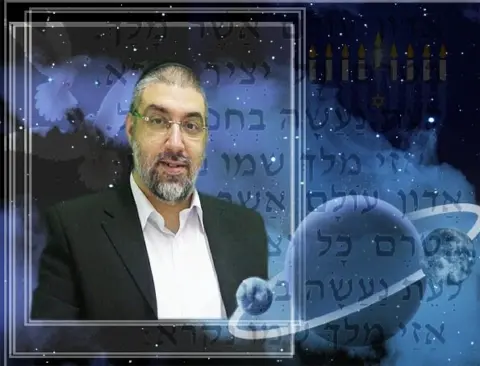
Shabbat Chazon Before Tisha B'Av and the Chozeh mi-Lublin
Shabbat Chazon Before Tisha B'Av and the Chozeh mi-Lublin
Shabbat Chazon is the last Shabbat before Tisha B'Av.
On this day, the haftarah “The Vision of the Prophet Yeshayahu” (Chazon Yeshayahu, 1:1–27) is read.
Rabbi Levi Yitzchak of Berditchev (may his merit shield us) taught that on this day the Third Temple is shown from Above, but it can only be seen from a distance—and that is why this Shabbat is called Shabbat Chazon—“the Shabbat of Vision.”The special nature of Shabbat when Tisha B'Av falls on it
When Tisha B'Av falls on Shabbat, the fast is postponed until the following day.
On Shabbat Tisha B'Av, great blessings descend to us from Above; this occurs only once every several years.
On this day, one may merit health, good fortune, a worthy spouse, peace in the home, prosperity, children—in fact, absolutely anything.
This is what is written in the holy books:
Rabbi Aharon of Apt, author of “Ohev Yisrael,” taught: “Shabbat Chazon”(the Shabbat before Tisha B'Av) is far higher in holiness than all the other Shabbatot of the year.The Saraf of Stralisk told his disciples that on this Shabbat, all the prayers that had been delayed and not accepted throughout the year are accepted and elevated.
What is the reason?
The Zohar HaKadosh states that the usual time of prayer, Mincha, is a time of judgment, a time when the Divine Countenance is concealed.
But on Shabbat, all judgments are transformed into mercy.
On an ordinary Shabbat, beginning at the time of Mincha Ketanah (approximately 3:00 p.m.), a period known in the Zohar as “Raava d'Raavin” begins—that is, the most auspicious time for prayer during the week.
Tisha B'Av—the yahrzeit of the Chozeh mi-Lublin
The Chozeh of Lublin teaches that when Tisha B'Av falls on Shabbat, the entire Shabbat becomes as auspicious for prayer as the time of Mincha on an ordinary Shabbat.
Moreover, Tisha B'Av is also the yahrzeit of the Holy Seer of Lublin. He was one of the great tzadikim who revealed to us the secret of this Shabbat; the combination of Shabbat and his yahrzeit opens the way to miracles.
So, what should one do to merit the great light of this day?
Everyone should make an effort to:
1) Read, on Erev Shabbat, a passage from the book of the Holy Seer of Lublin:
The Teachings of the Chozeh mi-Lublin, section “Exile and Redemption”
“The Throne of Glory is more exalted than the place of our Temple. And concerning the Throne of Glory, our Sages of blessed memory made the well-known statement that the Almighty, blessed is He, swore that neither His Name nor His Throne of Glory would be complete and perfect until the name of Amalek was erased. Surely, if the Creator had wished to bring Redemption through suffering, He would already have done so, for He knows what will happen in the end. And if it is impossible without this, why does He prolong the Exile? Because He wants the prolonged Exile itself, rather than suffering, to bring about the Redemption, and also that we should multiply exceedingly—specifically, souls in bodies—as the holy Arizal explained the verse:
“...and the least shall become a thousand...”
And if Redemption comes not under compulsion, because of a king as cruel as Haman, it will be for the glory of Heaven, for none of the suffering of His children brings glory to Him. It is possible that our Sages of blessed memory spoke of a king as cruel as Haman so that people would not despair completely and cease believing in the mercy of the Almighty.
For they had previously said that Redemption depends solely on prayer and repentance; and because they feared that people would not repent, they said that He would appoint a cruel king, so that all the promises and comforting prophecies would be fulfilled—and they could not fail to come true, since they are ‘the words of the living G-d.’
Yet it appears entirely clear that Redemption will not come through suffering if they repent completely. Why, then, did the Almighty prolong the Exile, if the need for a cruel king was known to Him?
And why did He prolong the Exile, when He longs to bestow mercy?
The Zohar states that Redemption will come in the merit of prayer, and then the Throne of Glory will become complete—not through our suffering—and will become even more exalted than it was before the war with Amalek, because there will be no subjugation by the nations.
And because we create a ‘small Temple’ in the place of our prayer, the holiness of the Almighty will descend, and the Temple will be rebuilt in its place.
2) Before Shabbat begins, light a candle in memory of the tzadik and give tzedakah;
3) Pray for your needs and for yourself as a part of the Jewish people;
4) Recite Tehillim 120–150.
(Silatehilim.com, based on a lecture by Rabbi Raphael Avitan; translated by Zoya Chaya Tigai)
Was this helpful?
100% of readers found this article helpful (31 votes).
Please note: some articles on our site contain the holy Names of the Almighty. If you print these articles, they may not be thrown away or destroyed. Please handle printed copies with care and respect.
Material from our site may be copied for the purpose of spreading Torah, provided a link to Silatehilim.com is included. Any use of the site's material in print publications or for commercial purposes is prohibited without the rights holder's consent.