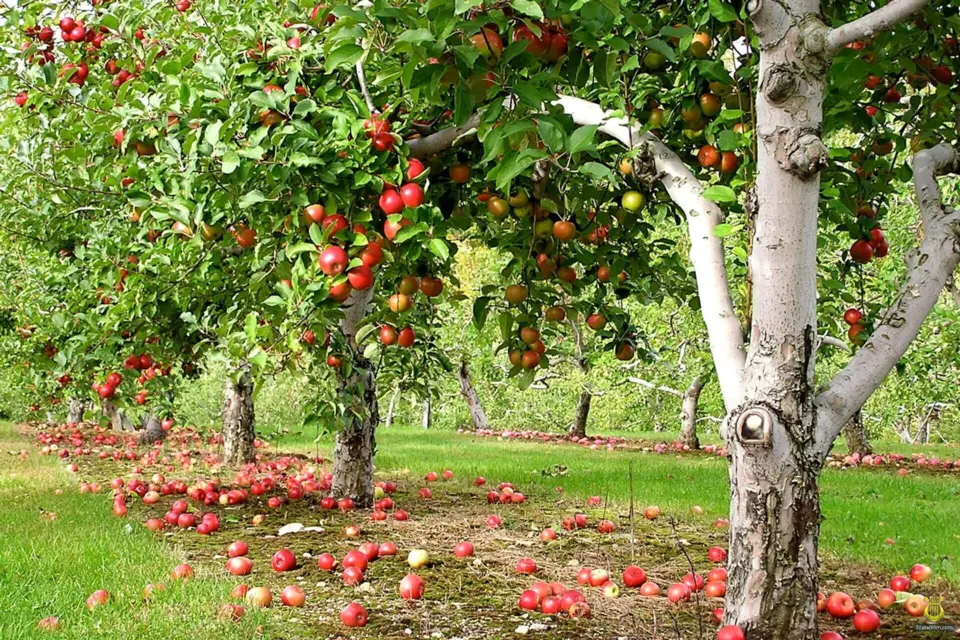
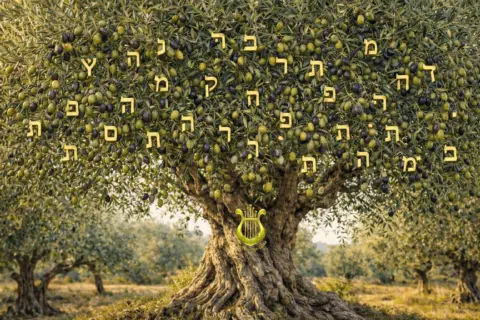
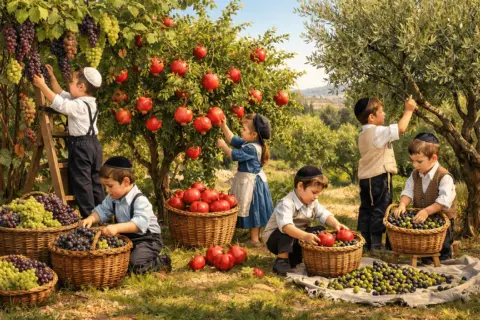
When the Almighty created the world, He designated fruit as food for man and vegetables for animals, as it is written: “The L-rd G-d commanded the man, saying: ‘You may eat from any tree in this garden’...”. Before Adam and Eve tasted the forbidden fruit, they subsisted on the fruit growing in the Garden of Eden and were completely free from concerns about procuring food—their minds were wholly devoted to apprehending divine wisdom.
But after the sin, one of Adam’s punishments was: “...you shall eat the grass of the field.” (Bereishit 3:18)
Upon hearing this, the first man burst into tears: “Will my donkey and I really eat from the same vessel?” (Pri Tzadik, Tu BiShvat)
Why was Adam so distressed that he would now have to eat not only fruit, but vegetables as well?
Fruit that grows on trees is fundamentally different from the produce of other plants.
Trees can bear fruit for many decades, and after the fruit has been eaten, the tree retains its potential for future harvests. Adam was originally on the level of tree-borne fruit—he, too, possessed hidden potential. But after tasting from the Tree of Knowledge of Good and Evil, the first man became like the animals.
The Hebrew word for animal is בהמה (behemah). If we divide this word in half, we get the expression בה מה (ba mah), which can be translated as: “there is something in it,” or, in other words: “it contains only what you see in it.”
Once vegetables and grain have been eaten, nothing remains of the plant that would produce a harvest the following year.
When the Almighty made “the grass of the field” Adam’s food, the first man realized that he had lost his hidden spiritual potential.
In the times of Mashiach, people will once again rise to the spiritual level at which Adam stood before the sin.
“In the future, trees will yield a harvest every month, and man will taste their fruit and be healed.” (Shemot Rabbah 15:21)
Fruit embodies the spirituality contained within food, which is why fruit occupies the central place on our table on the festival of Tu BiShvat. On this day, we not only rejoice in what we have, but also pray that G-d will return us to the spiritual level at which man stood before the sin.
(Rabbanit H. B. Siegelbaum, “Women on the Land”)
Was this helpful?
100% of readers found this article helpful (15 votes).
Please note: some articles on our site contain the holy Names of the Almighty. If you print these articles, they may not be thrown away or destroyed. Please handle printed copies with care and respect.
Material from our site may be copied for the purpose of spreading Torah, provided a link to Silatehilim.com is included. Any use of the site's material in print publications or for commercial purposes is prohibited without the rights holder's consent.