Tehillim 65 – How the Word “Basar” Is Connected to Gratitude
Tehillim 65:3
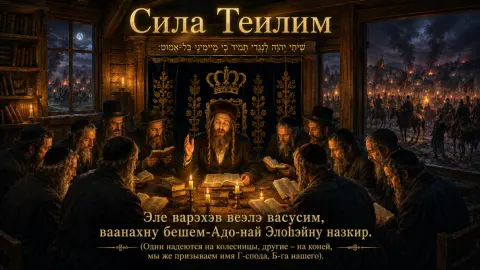
שֹׁמֵ֥עַ תְּפִלָּ֑ה עָ֝דֶ֗יךָ כָּל־בָּשָׂ֥ר יָבֹֽאוּ׃
– “Shomea tefillah adecha, kol basar yavo’u” – (You who hear prayer, all flesh will come to You).
A person should always regard every blessing he receives in this world not as his own achievement, but as a gift from the Almighty, blessed be He.
One who displays ingratitude and explains the wealth that has come his way as the result of his own efforts and abilities destroys himself. This is discussed by
Ma'aram Rabbeinu Moshe Alshich in his commentary on the weekly Torah portion of Ki Tavo, where the mitzvah of bikkurim (the offering of the first fruits) is explained.
Because a person's physical nature inclines him to misunderstand things and constantly seeks to convince him that all his possessions are the result of his own efforts, the Almighty gave us
three mitzvot that refute this misconception and testify that all the wealth in the world belongs solely to Him.
These
three mitzvot serve as an eternal reminder of the truth: we must believe that the L-rd our G-d gives us the strength and ability to create material wealth, and that everything is under His dominion. His blessings constantly flow down upon us.
The initial letters of the names of these mitzvot are:
ברכות – “Berachot” – (blessings),
שמיטה – “Shemitah” – (the seventh year, a year of rest),
רבית – “Ribbit” – (interest – %) – forming the word
בשר “basar” (flesh).
If a person observes these mitzvot and accepts the testimony that follows from them—that the Almighty, blessed be He, grants us the abilities and opportunities to acquire all the material benefits of this world—he will be able to cleave to holiness and stand before Him:
“You who hear prayer, all flesh will come to You.”
If not, he will deserve contempt and will not merit holiness, for there is no one more repulsive and deformed in the world than a person who shows ingratitude toward the L-rd, who gives everything.
In light of this, the meaning of the verse becomes clear:
“You who hear prayer, all flesh will come to You” (Tehillim 65:3).
ברכות – “Berachot” – (blessings)
The first mitzvah concerns the produce of the earth: a person may not enjoy either its taste or its aroma until he has blessed the Almighty for it. This also serves as proof that everything belongs to Him, that we eat His food, and that we therefore thank and bless Him for it.
שמיטה – “Shemitah” – (the seventh year, a year of rest)
The second mitzvah is Shemitah, which commands a person in the seventh year [of the seven-year cycle] to abandon his fields and vineyards as though they did not belong to him, and to make them available to the poor and needy, because this is what the L-rd ordained in the Torah. In this way, it is proclaimed that the land is in fact owned not by man, but by the Almighty, blessed be He; for if the land belonged to man, he would not abandon it.
רבית – “Ribbit” – (interest %)
The third mitzvah concerns property and money: the prohibition against charging interest. The L-rd, blessed be He, forbade us to lend our fellow money or other items of equivalent value in order to derive a profit from them. A loan must be interest-free.
This testifies that money and other material possessions are also the property of the Almighty, blessed be He. Therefore, He commanded us to lend them to one another without interest. For if they belonged to man, why would he allow someone else to use them without deriving any profit from it?
That we receive all blessings from Hashem is also expressed in another pasuk from Tehillim (136:25):
– “Noten lechem lechol
basar, ki le-olam chasdo” – (He gives food to every living creature, for His kindness endures forever).
The Almighty bestows His Abundance—
Shefa—upon those who are not subject to ingratitude and observe the three mitzvot alluded to by the word
בשר “basar” (flesh).
The secret of the prayer Birkat HaMazon and the word בשר “basar” (flesh).
Stories of Tzadikim – Rav Yechezkel Abramsky
(Based on the book “Code of Jewish Law by the Weekly Torah Portions,” Vayikra, Bamidbar, Devarim, by the Ben Ish Chai)
Was this helpful?
100% of readers found this article helpful (68 votes).
Please note: some articles on our site contain the holy Names of the Almighty. If you print these articles, they may not be thrown away or destroyed. Please handle printed copies with care and respect.