Tehillim 39 – Blood with Milk or Tikkun Niddah
Tehillim 39:3–4נֶאֱלַ֣מְתִּי ד֭וּמִיָּה הֶחֱשֵׁ֣יתִי מִטּ֑וֹב וּכְאֵבִ֥י נֶעְכָּֽר׃
— “Ne'elamti dumiyah, he'hesheiti mitov ukhe'evi ne'ekar” — (I was silent and still; I kept silent even concerning good, and my sorrow grew intense).
Rabbi Eliezer Papo teaches in his book “Pele Yoetz,” that the first and last letters of the first two words of Tehillim 39:3נֶאֱלַ֣מְתִּי ד֭וּמִיָּה “ne'elamti dumiyah” — form the word נידה “niddah” (the status of ritual impurity of a Jewish woman).
Blood (the cause of the state of “niddah”) is associated with the strict forces of judgment — “dinim” (the root of the word “niddah” — “din”).
The red color of blood is also associated with the forces of judgment. When conception (life) does not occur, the energy returns to the form of blood.
Moreover, Rabbi Nachman of Breslov says in “Likutei Moharan” that the word “dumiyah” (silence) in this verse is connected with the word “damim” (blood) — they share the same root, דם.
Thus, in verse 3, David HaMelech alludes to blood and the judgments associated with it.
But in the following, fourth verse, Rabbi Nachman finds that David HaMelech encoded the word חלב “chalav” (milk) in the first three words of the verse:
חַם־לִבִּ֨י בְּקִרְבִּ֗י בַּהֲגִיגִ֥י תִבְעַר־אֵ֑שׁ דִּ֝בַּ֗רְתִּי בִּלְשֽׁוֹנִי
— “Cham-libi bekirbi, baha𞀀gigi tiv'ar-esh, dibarti bilshoni” — (my heart burned within me; as I contemplated, a fire blazed).
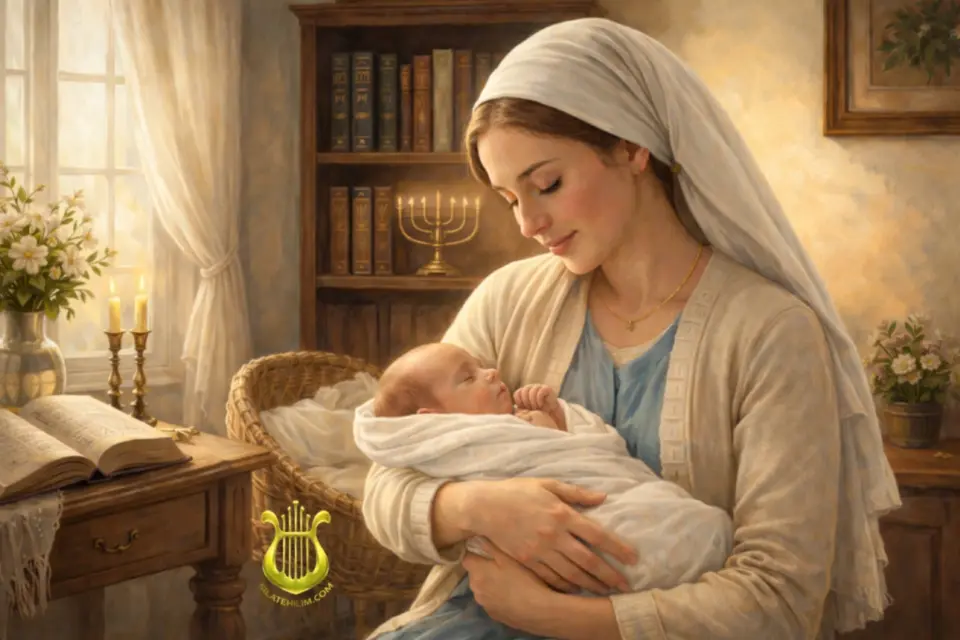
Physiologically, during pregnancy, a woman's blood is transformed into milk. This is one of the greatest miracles of G-d.
Milk, “chalav,” represents Chesed. It is white, which symbolizes mercy. Milk nourishes, sustains, and supports the life of a child.
Rabbi Nachman reveals King David's allusions to us: the child's character depends precisely on the mother's modesty and purity.
By placing the verse in which the word “niddah,” is encoded before the verse in which the word “chalav” (milk) is encoded, David HaMelech gives us another clue as to how to sweeten judgments with mercy: how to weaken the negative influence of “niddah” (whose symbol is blood) through the word “chalav” (milk)—in a word, how to sweeten judgments.
Very often, children's problems (health, behavior, middot) are specifically connected with violations of the laws of family purity.
The later generations, known as “Tinok Shenishbah” תינוק שנשבה (a captured child), grew up without knowledge of Jewish tradition and the mitzvot. Yet through learning these secrets, they can still rectify much, while having the appropriate kavanot when reciting Tehillim 39.
(Translated from the books: “Pele Yoetz”; “The Power of Psalms,” by Rabbi Nachman mi-Breslov)