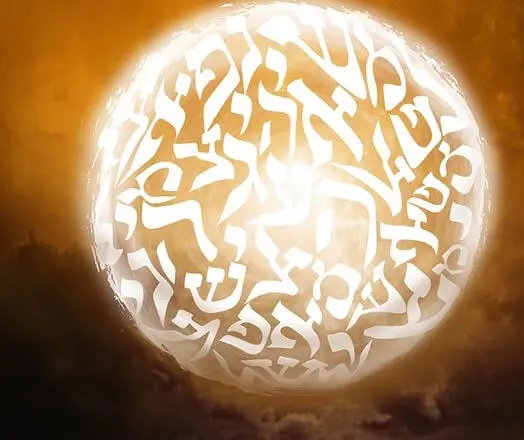
Tehillim 18 or Rabbi Abulafia’s Practice of Letter Permutation
Tehillim 18:31
- “Ha-El tamim darko, imrat A-donai tzerufah” - (G-d—His way is perfect (tamim); the word of the L-rd is pure (tzerufah).
At the beginning of his
“Kabbalah of Letters,” Rabbi Abraham Abulafia says the following:
“Take a pen in your hand, like a spear in the hand of a warrior. When you are thinking about something, pronounce it in your heart using specific letters, and also express it with your lips. Listen attentively and observe what emerges from your mouth.
Let your ears hear what your lips are saying, and understand in your heart the meaning of all these expressions. Immediately write each one down. Manipulate the letters and seek other words with the same numerical value [gematria], even if they do not follow my method. And know that this will be your key, opening the 50 Gates of Wisdom...”
Rabbi Aryeh Kaplan maintains that Abulafia finds an allusion to this in the verse from Tehillim 18:31, which says:
“G-d—His way is perfect (tamim); the word of the L-rd is pure (tzerufah).”
Tzeruf is precisely the practice of permuting letters introduced by Rabbi Abraham Abulafia.
Chokhmat ha-Tzeruf means “the science of combining letters.”
This technique engages the senses of touch, hearing, and sight, and is highly sought after. Abulafia bases it on the story of Bezalel in Shemot, who was charged with constructing the Tabernacle in the wilderness after the Exodus.
Rabbi Abraham Abulafia taught that Bezalel possessed the mystical ability to manipulate the Hebrew alphabet in order to construct the Tabernacle, and knew how to direct the spiritual energy of creation.
Both of these words—
tamim and
tzeruf —are frequently used by Kabbalists to describe the process of assigning numerical values to Hebrew words and then rearranging them for further understanding. Rabbi Abulafia went a step further, surpassing the Kabbalists who preceded him, and incorporated speech and writing into the meditative techniques of gematria:
“Know that the method of tzeruf can be compared to the sound of music. For the ear perceives sounds in various combinations, depending on the character of the melody and the instrument. Moreover, two different instruments can form a combination, and when the sounds blend, the listener’s ear takes delight in recognizing their differences. The strings touched by the right and left hands are set in motion, and the sound caresses the ear. Through the ear, sound enters the heart, and from the heart into the spleen—the seat of the emotions—and attention to different melodies brings ever-new delight. This feeling can be aroused only through a combination of sounds, and the same is true of combining letters. It touches the first string, which may be compared to the first letter, and then moves on to the second, third, fourth, and fifth; different sounds form different combinations. The mysteries expressed in these combinations delight the heart, which thereby comes to know its G-d and becomes filled with ever-new joy.”
Thus, instead of chanting a word repeatedly like a mantra, a person writes the word, rearranging and arranging its letters in every possible way. At a higher level, Rabbi Abulafia taught that by pronouncing the letters of the Divine Names, accompanied by special head movements and specific breathing exercises, one can attain prophetic visions.
https://dailyzohar.com/tzadikim/128-Rabbi-Avraham-Abulafia
Was this helpful?
100% of readers found this article helpful (18 votes).
Please note: some articles on our site contain the holy Names of the Almighty. If you print these articles, they may not be thrown away or destroyed. Please handle printed copies with care and respect.