Candles Made of Ice
That evening, the candles simply refused to burn properly.
They twisted and flickered, sending anxious shadows scurrying across the walls, then flared brightly only to go out a minute later.
A storm raged through Lubavitch, and the wind furiously tried to force its way through every crack.
The Tzemach Tzedek sat with the Chassidim, listening to the rustling of the trees.
The peals of thunder made it difficult for him to speak.
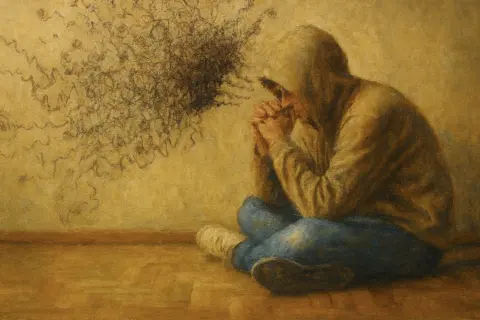
“Candles made of ice burned for our teacher, the Baal Shem Tov,” the Rebbe suddenly said, “while nowadays even knowledgeable Chassidim are cold, like blocks of ice.”
He fell silent, studying his students. They remained silent, embarrassed. When the Rebbe spoke this way, each person immediately began to apply his words to himself. And if one was honest and did not deceive himself, one would almost certainly realize that they applied directly to him.
“The Baal Shem Tov loved light very much,” the Tzemach Tzedek continued.
“After all, the gematria of the word ‘light’ — אור, ‘or’ — is 207, the same as the gematria of the word ‘secret’ — רז, ‘raz’ — which is also 207.
Only someone who knows the hidden meaning of everything can truly give light.”
Once, the Baal Shem Tov’s students were able to obtain only one candle for the evening. They waited anxiously and sadly for their teacher to arrive. The door flew open. The Baal Shem Tov entered the room, which was barely illuminated by the single flickering flame, and immediately exclaimed: “Jews need light! My task is to illuminate this world! Add more candles!”
The embarrassed students explained that they had been able to obtain money for only one candle.
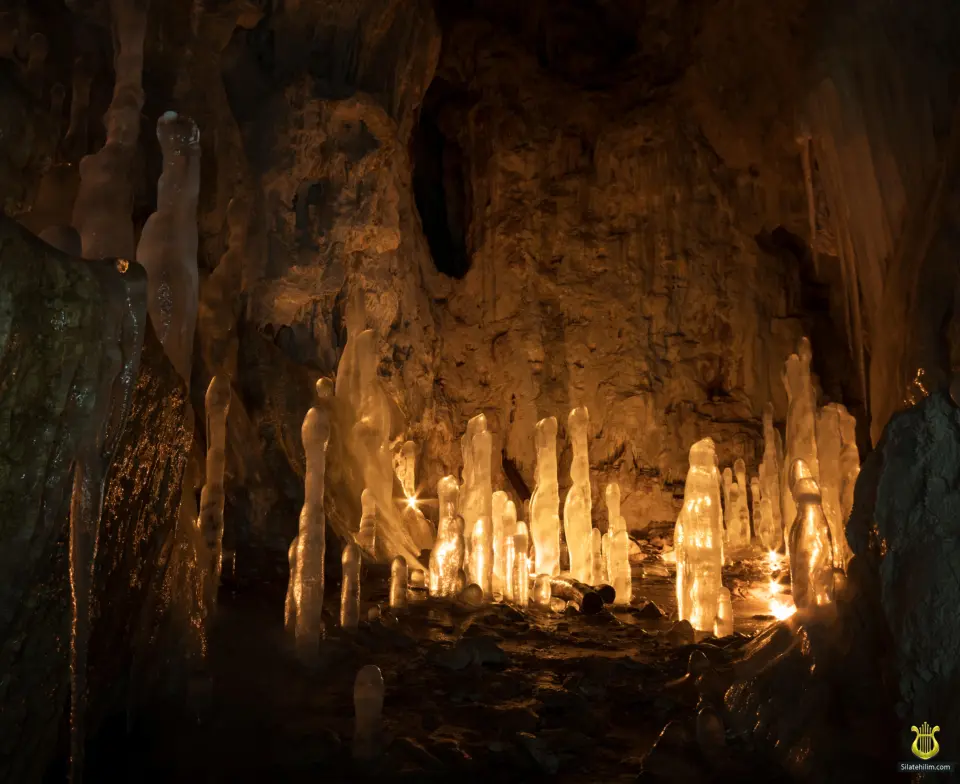
“Break off the icicles hanging from the roof,” the Baal Shem Tov instructed.
They brought in the icicles and held a flame to them, and the room filled with light. The icicles burned just like real candles.
The Tzemach Tzedek closed his eyes and began to sing.
The nigun continued on and on, touching the hearts and kindling the imagination. After all, sounds have no form, and music can therefore carry the soul away, transporting it to another realm.
“For the students of the Baal Shem Tov,” the Tzemach Tzedek exclaimed, interrupting the singing, “candles made of ice burned and shone, while darkness and cold surround today’s Chassidim!”
The Tzemach Tzedek’s grandson, the Rebbe Rashab, would end this story with the following words:
“Grandfather did not rebuke his students for their coldness without reason! That evening, he kindled an inextinguishable fire in the soul of each one of them.”
The Mikveh of the Baal Shem Tov
During the Melaveh Malkah meal, he would tell the same story about the Baal Shem Tov every week. Through this story, he sought to bring about yeshuot for everyone present and for the people who visited his home throughout the week. There are several well-known versions of this story, but this is the version told by Reb Avraham Fish:
In his youth, the Baal Shem Tov would seclude himself in the Carpathians during the week, coming home only for Shabbat and Yom Tov. Every day, he would immerse himself in the river that flowed through the mountains. Even when the river froze, the Baal Shem Tov would break through the ice to enter the water, emerging with shards of ice clinging to his beard and peyot.
A young non-Jewish man who lived in the area fished in the river, and every morning he noticed drops of blood on the ice along the riverbank. The young fisherman watched the area and saw the Baal Shem Tov emerging from the river and standing on its icy surface. He saw the Baal Shem Tov try to pull his feet away from the ice, only to discover that they had frozen to the surface. The Baal Shem Tov would then wrench his feet free, tearing his skin and spilling drops of blood that the fisherman found frozen on the surface of the river each morning.
The fisherman took pity on the Baal Shem Tov and from then on placed hay on the surface of the river at the spot where the Baal Shem Tov would emerge from the water. The Baal Shem Tov was pleased by his actions, called the fisherman over, and asked what kind of bracha he would like: for abundant sustenance, for health and physical strength, or for a long life. The non-Jew, of course, asked for all three, and the Baal Shem Tov promised him everything he had requested.
Years later, after the Baal Shem Tov’s passing, the fisherman himself told this story. By then he had reached a very advanced age, yet he was still strong and healthy and had never lacked anything in his life.
Whenever Reb Avraham told this story, he would always conclude with the evident love for his fellow Jews that constantly burned in his heart: “Here we have a kal vachomer. If this non-Jew merited health, sustenance, and longevity, how much more so do Jews deserve them.”
(Based on an article in Mishpacha, issue 488; and the book A Voice in the Silence by Rabbi Yaakov Shachter, volume 9)
Was this helpful?
100% of readers found this article helpful (44 votes).
Please note: some articles on our site contain the holy Names of the Almighty. If you print these articles, they may not be thrown away or destroyed. Please handle printed copies with care and respect.
Material from our site may be copied for the purpose of spreading Torah, provided a link to Silatehilim.com is included. Any use of the site's material in print publications or for commercial purposes is prohibited without the rights holder's consent.