The Secrets of the Amidah According to the Arba'ah Turim in Relation to the Offerings of the Six Kohanim
The Arba'ah Turim reveals that the Amidah is divided into three opening and three concluding blessings, and thirteen middle blessings.
If a person made a mistake in the three opening or three concluding blessings, he must repeat the prayer from the beginning.
However, if he made a mistake in one of the thirteen blessings, he does not need to return to the beginning; he should repeat the blessing in which he made the mistake.
If He Forgot to Make a Request
If a person wished to pray for a sick person but had already recited the eighth blessing, the Arba'ah Turim permits him to recite the eighth blessing again—it is the last of the middle blessings. In other words, any of the thirteen middle blessings may be recited out of order, since Rav Huna and Rav Assi say that the thirteen blessings do not follow a fixed order and may be recited out of order.
The Talmud also says that one's prayer should not be the same as yesterday's or the day before yesterday's. For example, if one forgot to ask for a livelihood in the ninth blessing, he may return to it.
Of the thirteen middle blessings, the Talmud highlights three special ones:
- “Refa'einu”—a prayer for healing;
- “Birkat HaShanim”—a prayer for Parnassah;
- “Shema Koleinu”—a prayer for all aspects of life.
A Prayer for a Refuah Shleimah
The Mishnah Berurah (siman 119) cites the Magen Avraham, who refers to the Zohar, stating that when one prays for a sick person who is present, one should not mention the sick person's name; instead, one says: “
choleh zeh.”
Mentioning the sick person's name awakens judgment against him.
This applies not only to the eighth blessing, but to any prayer.
The same applies to the “
Misheberach” prayer: if the name of a sick person is mentioned in the synagogue while he is present there, he should leave the synagogue.
The Zohar explains that when the sick person's name is mentioned, the angels of judgment are awakened.
Early Sephardic sources, followed by the Talmud, prescribe the following guidelines when visiting a sick person:
- One should cover one's head, and one may not sit or stand at the head of the sick person (the Shechinah is always at the head of the sick person);
- One may not sit or stand at the sick person's feet (the angel of death is there);
- One should sit in the middle;
- If the sick person is lying on the floor, one should also sit on the floor (not higher than him).
A Prayer for Parnassah
The blessing for Parnassah in the Talmud was originally not inserted for livelihood.
It was intended to overcome the
yetzer hara—thoughts about one's livelihood overcome the yetzer hara and protect one from it.
In the time of the Mishnah, the Sages debated how many times one should pray each day and concluded that twice daily was obligatory: Shacharit and Mincha (corresponding to the Tamid offering), while the third prayer, Maariv, was voluntary, according to one's desire. Ultimately, however, halachah established three daily prayers for us.
Here is the idea: three prayers a day, each containing nineteen blessings, equal 57.
57 is the gematria of the word “
zan” (sustenance), since the Almighty is called “
Ha-Zan et ha-kol” (the One who sustains all).
Abudarham teaches in the Sefer Tikkunei Tefillah that the three daily prayers were established so that a person would receive a blessing for Parnassah through the Amidah prayer (this applies only on weekdays). He says that the entire Amidah prayer—regardless of whether one prayed specifically for Parnassah—is itself a segulah for Parnassah.
The Six Kohanim and the Eleven Parts of the Ram
The Amidah prayer was established in place of the Tamid offerings.
The thirteen middle weekday blessings correspond directly to the Tamid offering.
During the Tamid offering, the ram was divided into eleven parts, and six Kohanim successively carried them up to the altar and burned them there.
These six parts correspond to the first six of the Amidah's thirteen blessings. The first of the thirteen is the blessing associated with the intellect—we ask to be granted understanding, knowledge, and wisdom.
The First Kohen carried the
head, the fat, and the right hind leg, including the ram's reproductive organs. This signifies that our intellect must subdue our desires for pleasure.
The Second Kohen carried the ram's two
forelegs, which symbolize the prayer for “
those who desire teshuvah.” This means that a person performs teshuvah with his feet—he returns.
The Third Kohen carried the
kidneys. It is said that the kidneys offer counsel, and therefore the kidneys are associated with the blessing “
Selach lanu,” in which we ask for forgiveness.
The Fourth Kohen carried the
trachea and lungs; the prayer for the Geulah is associated with the lungs.
The Fifth Kohen carried the
liver and spleen. The number five is associated with the five gevurot. If a person is healthy, this is the strength of the five gevurot; if he is ill, he is crushed by the forces of these five gevurot. The liver and spleen determine a person's health.
The Sixth Kohen carried the ram's
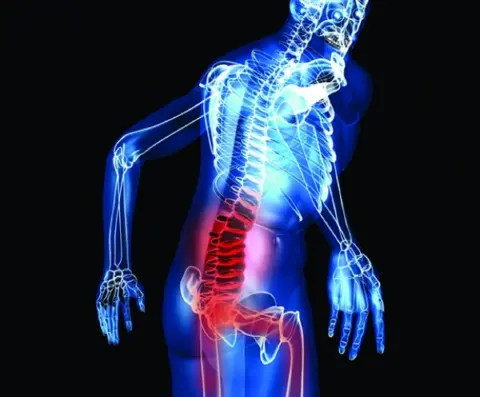
ribs, spine, and intestines. The blessing of
Birkat HaShanim is associated with Parnassah; the spine—the framework of the body—is associated with sustenance.
These six blessings are for personal prayers.
The next three, however, are communal prayers—for the welfare of the entire nation.
The thirteenth and final blessing is the culmination of the entire prayer.
If one forgot to make a particular request, then, provided one has not begun reciting the seventeenth blessing, one may return and pray with that request.
(Based on a lesson by Rav Alexander Tzvi Sypkov)
Please note: some articles on our site contain the holy Names of the Almighty. If you print these articles, they may not be thrown away or destroyed. Please handle printed copies with care and respect.